

1 Zecchino – Malta
Malta
Context
Material
References
KM: #Click to copy to clipboard123
Numista: #129566
Value
Bullion value: $567.04
Obverse
Description:
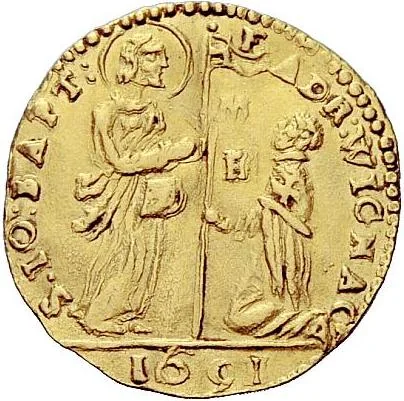
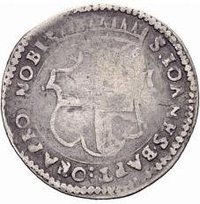
St. John offers the banner to the kneeling Grand Master.
Inscription:
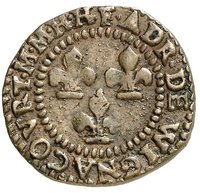
S·IO:BAPT: F ADR:WICNAC
H
1691
H
1691
Script: Latin
Reverse
Edge
Mintings
| Year | Mint Mark | Mintage | Quality | Collection |
|---|---|---|---|---|
| 1691 | — | — | ||
| 1694 | — | — | ||
| 1695 | — | — | ||
| 1696 | — | — |
Historical background
In 1691, Malta was under the rule of the Knights of the Order of St. John, a period marked by a complex and often chaotic currency situation. The islands functioned as a crucial trading hub in the central Mediterranean, which meant a multitude of foreign coins circulated daily. The primary units of account were the scudo (divided into 12 tari, each of 20 grani) and the lira (worth 12 tari), but the actual physical currency in use was a bewildering mix of Spanish pieces of eight, Venetian sequins and ducats, French écus, and Ottoman piastres. This created a constant challenge for merchants and the treasury, as the value of these coins fluctuated based on their metal content and international trade.
The Knights attempted to impose order by minting their own copper grani and silver tari and scudi at the Malta Mint, established in 1566. However, these local issues were often insufficient in quantity and frequently debased, leading to a lack of public confidence. Consequently, high-quality foreign gold and silver coins were hoarded or exported, while the poorer-quality local and foreign copper coins remained in circulation—a classic example of Gresham's Law, where "bad money drives out good." This imbalance hampered local commerce and complicated the Order's own financial administration and tax collection.
Ultimately, the monetary chaos of 1691 was a symptom of Malta's position as a dependent, non-sovereign entity within a larger European and Mediterranean economic system. The Knights lacked the full monetary sovereignty of a nation-state to effectively control their currency. Their efforts were reactive, focused on managing a system dominated by foreign specie rather than establishing a stable, unified currency. This situation would persist with varying degrees of severity throughout the 18th century, only finding resolution much later with the introduction of formal decimal currency under the British administration.
The Knights attempted to impose order by minting their own copper grani and silver tari and scudi at the Malta Mint, established in 1566. However, these local issues were often insufficient in quantity and frequently debased, leading to a lack of public confidence. Consequently, high-quality foreign gold and silver coins were hoarded or exported, while the poorer-quality local and foreign copper coins remained in circulation—a classic example of Gresham's Law, where "bad money drives out good." This imbalance hampered local commerce and complicated the Order's own financial administration and tax collection.
Ultimately, the monetary chaos of 1691 was a symptom of Malta's position as a dependent, non-sovereign entity within a larger European and Mediterranean economic system. The Knights lacked the full monetary sovereignty of a nation-state to effectively control their currency. Their efforts were reactive, focused on managing a system dominated by foreign specie rather than establishing a stable, unified currency. This situation would persist with varying degrees of severity throughout the 18th century, only finding resolution much later with the introduction of formal decimal currency under the British administration.
✨ Legendary