

5 Guineas – England
United Kingdom
Context
Years: 1678–1684
Country: United Kingdom 
Issuer: England 
Ruler: Charles II
Currency:
(1158—1970)
Demonetized: Yes
Material
References
KM: #Click to copy to clipboard444
Numista: #12944
Value
Bullion value: $6410.80
Obverse
Description:
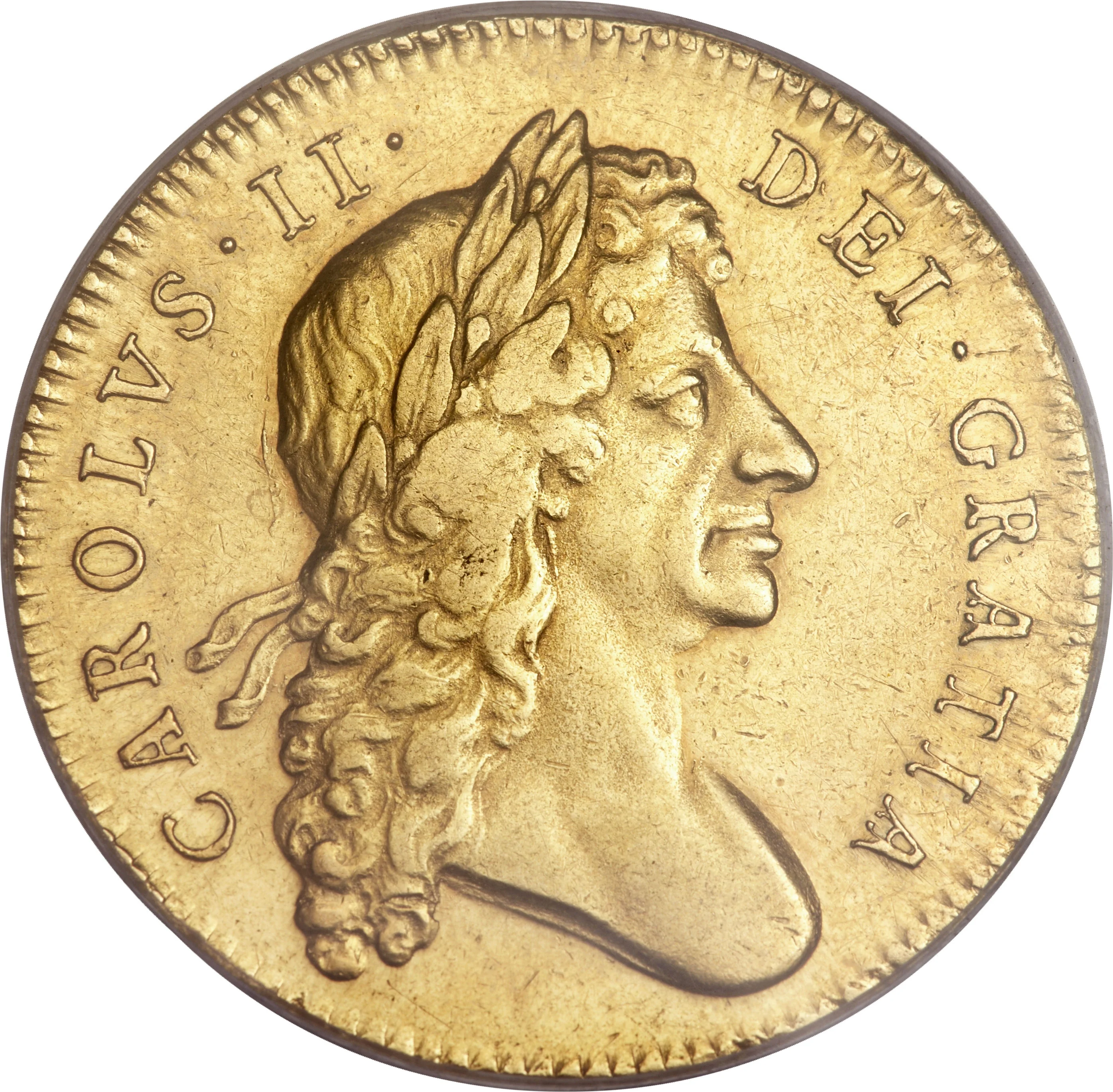
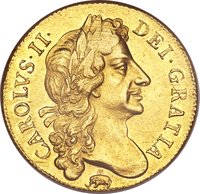
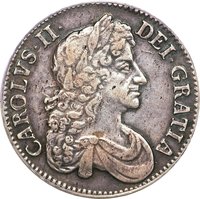
King Charles II bust right, legend around. Rounded truncation.
Inscription:
CAROLVS·II· DEI·GRATIA
Script: Latin
Engraver: John Roettier
Reverse
Description:
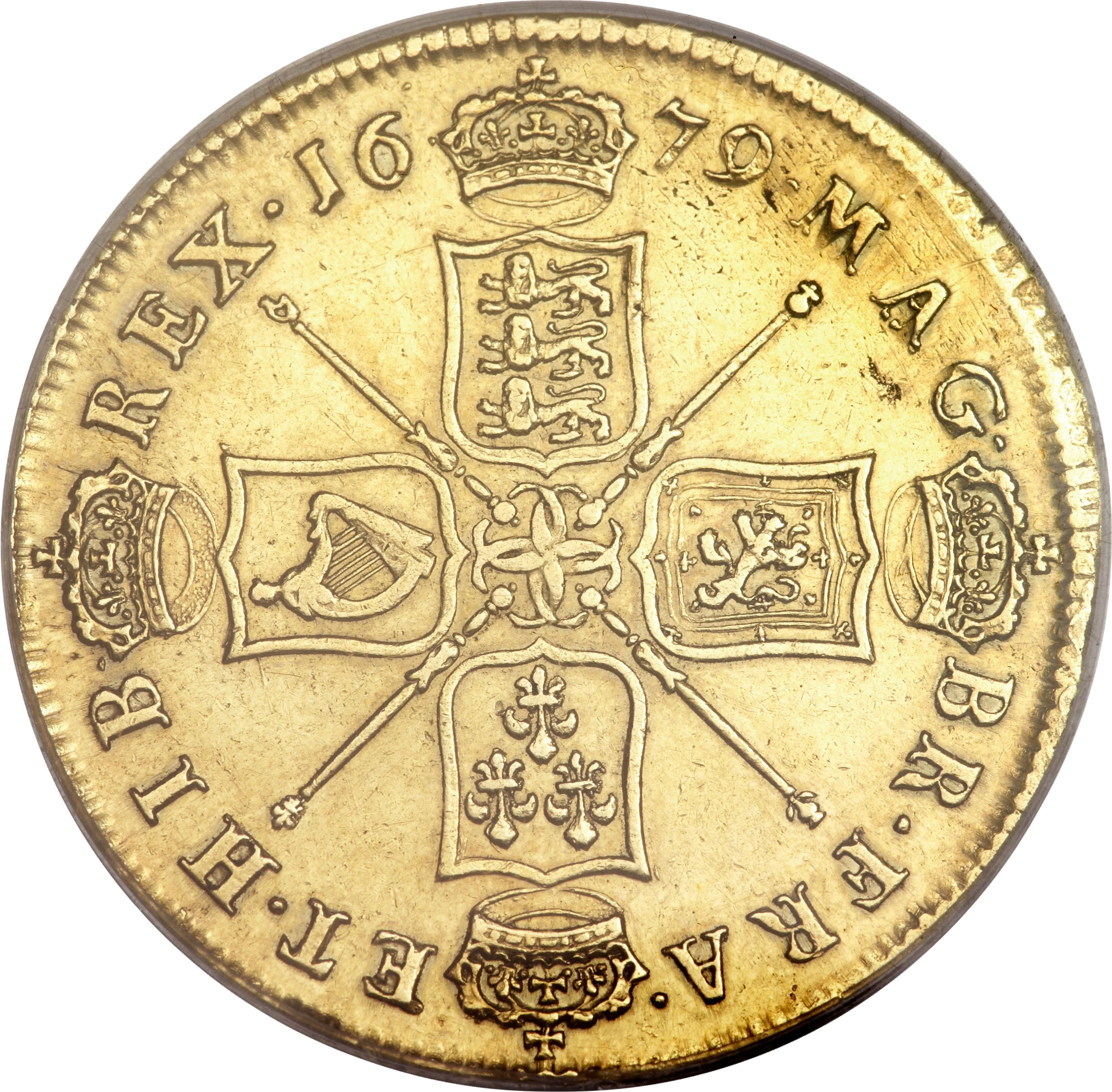
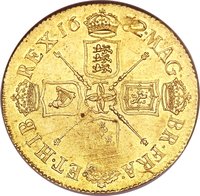
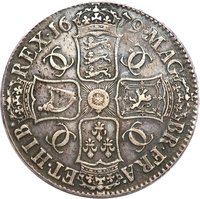
Crowned shields and interlinked C's flanked by sceptres, date above, legend around.
Inscription:
MAG· BR·FRA· ET·HIB· REX·16 79·
Script: Latin
Engraver: John Roettier
Edge
Regnal year in Latin
Legend:
TRICESIMO PRIMO
Mintings
| Year | Mint Mark | Mintage | Quality | Collection |
|---|---|---|---|---|
| 1678 | — | — | ||
| 1679 | — | — | ||
| 1680 | — | — | ||
| 1680 | — | — | BU | |
| 1681 | — | — | ||
| 1681 | — | — | BU | |
| 1682 | — | — | ||
| 1682 | — | — | BU | |
| 1683 | — | — | ||
| 1683 | — | — | BU | |
| 1684 | — | — | BU | |
| 1684 | — | — |
Historical background
In 1678, England's currency system was predominantly based on silver. The principal coin was the silver penny, with the pound sterling (£) representing a unit of account equivalent to 240 silver pennies. Gold coins, such as the guinea (minted from gold imported from West Africa), were also in circulation but their value fluctuated against silver. The guinea, originally valued at 20 shillings, was trading at a premium of nearly 22 shillings due to the higher market price of gold, creating a complex bimetallic system. This period preceded the great recoinage of the 1690s, so the coinage in circulation was a mixture of old hammered coins, often worn or clipped, and newer milled coins introduced under Charles II after 1662.
The monetary situation was under significant strain. A major problem was the widespread clipping and counterfeiting of silver coins, which reduced their precious metal content and eroded public trust. The newer, milled coins with their engraved edges were harder to tamper with, but they were hoarded or melted down for their higher silver content, leaving the degraded older coins in general circulation—a classic example of Gresham's Law ("bad money drives out good"). This debasement effectively meant the government's face value of the currency was becoming detached from its intrinsic metallic worth, causing inflation and hampering trade, both domestic and international.
This unstable currency backdrop existed within a tense political climate. The year 1678 was dominated by the eruption of the "Popish Plot," a fabricated conspiracy alleging a Catholic plot to assassinate King Charles II. The ensuing political and constitutional crisis diverted the government's attention from monetary reform. While economists and officials, including figures like Sir Isaac Newton (who would later become Warden of the Mint), were aware of the currency's problems, the immediate focus was on national survival. Consequently, decisive action to restore the integrity of the coinage was delayed until the financial pressures of the Nine Years' War forced the Great Recoinage of 1696 under King William III.
The monetary situation was under significant strain. A major problem was the widespread clipping and counterfeiting of silver coins, which reduced their precious metal content and eroded public trust. The newer, milled coins with their engraved edges were harder to tamper with, but they were hoarded or melted down for their higher silver content, leaving the degraded older coins in general circulation—a classic example of Gresham's Law ("bad money drives out good"). This debasement effectively meant the government's face value of the currency was becoming detached from its intrinsic metallic worth, causing inflation and hampering trade, both domestic and international.
This unstable currency backdrop existed within a tense political climate. The year 1678 was dominated by the eruption of the "Popish Plot," a fabricated conspiracy alleging a Catholic plot to assassinate King Charles II. The ensuing political and constitutional crisis diverted the government's attention from monetary reform. While economists and officials, including figures like Sir Isaac Newton (who would later become Warden of the Mint), were aware of the currency's problems, the immediate focus was on national survival. Consequently, decisive action to restore the integrity of the coinage was delayed until the financial pressures of the Nine Years' War forced the Great Recoinage of 1696 under King William III.
✨ Legendary