

1 Crown – England
United Kingdom
Context
Years: 1679–1684
Country: United Kingdom 
Issuer: England 
Ruler: Charles II
Currency:
(1158—1970)
Demonetized: Yes
Material
References
KM: #Click to copy to clipboard445.1
Numista: #12863
Value
Bullion value: $79.13
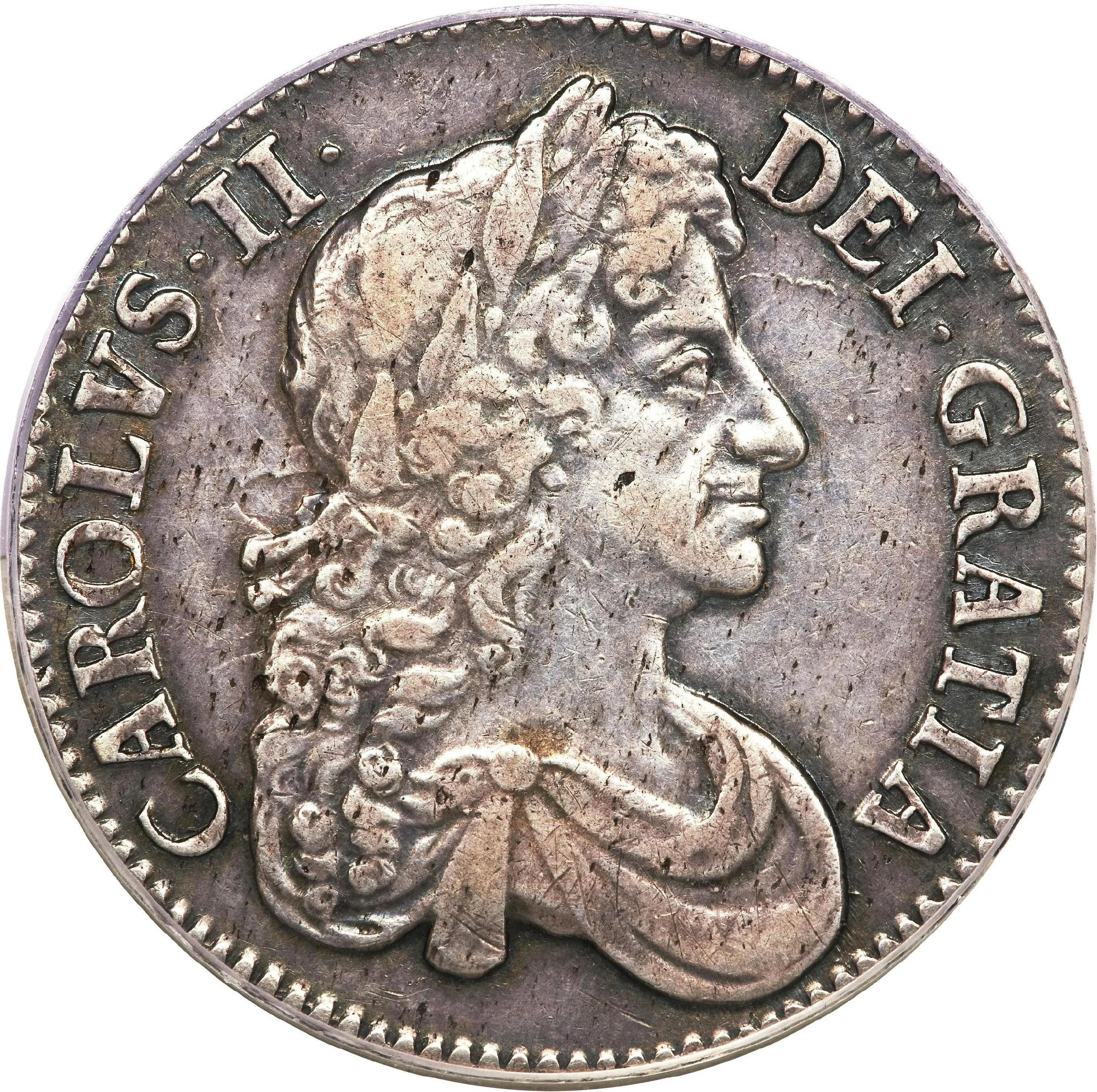
Obverse
Description:
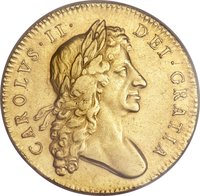
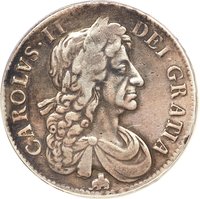
Fourth laureate: draped bust of Charles II right, larger with aged features and pointed nose.
Inscription:
CAROLVS·II· DEI·GRATIA
Script: Latin
Engraver: John Roettier
Reverse
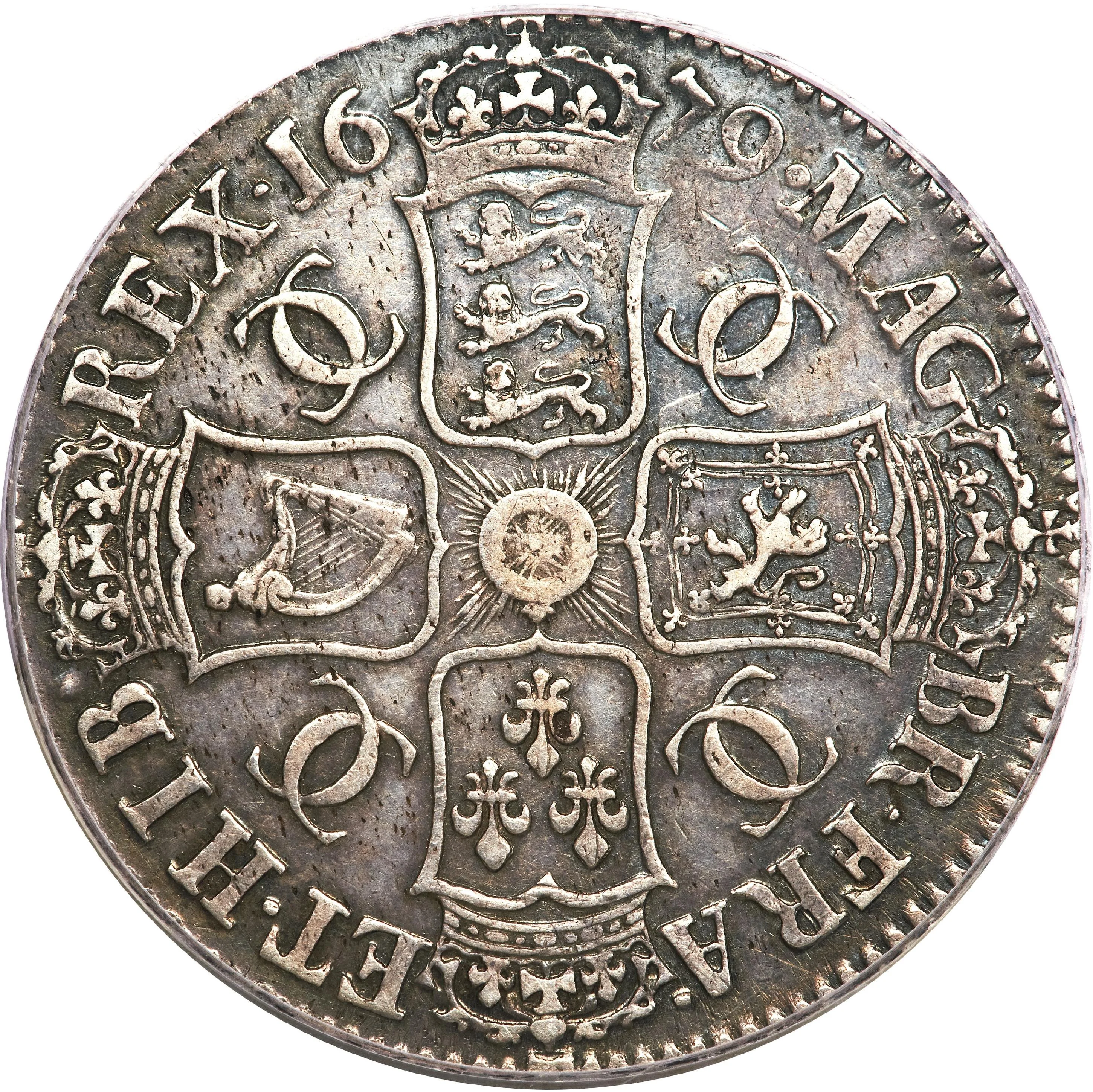
Description:
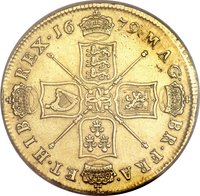
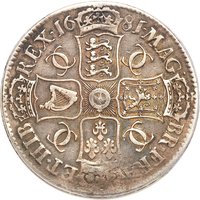
Crowned shields flank central Garter star, interlinked C's in angles, date above, legend around.
Inscription:
MAG· BR·FRA· ET·HIB· REX·1679·
CC CC CC CC
CC CC CC CC
Script: Latin
Engraver: John Roettier
Edge
Regnal year in Latin
Legend:
TRICESIMO PRIMO
Mintings
| Year | Mint Mark | Mintage | Quality | Collection |
|---|---|---|---|---|
| 1679 | — | — | ||
| 1680 | — | — | ||
| 1681 | — | — | ||
| 1682 | — | — | ||
| 1683 | — | — | ||
| 1684 | — | — |
Historical background
In 1679, England’s currency was predominantly silver-based, operating under a bimetallic system where both silver and gold coins circulated. The foundational unit was the silver penny, with 240 pennies minted from one Tower Pound of sterling silver, defining the pound sterling. The principal coin in everyday use was the silver shilling (12 pence), alongside crowns (5 shillings) and half-crowns. Gold coins, like the guinea, first minted in 1663 from gold sourced by the Royal African Company, were also in circulation. However, the guinea’s value was not fixed in statute; it traded at a market rate against the silver pound, typically around 20 to 21 shillings, creating a dynamic and sometimes unstable relationship between the two metals.
This period was one of significant monetary stress, largely due to the problem of "clipping" and wear. Unscrupulous individuals would shave small amounts of precious metal from the edges of coins, while general circulation wore them down. These "light" coins remained in circulation at face value, while full-weight coins were often hoarded or melted down for their bullion value, especially if the metal was worth more than the coin’s denomination—a manifestation of Gresham’s Law (“bad money drives out good”). This led to a degraded and unreliable currency, hampering trade and public confidence. The problem was acute enough that it prompted serious discussions about recoinage, although a full reform would not be enacted until the Great Recoinage of 1696.
The monetary situation was further complicated by the political turmoil of the Popish Plot and the Exclusion Crisis, which dominated 1679. King Charles II’s chronic financial difficulties and his secret subsidies from France undermined parliamentary efforts to address broader fiscal and monetary stability. While the Treasury and figures like Sir Isaac Newton (who would later become Warden of the Mint) were aware of the currency’s deterioration, the immediate political crises took precedence. Consequently, England muddled through with a deteriorating silver coinage, setting the stage for the severe financial pressures that would culminate in the major recoinage under William III.
This period was one of significant monetary stress, largely due to the problem of "clipping" and wear. Unscrupulous individuals would shave small amounts of precious metal from the edges of coins, while general circulation wore them down. These "light" coins remained in circulation at face value, while full-weight coins were often hoarded or melted down for their bullion value, especially if the metal was worth more than the coin’s denomination—a manifestation of Gresham’s Law (“bad money drives out good”). This led to a degraded and unreliable currency, hampering trade and public confidence. The problem was acute enough that it prompted serious discussions about recoinage, although a full reform would not be enacted until the Great Recoinage of 1696.
The monetary situation was further complicated by the political turmoil of the Popish Plot and the Exclusion Crisis, which dominated 1679. King Charles II’s chronic financial difficulties and his secret subsidies from France undermined parliamentary efforts to address broader fiscal and monetary stability. While the Treasury and figures like Sir Isaac Newton (who would later become Warden of the Mint) were aware of the currency’s deterioration, the immediate political crises took precedence. Consequently, England muddled through with a deteriorating silver coinage, setting the stage for the severe financial pressures that would culminate in the major recoinage under William III.
💎 Very Rare