

2 Guineas – England
United Kingdom
Context
Years: 1675–1684
Country: United Kingdom 
Issuer: England 
Ruler: Charles II
Currency:
(1158—1970)
Demonetized: Yes
Material
References
KM: #Click to copy to clipboard443
Numista: #12943
Value
Bullion value: $2565.48
Obverse
Description:
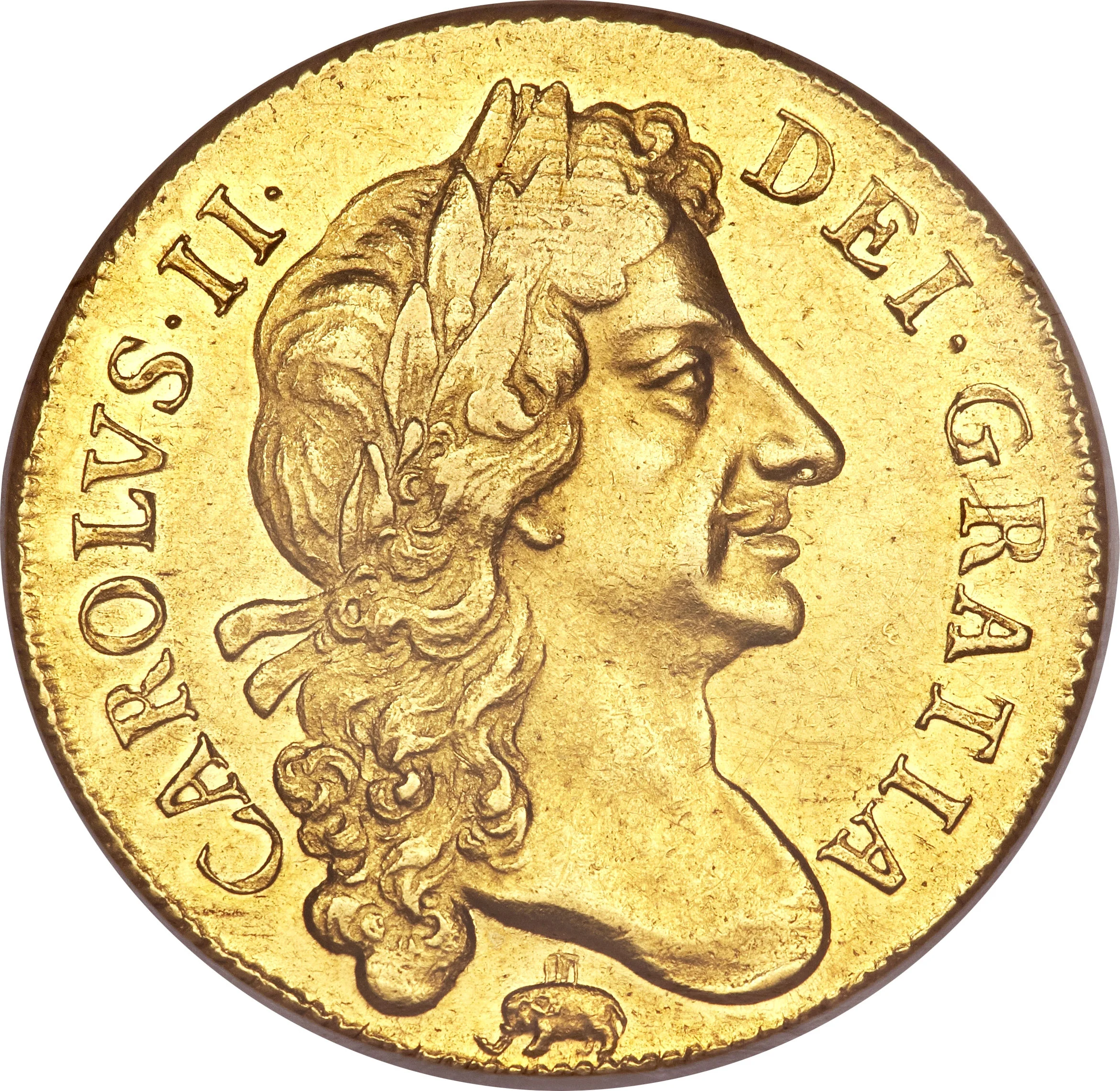
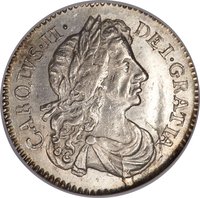
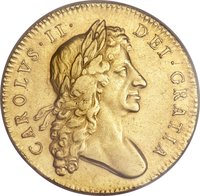
King Charles II bust right, legend around. Rounded truncation.
Inscription:
CAROLVS·II· DEI·GRATIA
Script: Latin
Engraver: John Roettier
Reverse
Description:
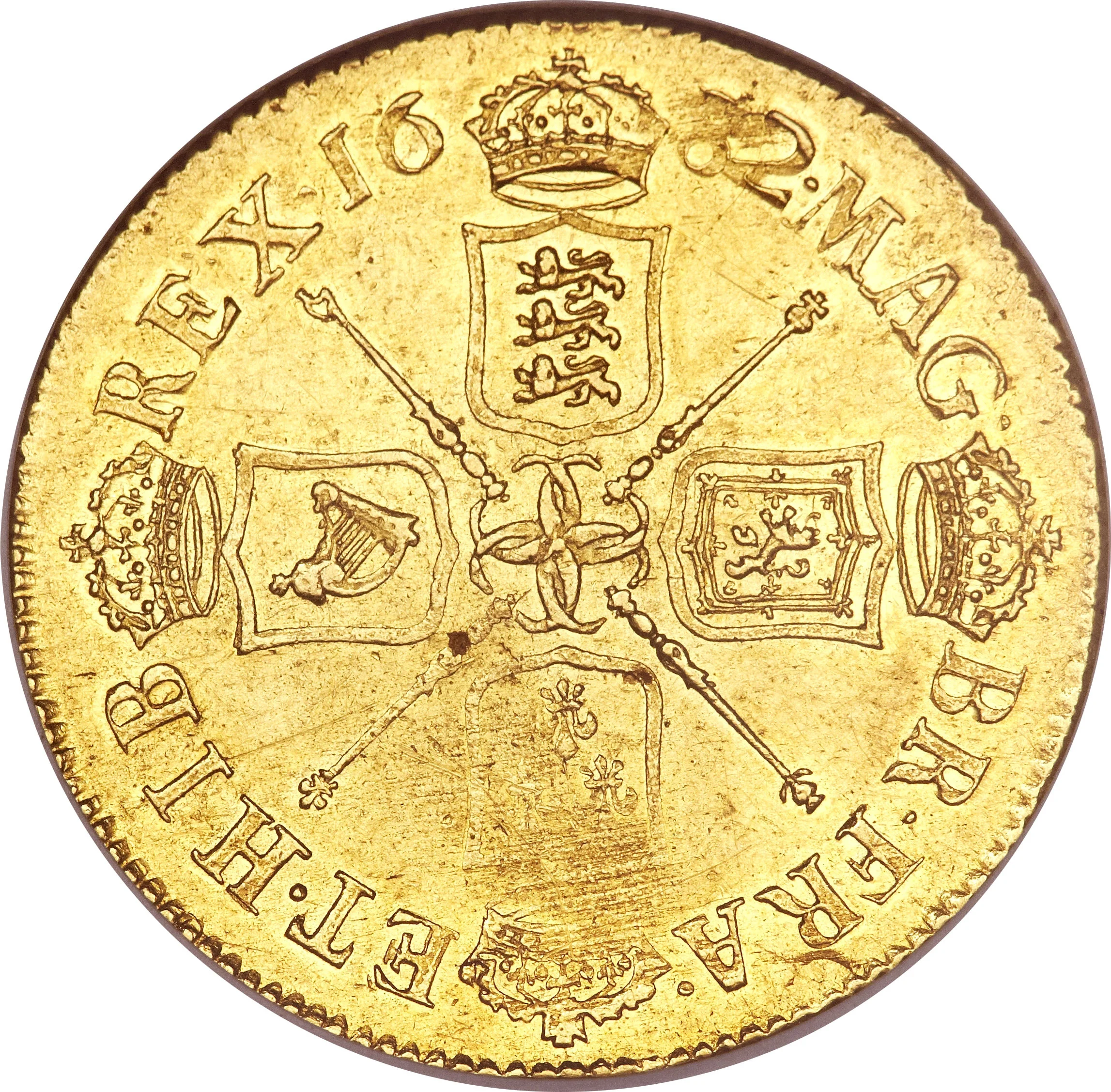
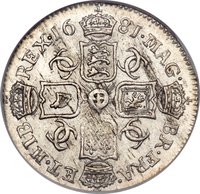
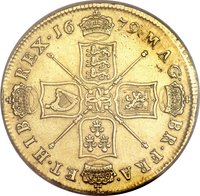
Crowned shields and interlinked C's flanked by sceptres, date above, legend around.
Inscription:
MAG· BR·FRA· ET·HIB· REX·16 82·
Script: Latin
Engraver: John Roettier
Edge
Mintings
| Year | Mint Mark | Mintage | Quality | Collection |
|---|---|---|---|---|
| 1675 | — | — | ||
| 1676 | — | — | ||
| 1676 | — | — | BU | |
| 1677 | — | — | ||
| 1677 | — | — | BU | |
| 1678 | — | — | ||
| 1678 | — | — | BU | |
| 1679 | — | — | ||
| 1680 | — | — | ||
| 1681 | — | — | ||
| 1682 | — | — | ||
| 1682 | — | — | BU | |
| 1683 | — | — | ||
| 1683 | — | — | BU | |
| 1684 | — | — | ||
| 1684 | — | — | BU |
Historical background
In 1675, England's currency system was predominantly based on silver. The principal coin was the silver penny, with the pound sterling (£) existing as a unit of account equivalent to 240 silver pennies. Gold coins, like the guinea (first minted in 1663), were also in circulation. The guinea, valued at 20 shillings at its introduction, was beginning to trade at a premium above its face value due to fluctuations in the relative market prices of gold and silver. This hinted at the monetary instability that would later intensify, but in 1675 the system still functioned under the ancient principle of "hammered" coinage, where coins were struck by hand.
However, this system was critically vulnerable. The coinage, especially silver, was heavily degraded through "clipping" (shaving metal from the edges) and wear, reducing the actual silver content in circulation. Furthermore, the official mint price for silver was often lower than the market price, discouraging people from bringing bullion to the mint for coining. This led to a shortage of good, full-weight currency. The problem was exacerbated by the recoinage of 1662, which introduced milled edges to prevent clipping on new coins, but inadvertently created a two-tier system where the older, clipped hammered coins remained in wide circulation and drove the newer, heavier milled coins out of circulation (following Gresham's Law: "bad money drives out good").
Consequently, by 1675, England was operating with a corrupted and unreliable medium of exchange, which hampered trade and state finance. The situation was a growing concern for merchants and the Crown alike, but decisive action was still two decades away. The crisis would culminate in the Great Recoinage of 1696, under the guidance of Sir Isaac Newton as Warden of the Mint, which finally replaced all the old hammered money with new, machine-struck milled coinage and formally placed England on a de facto gold standard, setting the stage for the financial revolution of the 18th century.
However, this system was critically vulnerable. The coinage, especially silver, was heavily degraded through "clipping" (shaving metal from the edges) and wear, reducing the actual silver content in circulation. Furthermore, the official mint price for silver was often lower than the market price, discouraging people from bringing bullion to the mint for coining. This led to a shortage of good, full-weight currency. The problem was exacerbated by the recoinage of 1662, which introduced milled edges to prevent clipping on new coins, but inadvertently created a two-tier system where the older, clipped hammered coins remained in wide circulation and drove the newer, heavier milled coins out of circulation (following Gresham's Law: "bad money drives out good").
Consequently, by 1675, England was operating with a corrupted and unreliable medium of exchange, which hampered trade and state finance. The situation was a growing concern for merchants and the Crown alike, but decisive action was still two decades away. The crisis would culminate in the Great Recoinage of 1696, under the guidance of Sir Isaac Newton as Warden of the Mint, which finally replaced all the old hammered money with new, machine-struck milled coinage and formally placed England on a de facto gold standard, setting the stage for the financial revolution of the 18th century.
✨ Legendary