

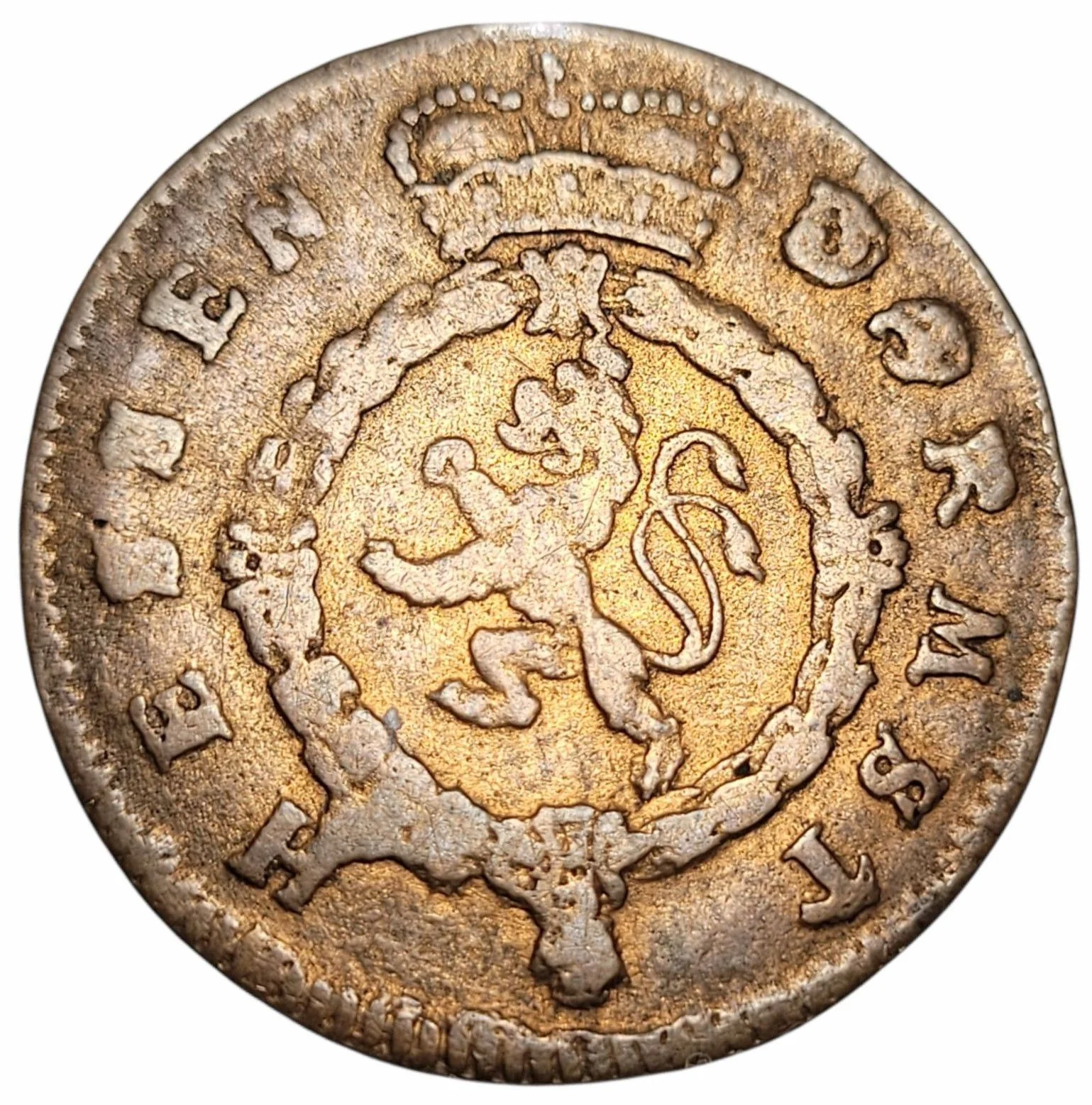
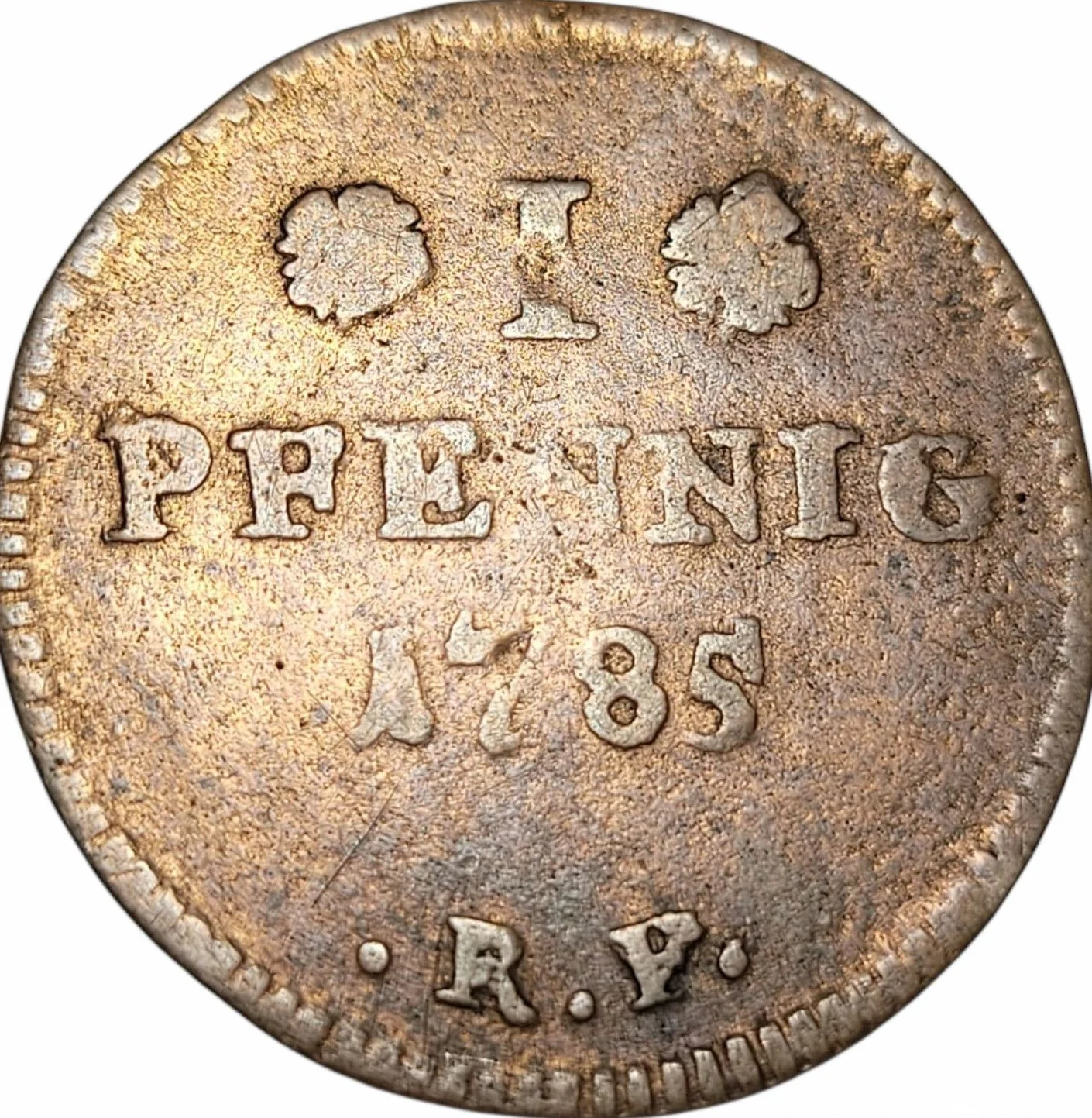
1 Pfennig – Landgraviate of Hesse-Darmstadt
Context
Years: 1784–1790
Issuer: Landgraviate of Hesse-Darmstadt
Ruler: Louis IX
Currency:
(1568—1805)
Demonetized: Yes
Material
References
KM: #Click to copy to clipboard240
Numista: #128855
Obverse
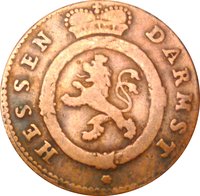
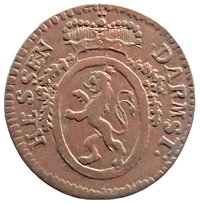
Description:
Crowned lion in wreath with side inscriptions.
Inscription:
HESSEN DARMST
Script: Latin
Reverse
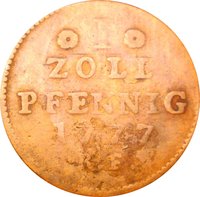
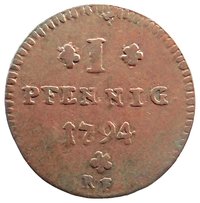
Description:
Denomination, date, mintmaster initials.
Inscription:
*I*
PFENNIG
1785
.R.F.
PFENNIG
1785
.R.F.
Script: Latin
Edge
Plain
Mints
| Name | Mark |
|---|---|
| Darmstadt | — |
Mintings
| Year | Mint Mark | Mintage | Quality | Collection |
|---|---|---|---|---|
| 1784 | — | — | ||
| 1785 | — | — | ||
| 1786 | — | — | ||
| 1787 | — | — | ||
| 1788 | — | — | ||
| 1789 | — | — | ||
| 1790 | — | — |
Historical background
In 1784, the currency situation in the Landgraviate of Hesse-Darmstadt was complex and fragmented, reflecting the broader monetary disunity of the Holy Roman Empire. The landgraviate did not have a single, dominant currency but operated within a multi-layered system. The most important official unit was the Hesse-Darmstadt Gulden (florin), which was subdivided into 15 Kreuzer or 60 Heller. However, this "current gulden" (Rechnungsgulden) often served more as a unit of account than a universally circulating coin, with a wide variety of physical coins from other states in daily use.
The actual coinage in circulation was a chaotic mix of domestic and foreign issues. Alongside a limited number of locally minted coins, the most prevalent and trusted large silver coin was the Reichsthaler, a standard across the Empire. Its value was officially set at 1.5 Hesse-Darmstadt Gulden, creating a fixed but awkward exchange rate. Furthermore, a plethora of coins from neighboring territories like Electoral Mainz, the Palatinate, and even larger states like Austria and the Netherlands circulated freely, their acceptance based on their silver content and familiarity to merchants.
This monetary fragmentation created significant challenges for trade and administration. Exchange rates between the myriad of physical coins and the official accounting gulden were fluid and often exploitative, leading to confusion and transaction costs. Recognizing these problems, Landgrave Louis X (later Grand Duke Louis I) was aware of the need for monetary reform. The year 1784 fell within a period of pre-reform assessment, as the landgraviate, like many German states, was slowly moving toward the more standardized Konventionsfuß system, which would later attempt to bring order by aligning the gulden with a fixed silver standard relative to the Reichsthaler.
The actual coinage in circulation was a chaotic mix of domestic and foreign issues. Alongside a limited number of locally minted coins, the most prevalent and trusted large silver coin was the Reichsthaler, a standard across the Empire. Its value was officially set at 1.5 Hesse-Darmstadt Gulden, creating a fixed but awkward exchange rate. Furthermore, a plethora of coins from neighboring territories like Electoral Mainz, the Palatinate, and even larger states like Austria and the Netherlands circulated freely, their acceptance based on their silver content and familiarity to merchants.
This monetary fragmentation created significant challenges for trade and administration. Exchange rates between the myriad of physical coins and the official accounting gulden were fluid and often exploitative, leading to confusion and transaction costs. Recognizing these problems, Landgrave Louis X (later Grand Duke Louis I) was aware of the need for monetary reform. The year 1784 fell within a period of pre-reform assessment, as the landgraviate, like many German states, was slowly moving toward the more standardized Konventionsfuß system, which would later attempt to bring order by aligning the gulden with a fixed silver standard relative to the Reichsthaler.
⭐ Somewhat Rare