

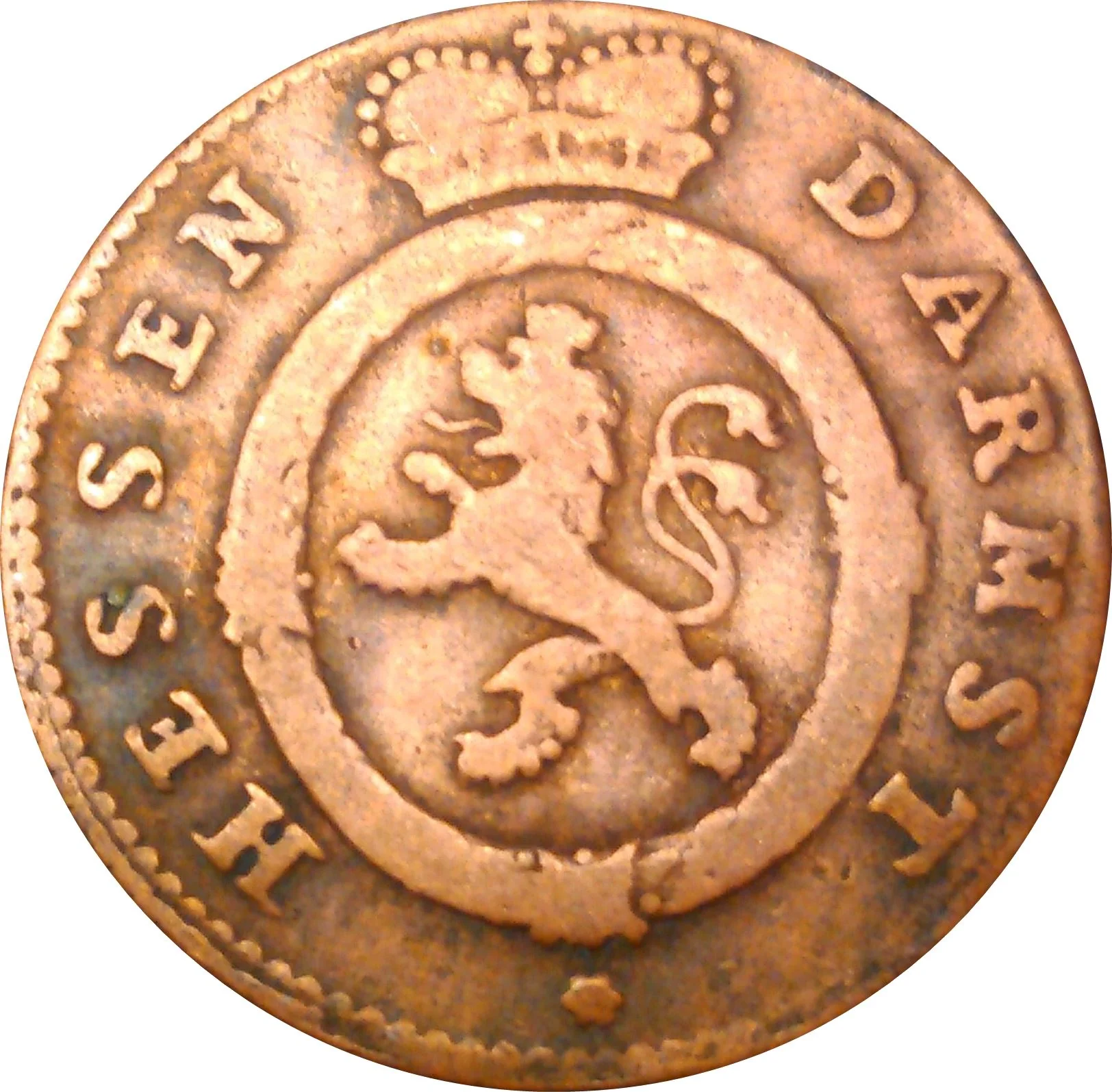
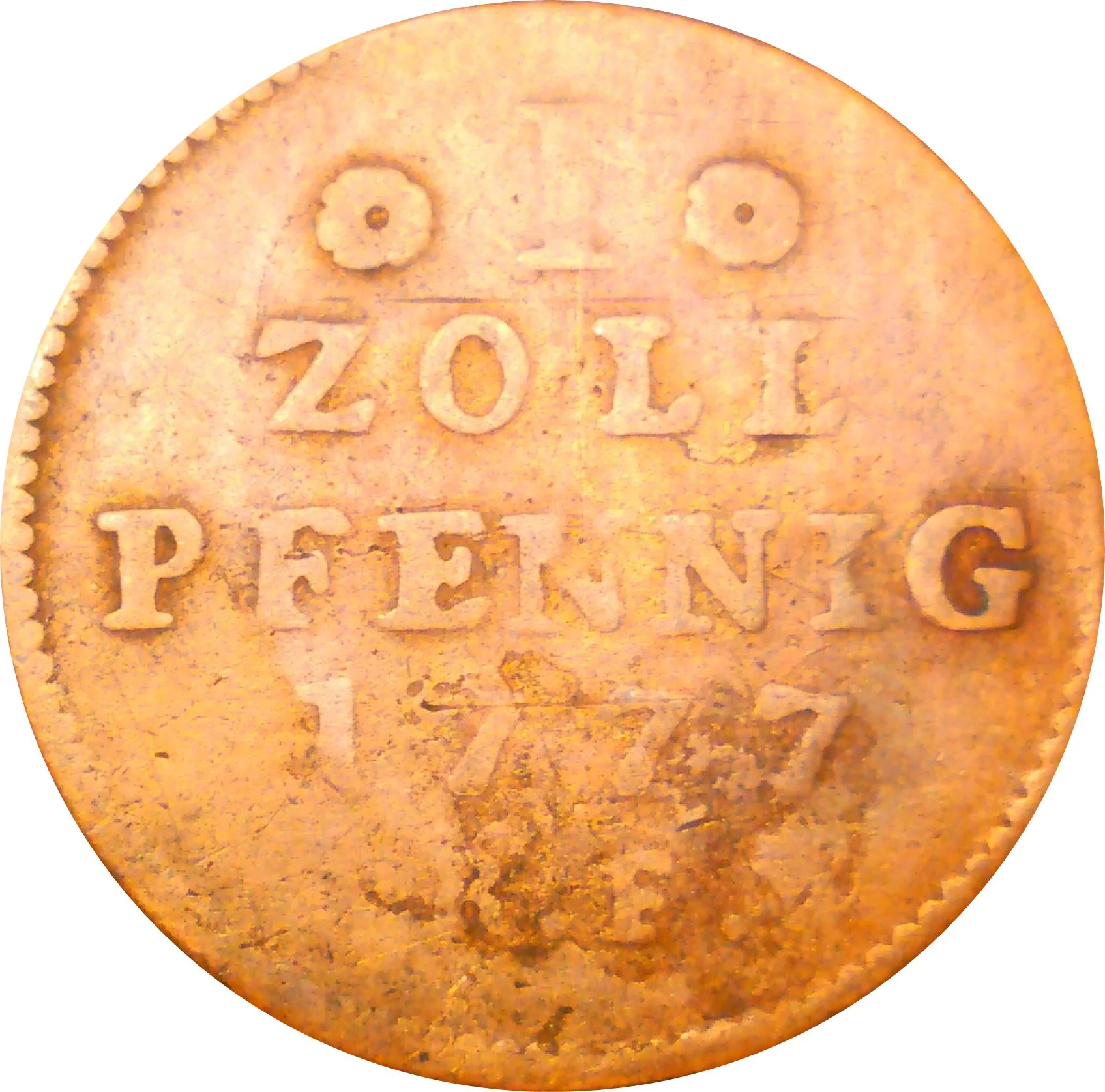
1 Pfennig – Landgraviate of Hesse-Darmstadt
Context
Year: 1777
Issuer: Landgraviate of Hesse-Darmstadt
Ruler: Louis IX
Currency:
(1568—1805)
Demonetized: Yes
Material
References
KM: #Click to copy to clipboard234
Numista: #78824
Obverse
Reverse
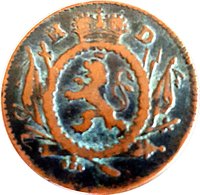
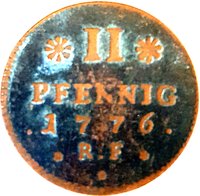
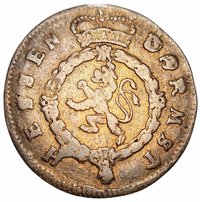
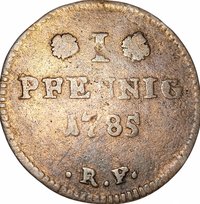
Description:
Denomination, date, and mintmaster initials in five lines.
Inscription:
*I*
ZOLL
PFENNIG
1777
.R.F.
ZOLL
PFENNIG
1777
.R.F.
Script: Latin
Edge
Mints
| Name | Mark |
|---|---|
| Darmstadt | — |
Mintings
| Year | Mint Mark | Mintage | Quality | Collection |
|---|---|---|---|---|
| 1777 | — | — |
Historical background
In 1777, the currency situation in the Landgraviate of Hesse-Darmstadt was complex and fragmented, reflecting the broader monetary disarray of the Holy Roman Empire. The landgraviate did not have a single, unified currency but operated within a system where multiple coinage standards circulated simultaneously. The most important for large transactions and state finance was the Reichsthaler, a silver coin defined by Imperial decree, which was divided into 90 Kreuzer. However, the everyday economy relied heavily on a plethora of smaller regional and foreign coins, including those from neighboring states like Frankfurt and the Palatinate, leading to constant difficulties in exchange and valuation.
This monetary plurality created significant challenges for trade and administration. The value of coins depended not only on their denomination but also on their silver content, which often varied, and their rate of exchange against the Reichsthaler. Counterfeiting and the clipping of coins to extract precious metals were persistent problems, eroding public trust. Furthermore, the landgraviate's own minting rights were limited, and it often had to rely on the output of other mints, leaving its economy vulnerable to external monetary policies and debasements.
Landgrave Ludwig IX, a ruler with strong military interests, was aware of these economic inefficiencies. While the year 1777 did not see a major monetary reform, the state's financial administration continually grappled with stabilizing the currency to ensure reliable revenue for the treasury and to facilitate commerce. The situation underscored the tension between local economic needs and the impractical, decentralized monetary framework of the Empire, a pressure that would eventually contribute to broader calls for standardization in the German states later in the century.
This monetary plurality created significant challenges for trade and administration. The value of coins depended not only on their denomination but also on their silver content, which often varied, and their rate of exchange against the Reichsthaler. Counterfeiting and the clipping of coins to extract precious metals were persistent problems, eroding public trust. Furthermore, the landgraviate's own minting rights were limited, and it often had to rely on the output of other mints, leaving its economy vulnerable to external monetary policies and debasements.
Landgrave Ludwig IX, a ruler with strong military interests, was aware of these economic inefficiencies. While the year 1777 did not see a major monetary reform, the state's financial administration continually grappled with stabilizing the currency to ensure reliable revenue for the treasury and to facilitate commerce. The situation underscored the tension between local economic needs and the impractical, decentralized monetary framework of the Empire, a pressure that would eventually contribute to broader calls for standardization in the German states later in the century.
⭐ Rare