

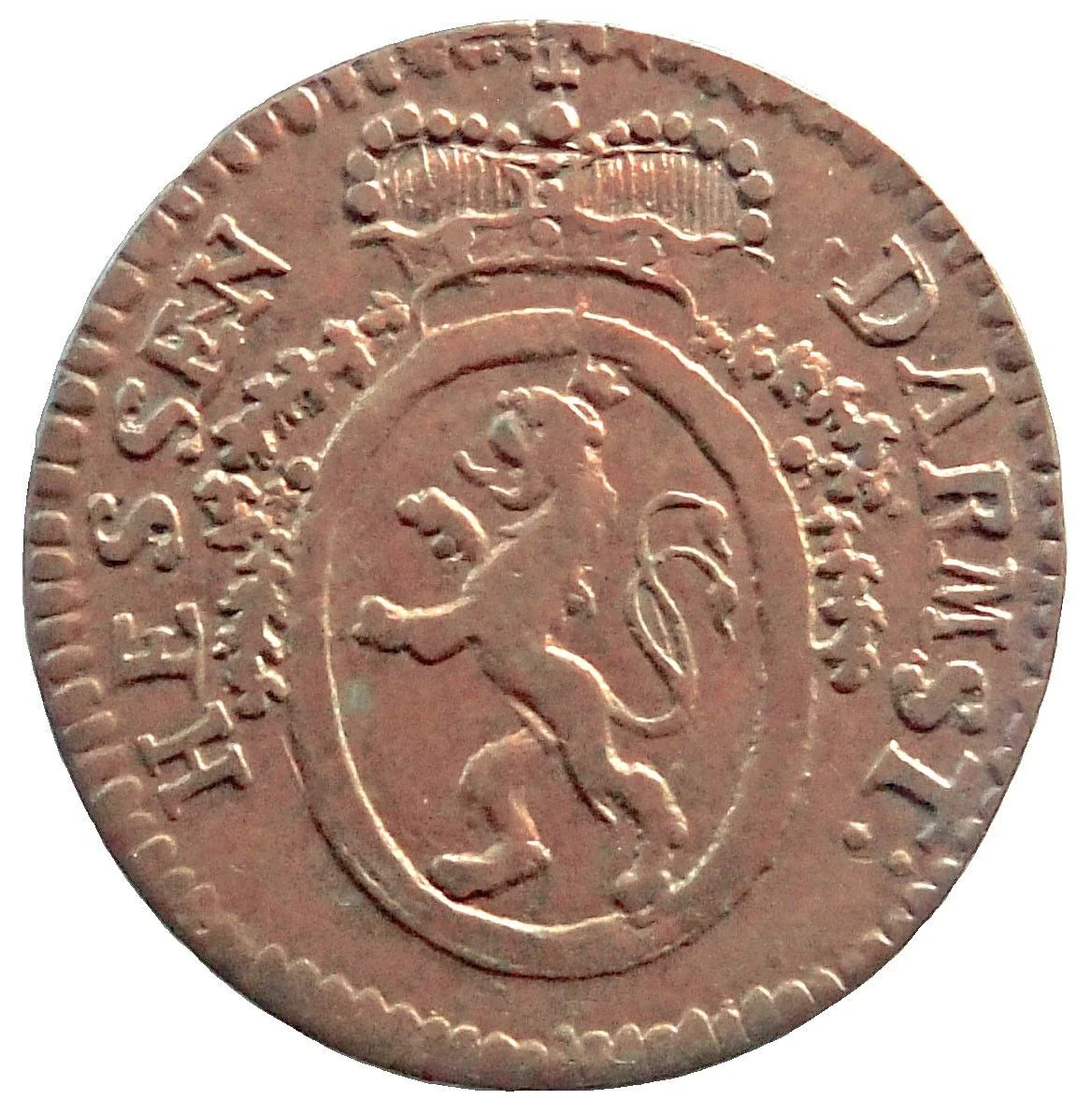
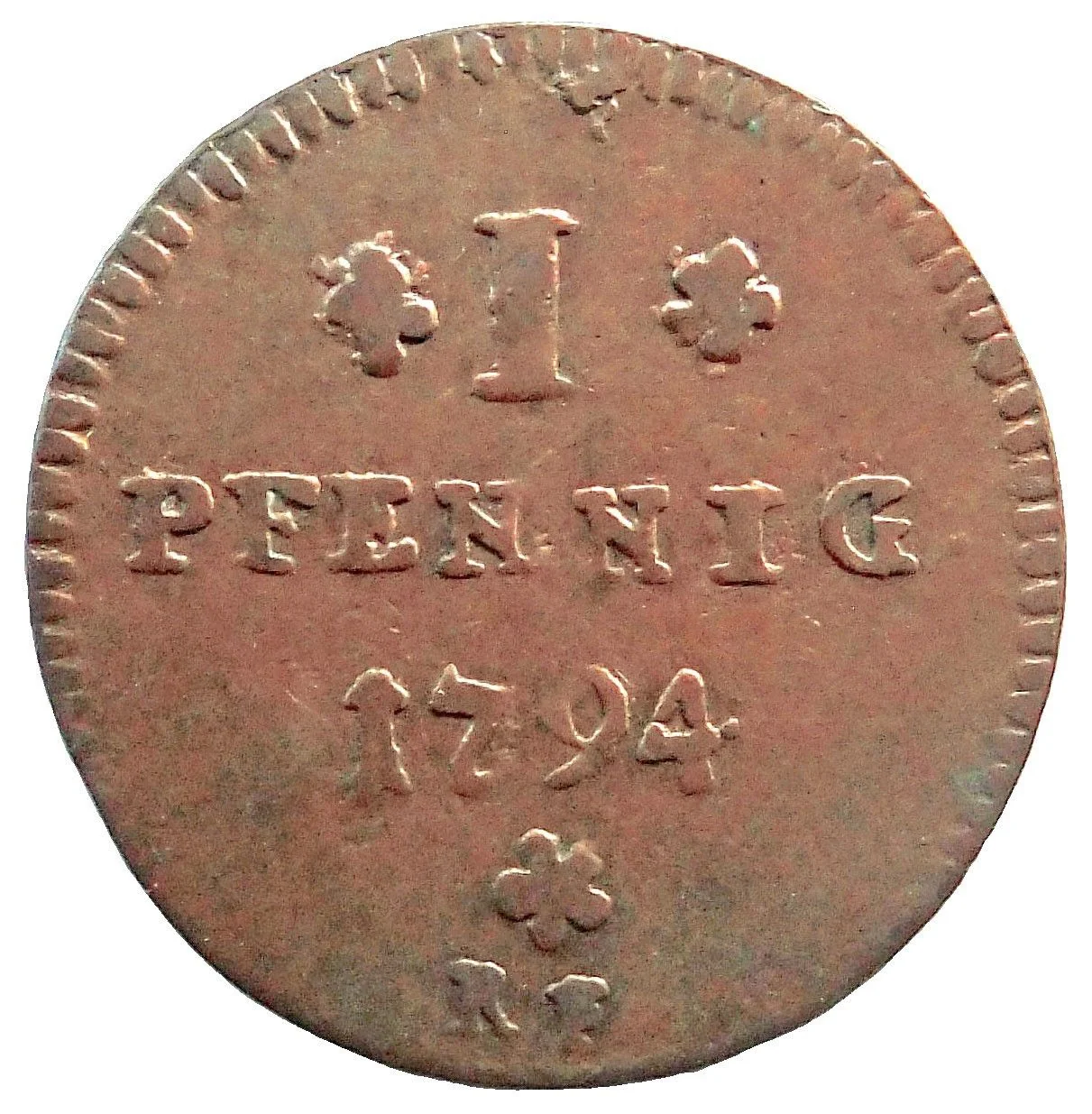
1 Pfennig – Landgraviate of Hesse-Darmstadt
Context
Years: 1789–1797
Issuer: Landgraviate of Hesse-Darmstadt
Ruler: Louis IX
Currency:
(1568—1805)
Demonetized: Yes
Material
References
KM: #Click to copy to clipboardA240
Numista: #42025
Obverse
Description:
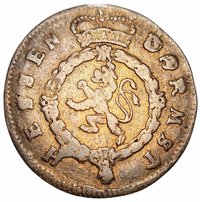
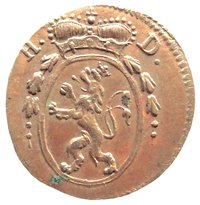
Oval crowned coat of arms with encircling inscription.
Inscription:
HESSEN DARMST:
Script: Latin
Reverse
Edge
Mints
| Name | Mark |
|---|---|
| Darmstadt | — |
Mintings
| Year | Mint Mark | Mintage | Quality | Collection |
|---|---|---|---|---|
| 1789 | — | — | ||
| 1790 | — | — | ||
| 1791 | — | — | ||
| 1794 | — | — | ||
| 1796 | — | — | ||
| 1797 | — | — |
Historical background
In 1789, the Landgraviate of Hesse-Darmstadt, like many German territories of the Holy Roman Empire, operated within a complex and fragmented monetary system. It did not possess full sovereignty over coinage, as its currency was regulated within the broader framework of the Reichsmünzfuß (Imperial Coinage Standard). This system, established by imperial ordinances, aimed to standardize the silver content of coins across the Empire's hundreds of states to facilitate trade. However, adherence was inconsistent, and Hesse-Darmstadt's coins circulated alongside a multitude of foreign currencies, particularly those from neighboring Hessian territories and important trade partners like Frankfurt.
The domestic economy relied on a bimetallic system of silver Gulden (florins) and Kreuzers. The Gulden was subdivided into 60 Kreuzers, and 2.5 Gulden equaled one Reichsthaler. In practice, this system was strained and inefficient. Chronic state debt, exacerbated by military expenditures and the lavish court of Landgrave Louis X, led to repeated debasements of the coinage. The government would reduce the precious metal content in new coins to generate seigniorage profit, which eroded public trust and caused inflation, harming peasants and wage-earners the most.
Consequently, the monetary reality for citizens and merchants was one of confusion and calculation. A variety of coins—local, imperial, and foreign—circulated simultaneously, each with fluctuating exchange values. This necessitated the constant use of money changers and published exchange rate tables. The situation hindered economic development and reflected the broader weaknesses of the Old Empire's political structure, where territorial fragmentation directly impeded a unified economic policy. Just three years later, in 1792, Hesse-Darmstadt would attempt a significant reform by introducing a new Landesmünzfuß (State Coinage Standard), highlighting the pressing need to stabilize its currency as the upheavals of the French Revolutionary era began.
The domestic economy relied on a bimetallic system of silver Gulden (florins) and Kreuzers. The Gulden was subdivided into 60 Kreuzers, and 2.5 Gulden equaled one Reichsthaler. In practice, this system was strained and inefficient. Chronic state debt, exacerbated by military expenditures and the lavish court of Landgrave Louis X, led to repeated debasements of the coinage. The government would reduce the precious metal content in new coins to generate seigniorage profit, which eroded public trust and caused inflation, harming peasants and wage-earners the most.
Consequently, the monetary reality for citizens and merchants was one of confusion and calculation. A variety of coins—local, imperial, and foreign—circulated simultaneously, each with fluctuating exchange values. This necessitated the constant use of money changers and published exchange rate tables. The situation hindered economic development and reflected the broader weaknesses of the Old Empire's political structure, where territorial fragmentation directly impeded a unified economic policy. Just three years later, in 1792, Hesse-Darmstadt would attempt a significant reform by introducing a new Landesmünzfuß (State Coinage Standard), highlighting the pressing need to stabilize its currency as the upheavals of the French Revolutionary era began.
⭐ Rare