

2 Guineas – England
United Kingdom
Context
Years: 1664–1673
Country: United Kingdom 
Issuer: England 
Ruler: Charles II
Currency:
(1158—1970)
Demonetized: Yes
Material
References
KM: #Click to copy to clipboard425
Numista: #12860
Value
Bullion value: $2606.89
Obverse
Description:
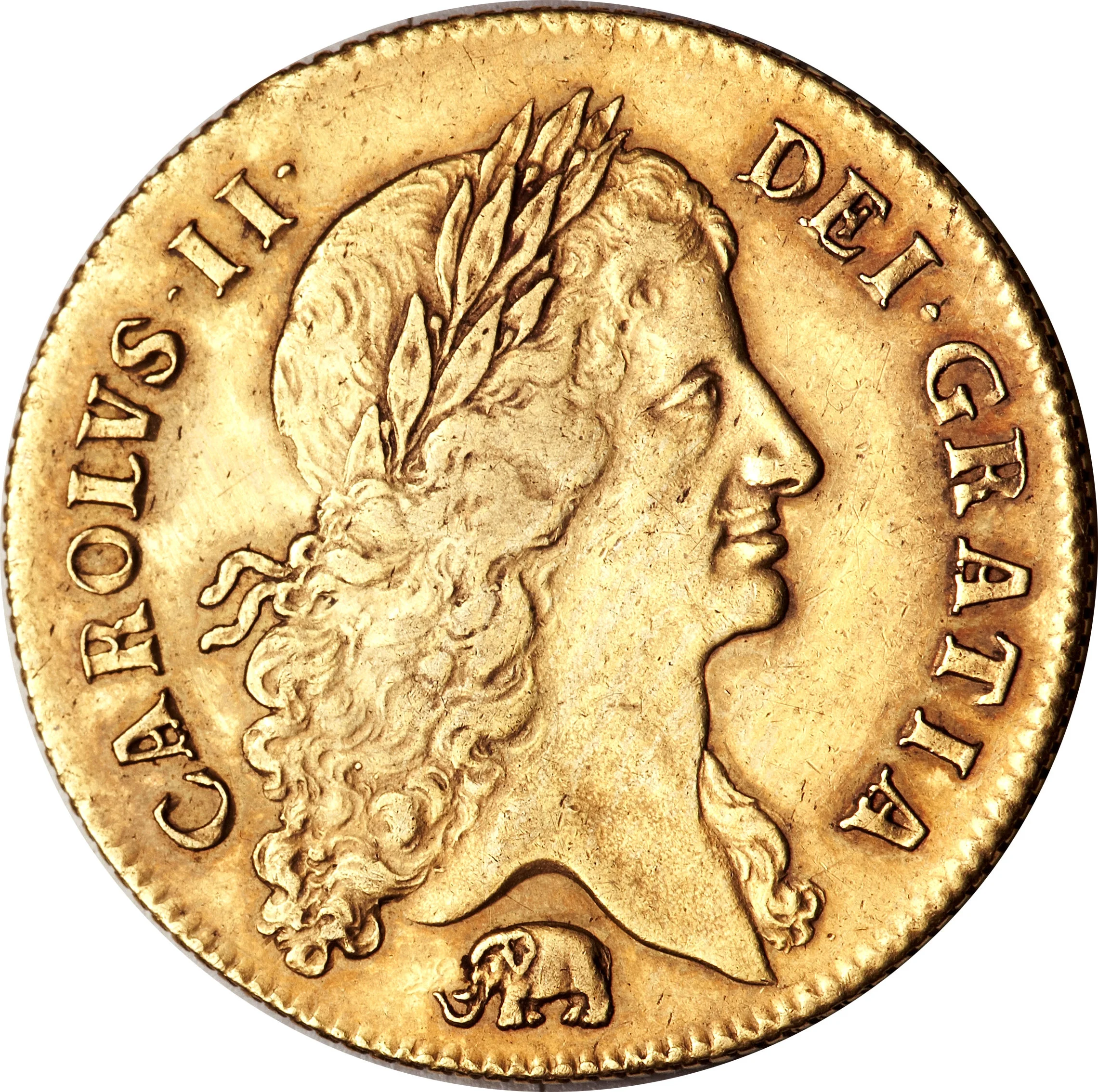
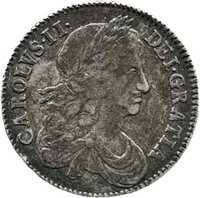
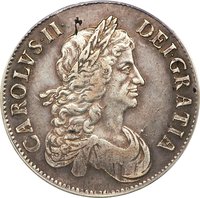
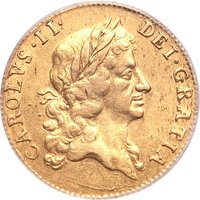
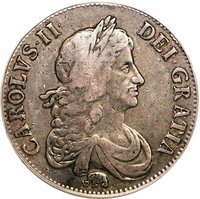
King Charles II laureate bust right, pointed truncation, legend around.
Inscription:
CAROLVS·II· DEI·GRATIA
Script: Latin
Engraver: John Roettier
Reverse
Description:
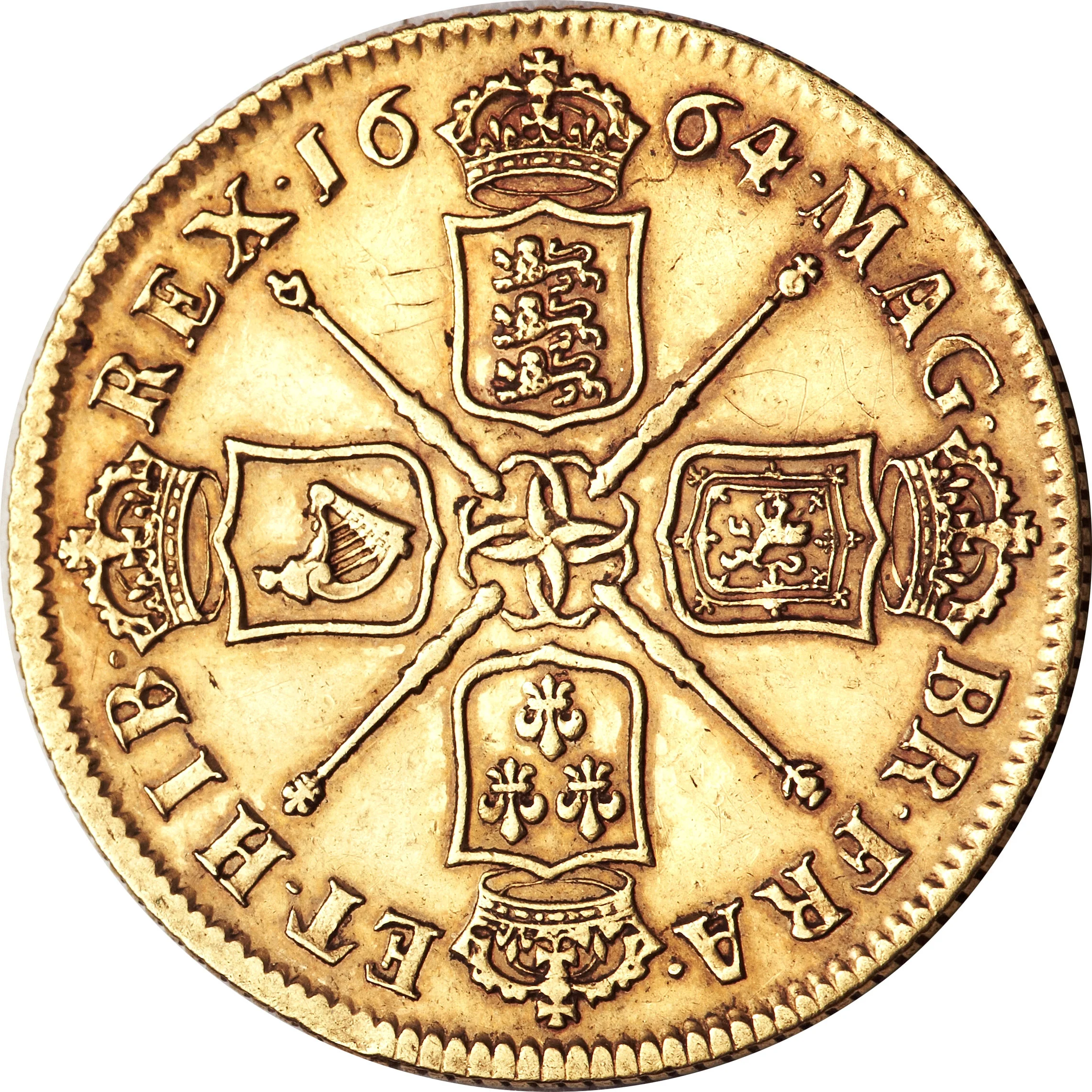
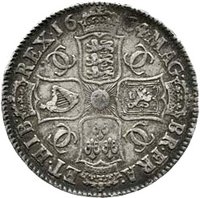
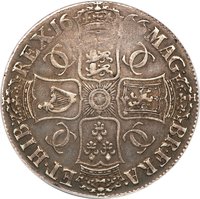
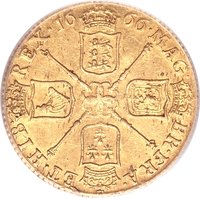
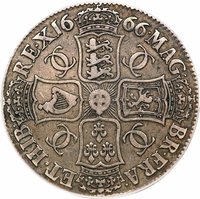
Crowned shields and interlinked C's flanked by sceptres, date above, legend around.
Inscription:
MAG· BR·FRA· ET·HIB· REX·16 64·
Script: Latin
Engraver: John Roettier
Edge
Mintings
| Year | Mint Mark | Mintage | Quality | Collection |
|---|---|---|---|---|
| 1664 | — | — | ||
| 1664 | — | — | BU | |
| 1665 | — | — | ||
| 1669 | — | — | ||
| 1671 | — | — | ||
| 1673 | — | — |
Historical background
In 1664, England’s currency system was a complex and often chaotic blend of physical coinage, credit, and government expediency. The foundation was supposed to be a bimetallic system of gold and silver coins, with the pound sterling (£) as the unit of account. However, the actual coins in circulation were a jumble of domestic and foreign issues, many clipped, worn, or counterfeit. The official mint price for silver was often below its market value, leading to the widespread export and melting down of full-weight silver coins. This left the economy reliant on a degraded and unreliable physical currency, which hampered trade and created daily uncertainty for merchants and the public.
The government of Charles II was acutely aware of these problems, and 1664 fell within a period of active monetary investigation and reform. Just three years earlier, in 1661, the Exchequer had resumed issuing tallies (notched sticks recording debts), reviving a medieval form of credit to manage royal finances. More significantly, plans were already being formulated for a major recoinage, which would eventually be enacted in the 1690s following the crisis of the Great Recoinage. The year 1664 itself saw the passage of "An Act for the Encouragement of Trade," which included provisions to prohibit the export of British woolen textiles, reflecting the mercantilist focus on accumulating precious metals by maintaining a positive trade balance.
Beyond official coinage, commerce was increasingly facilitated by private credit instruments, goldsmiths' notes, and bills of exchange. London goldsmiths, acting as early bankers, accepted deposits and issued promissory notes that circulated as money. This nascent banking system was beginning to provide a more stable medium of exchange than the physical coinage. Thus, the currency situation in 1664 was one of transition: a strained and archaic metallic system was visibly failing, while the financial innovations that would eventually lead to the establishment of the Bank of England in 1694 were slowly taking root in response to the coinage's inadequacies.
The government of Charles II was acutely aware of these problems, and 1664 fell within a period of active monetary investigation and reform. Just three years earlier, in 1661, the Exchequer had resumed issuing tallies (notched sticks recording debts), reviving a medieval form of credit to manage royal finances. More significantly, plans were already being formulated for a major recoinage, which would eventually be enacted in the 1690s following the crisis of the Great Recoinage. The year 1664 itself saw the passage of "An Act for the Encouragement of Trade," which included provisions to prohibit the export of British woolen textiles, reflecting the mercantilist focus on accumulating precious metals by maintaining a positive trade balance.
Beyond official coinage, commerce was increasingly facilitated by private credit instruments, goldsmiths' notes, and bills of exchange. London goldsmiths, acting as early bankers, accepted deposits and issued promissory notes that circulated as money. This nascent banking system was beginning to provide a more stable medium of exchange than the physical coinage. Thus, the currency situation in 1664 was one of transition: a strained and archaic metallic system was visibly failing, while the financial innovations that would eventually lead to the establishment of the Bank of England in 1694 were slowly taking root in response to the coinage's inadequacies.
Series: 1664 England circulation coins
✨ Legendary