

1 thaler – Java
Add to wishlist
Indonesia
Context
Material
Weight: 28.06 g
Silver Weight:: 23.37 g
Shape: Round
Composition: 83.3% Silver
Magnetic: No
Techniques: Milled, Countermarked
References
KM: #
Numista: #126496
Value
Bullion value: $59.50
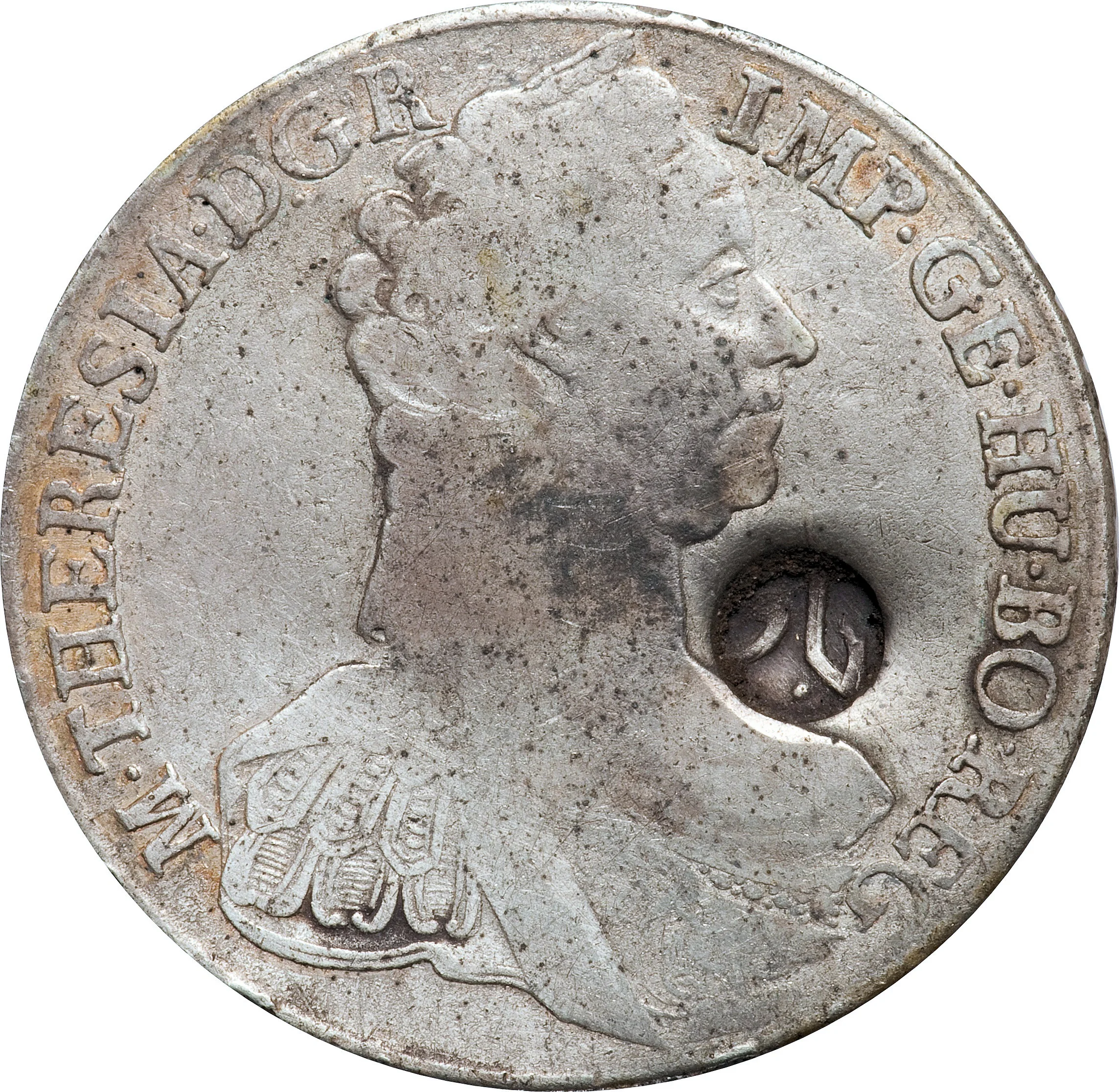
Obverse
Description:
Portrait right, legend split top and bottom. Arabic Java countermark.
Inscription:
M·THERESIA·D:G·R· IMP·GE·HU·BO·REG·
Script: Latin
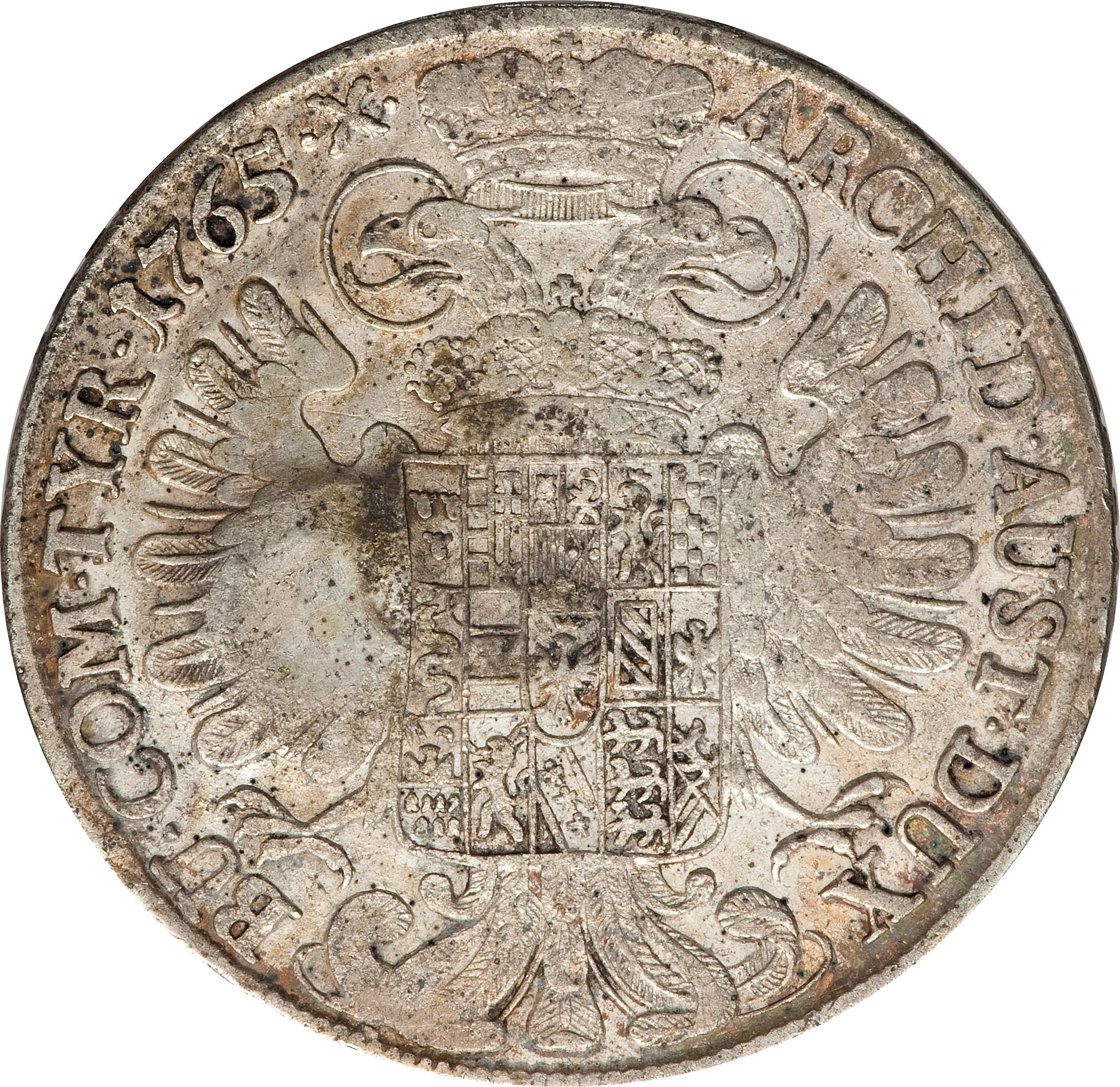
Reverse
Description:
Imperial eagle centered with a small Tyrolean shield.
Inscription:
ARCHID·AUST·DUX BU·COM·TYR·1765·X·
Script: Latin
Edge
Mintings
| Year | Mint Mark | Mintage | Quality | Collection |
|---|---|---|---|---|
| — | — | — |
Historical background
In 1747, the currency situation in Java was a complex and often chaotic system, reflecting the island's contested economic control between the Dutch East India Company (VOC) and various indigenous powers. The VOC, headquartered in Batavia, sought to impose monetary order by establishing its own currency as the standard. The primary coin was the rijksdaalder, alongside smaller denominations like stuivers and duiten. However, the Company's chronic shortage of specie (minted coin) meant that its own paper credit notes, known as kreditietbrieven, circulated widely, though they were often distrusted and subject to depreciation.
Alongside the official VOC system, a vast array of other currencies remained in active circulation, creating a bewildering monetary landscape. Spanish silver pesos (pieces of eight) and Japanese copper koban coins were widely used in international trade. Locally, various Javanese kingdoms, such as Mataram, continued to mint their own low-value tin and copper picis (cash coins), which were essential for daily market transactions among the Javanese populace. Furthermore, clipped, worn, and counterfeit coins of all types were endemic, leading to constant disputes over exchange rates and intrinsic metal value.
This monetary pluralism was a source of both friction and flexibility. The VOC attempted to fix exchange rates between these currencies through periodic ordinances, but in practice, market forces and regional variations prevailed. The situation was economically inefficient, burdening trade with complex calculations and exchange risks, but it also allowed different sectors of Javanese society to operate within their own monetary spheres. Ultimately, the currency chaos of 1747 underscored the VOC's incomplete hegemony and the persistent vitality of local economic networks, even as the Company struggled to assert a single, controlled monetary system to profit its colonial enterprise.
Alongside the official VOC system, a vast array of other currencies remained in active circulation, creating a bewildering monetary landscape. Spanish silver pesos (pieces of eight) and Japanese copper koban coins were widely used in international trade. Locally, various Javanese kingdoms, such as Mataram, continued to mint their own low-value tin and copper picis (cash coins), which were essential for daily market transactions among the Javanese populace. Furthermore, clipped, worn, and counterfeit coins of all types were endemic, leading to constant disputes over exchange rates and intrinsic metal value.
This monetary pluralism was a source of both friction and flexibility. The VOC attempted to fix exchange rates between these currencies through periodic ordinances, but in practice, market forces and regional variations prevailed. The situation was economically inefficient, burdening trade with complex calculations and exchange risks, but it also allowed different sectors of Javanese society to operate within their own monetary spheres. Ultimately, the currency chaos of 1747 underscored the VOC's incomplete hegemony and the persistent vitality of local economic networks, even as the Company struggled to assert a single, controlled monetary system to profit its colonial enterprise.
✨ Legendary