

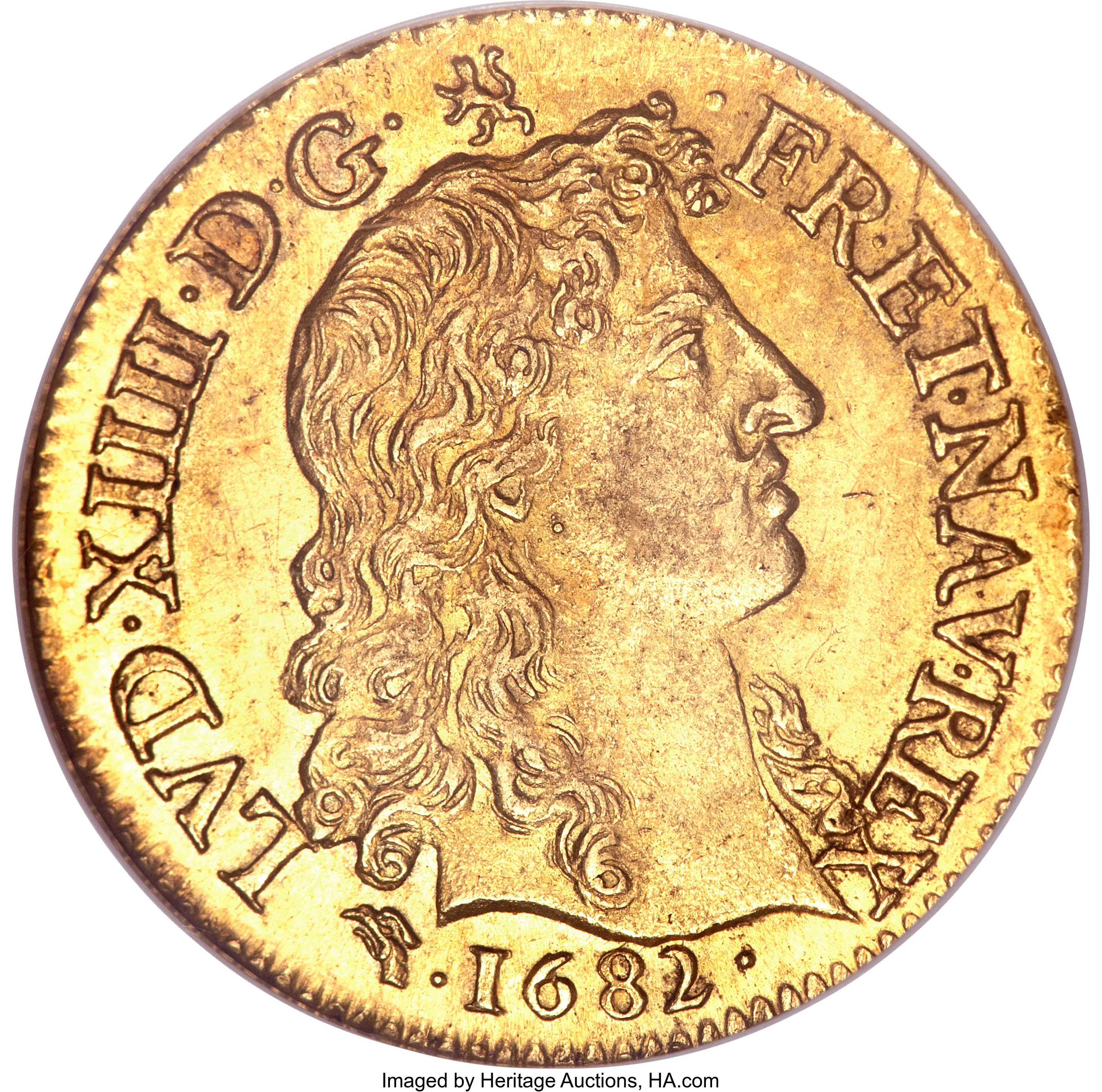
Obverse
Description:
Louis XIV large right-facing portrait.
Inscription:
LVD. XIIII. D. G. FR. ET. NAV. REX.
1682
1682
Script: Latin
Engravers: Jean Warin, François Warin
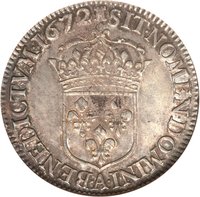
Reverse
Description:
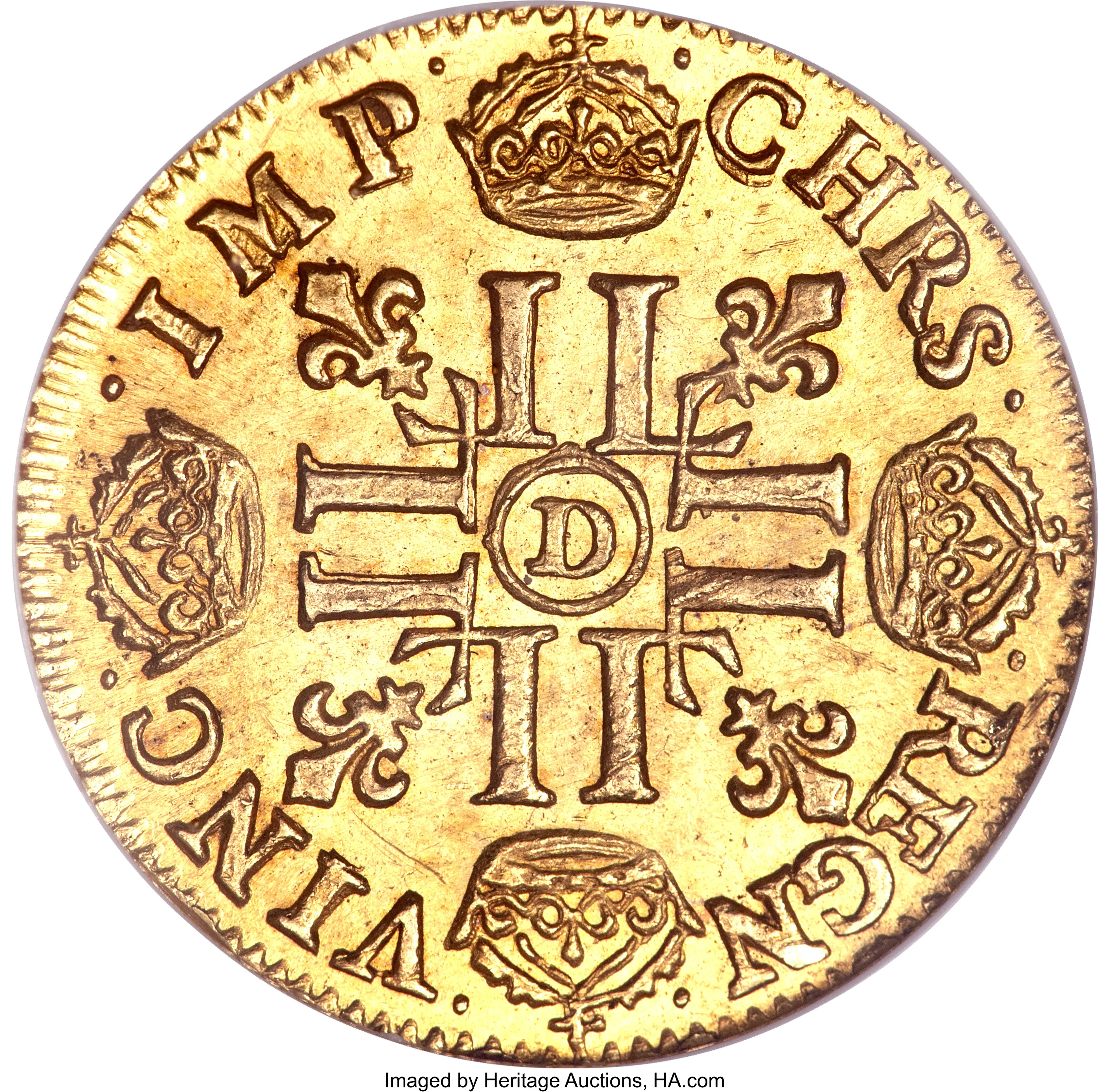
Cross of eight paired Ls, crowned, with lilies in corners; workshop mark in central circle.
Inscription:
CHRS.REGN.VINC.IMP.
D
D
Script: Latin
Engravers: Jean Warin, François Warin
Edge
Plain
Categories
| Person> Monarch |
| Symbol> Fleur-de-lis |
Mints
| Name | Mark |
|---|---|
| Monnaie de Paris | A |
| Lyon | D |
| Bayonne | L |
Mintings
Historical background
In 1668, France was under the monetary system of Louis XIV, who had recently assumed personal control of the kingdom following the death of his chief minister, Cardinal Mazarin, in 1661. The French currency landscape was complex and fragmented, operating on a bimetallic system based on both gold (louis d'or) and silver (écus and livres tournois). The livre tournois was the unit of account, but its value in actual coinage was unstable, as the monarchy frequently manipulated the official exchange rates between gold and silver or altered the metal content of coins to finance state expenditures, a practice known as augmentation or diminution.
This period, however, was one of relative stability and reform, largely due to the efforts of Jean-Baptiste Colbert, the Controller-General of Finances. Colbert was in the midst of implementing his mercantilist program to strengthen the French economy. A key pillar was monetary stability; he had worked to recall and recoin debased currency, standardize weights and measures, and establish a more reliable national coinage through the creation of modern mint facilities. The goal was to foster confidence in French currency for both domestic commerce and international trade, enhancing the king's power and revenue.
Despite Colbert's efforts, underlying tensions persisted. The temptation for the crown to resort to currency manipulation as a quick fiscal fix remained a constant threat, and the system was still vulnerable to fluctuations in the international bullion market. Furthermore, older, depreciated coins often remained in circulation alongside the new, causing confusion. Thus, while 1668 represented a high point of deliberate management under Colbert, it was a precarious stability built within a system that inherently lent itself to monarchical manipulation for political ends.
This period, however, was one of relative stability and reform, largely due to the efforts of Jean-Baptiste Colbert, the Controller-General of Finances. Colbert was in the midst of implementing his mercantilist program to strengthen the French economy. A key pillar was monetary stability; he had worked to recall and recoin debased currency, standardize weights and measures, and establish a more reliable national coinage through the creation of modern mint facilities. The goal was to foster confidence in French currency for both domestic commerce and international trade, enhancing the king's power and revenue.
Despite Colbert's efforts, underlying tensions persisted. The temptation for the crown to resort to currency manipulation as a quick fiscal fix remained a constant threat, and the system was still vulnerable to fluctuations in the international bullion market. Furthermore, older, depreciated coins often remained in circulation alongside the new, causing confusion. Thus, while 1668 represented a high point of deliberate management under Colbert, it was a precarious stability built within a system that inherently lent itself to monarchical manipulation for political ends.

✨ Legendary