

20 Tambala – Malawi
Malawi
Context
Years: 1989–1994
Issuer: Malawi 
Period:
(since 1966)
Ruler: Hastings Kamuzu Banda
Currency:
(since 1971)
Total mintage: 10,000,000
Material
References
KM: #Click to copy to clipboard11.2a
Numista: #12039
Value
Exchange value: 0.20 MWK
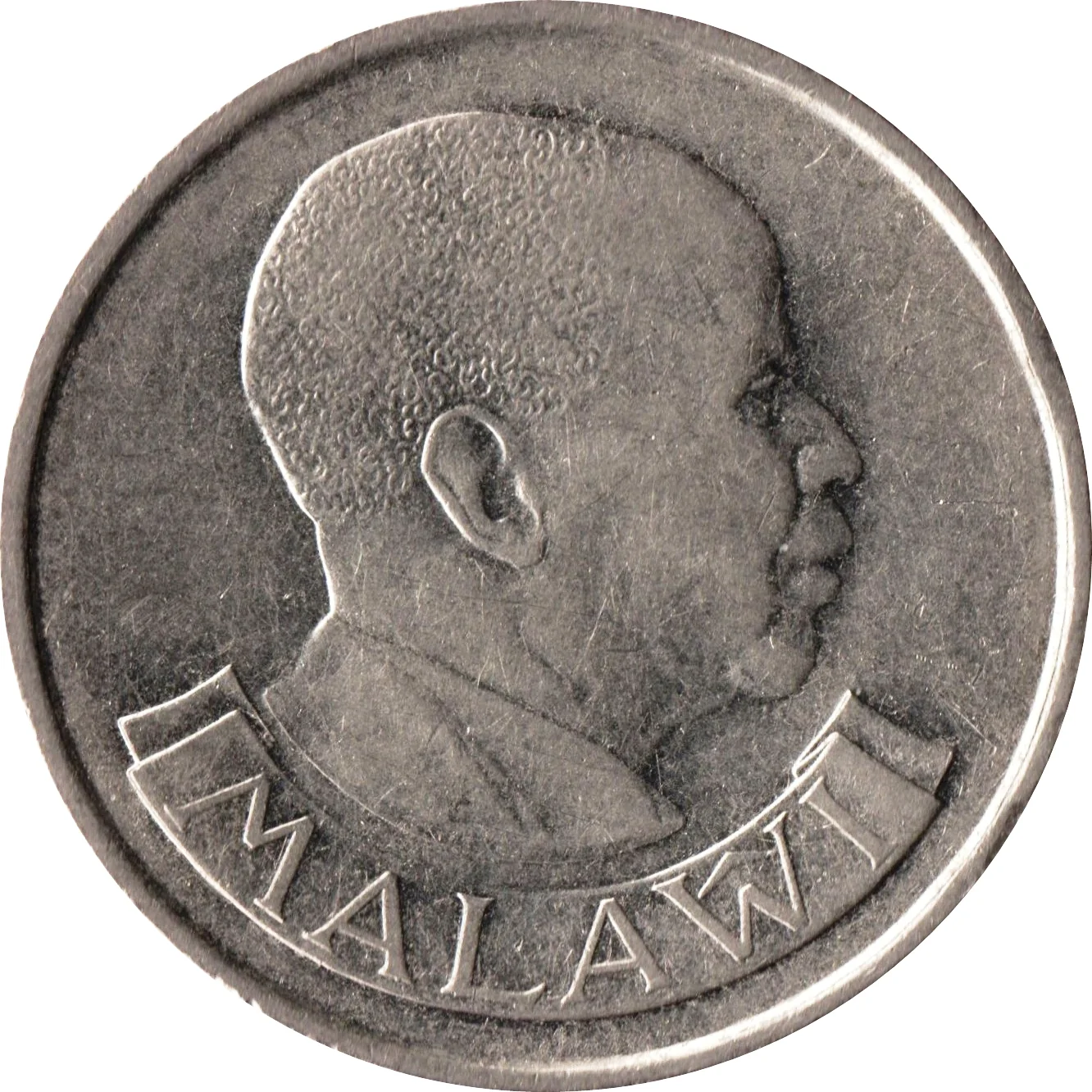
Obverse
Description:
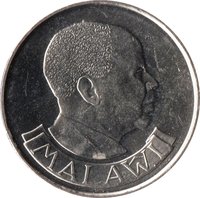
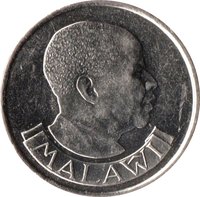
Portrait of Hastings Kamuzu Banda.
Inscription:
MALAŴI
Translation:
MALAWI
Script: Latin
Language: Chichewa
Designer: Paul Vincze
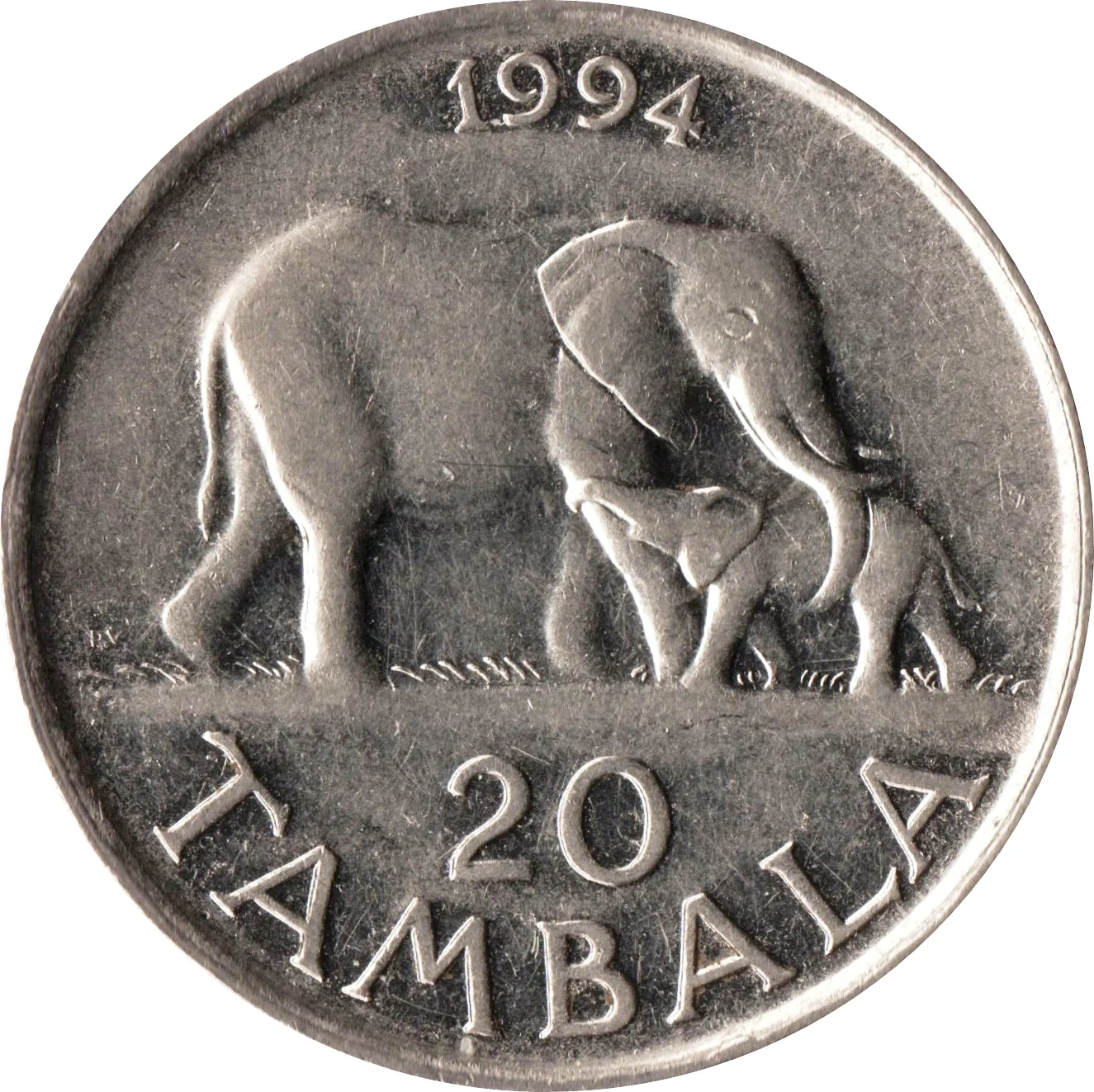
Reverse
Description:
African elephant and calf.
Inscription:
1994
20
TAMBALA
20
TAMBALA
Script: Latin
Designer: Paul Vincze
Edge
Reeded
Categories
| Animal> Elephant |
| Person> Politician |
Mints
| Name | Mark |
|---|---|
| Royal Mint | — |
Mintings
| Year | Mint Mark | Mintage | Quality | Collection |
|---|---|---|---|---|
| 1989 | — | 10,000,000 | ||
| 1994 | — | — |
Historical background
In 1989, Malawi's currency situation was characterized by a rigid and overvalued official exchange rate for the Malawian kwacha, maintained through strict exchange controls under the long-standing rule of President Hastings Kamuzu Banda. The country operated a complex multi-tier exchange rate system, with a primary official rate fixed by the Reserve Bank of Malawi and applied to essential imports like fuel, medicines, and agricultural inputs. However, this official rate did not reflect economic realities, creating a significant disparity with the parallel (black) market rate, where the kwacha traded at a substantial discount due to scarcity of foreign exchange and strong demand.
This overvaluation, coupled with a persistent current account deficit and heavy reliance on agricultural exports (notably tobacco, tea, and sugar), led to chronic foreign exchange shortages. The situation was exacerbated by deteriorating terms of trade, high external debt servicing costs, and inefficient state-owned enterprises. Consequently, legitimate businesses faced severe difficulties obtaining forex for necessary imports and equipment, stifling investment and growth. The thriving parallel market, while providing some liquidity, distorted the economy, encouraged corruption, and diverted resources away from formal channels.
The currency rigidity in 1989 was a symptom of broader macroeconomic imbalances and a highly controlled economic model. While providing short-term stability for a narrow range of government-prioritized transactions, the system imposed significant long-term costs by masking inefficiencies, discouraging exports, and creating a major bottleneck for the private sector. This unsustainable position set the stage for the structural adjustment programs and eventual devaluations and liberalization that would be reluctantly pursued in the early 1990s under pressure from the International Monetary Fund and World Bank.
This overvaluation, coupled with a persistent current account deficit and heavy reliance on agricultural exports (notably tobacco, tea, and sugar), led to chronic foreign exchange shortages. The situation was exacerbated by deteriorating terms of trade, high external debt servicing costs, and inefficient state-owned enterprises. Consequently, legitimate businesses faced severe difficulties obtaining forex for necessary imports and equipment, stifling investment and growth. The thriving parallel market, while providing some liquidity, distorted the economy, encouraged corruption, and diverted resources away from formal channels.
The currency rigidity in 1989 was a symptom of broader macroeconomic imbalances and a highly controlled economic model. While providing short-term stability for a narrow range of government-prioritized transactions, the system imposed significant long-term costs by masking inefficiencies, discouraging exports, and creating a major bottleneck for the private sector. This unsustainable position set the stage for the structural adjustment programs and eventual devaluations and liberalization that would be reluctantly pursued in the early 1990s under pressure from the International Monetary Fund and World Bank.
🌱 Common