

24 skilling – Norway
Add to wishlist
Norway
Context
Years: 1734–1735
Issuer: Norway
Ruler: Christian VI
Currency:
(1523—1746)
Demonetized: Yes
Total mintage: 273,100
Material
References
KM: #
Numista: #99776
Value
Bullion value: $12.86
Obverse
Description:
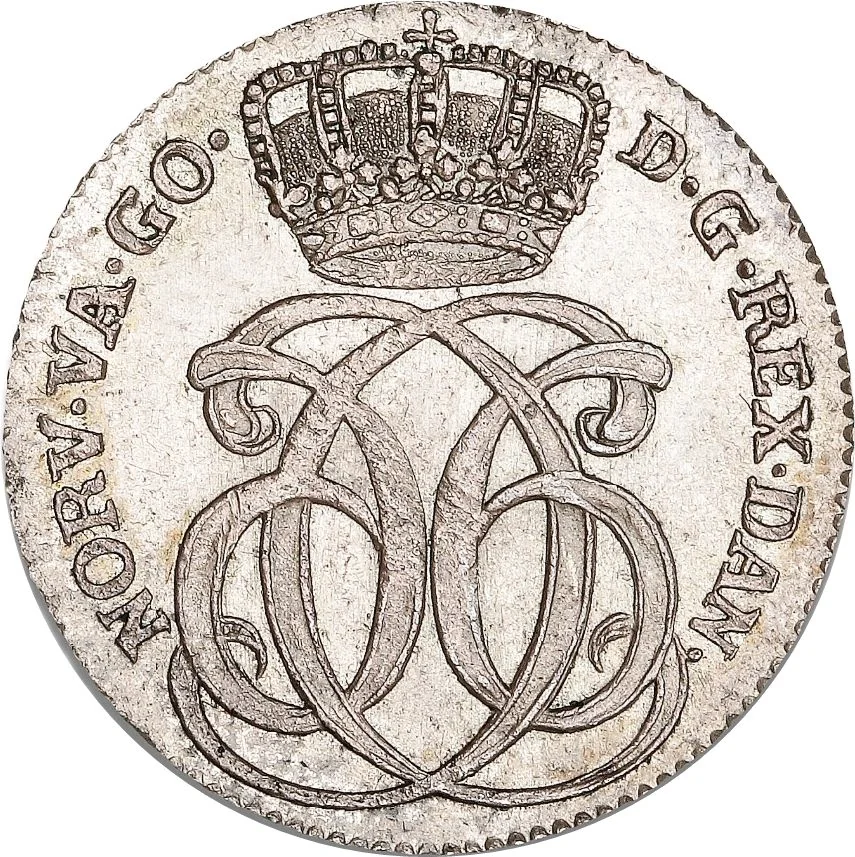
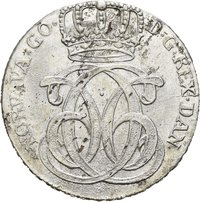
Crowned mirrored monogram of Christian VI. Inscription surrounds. Beaded edge.
Inscription:
D·G·REX·DAN· | NORV·VA·GO·
Script: Latin
Reverse
Description:
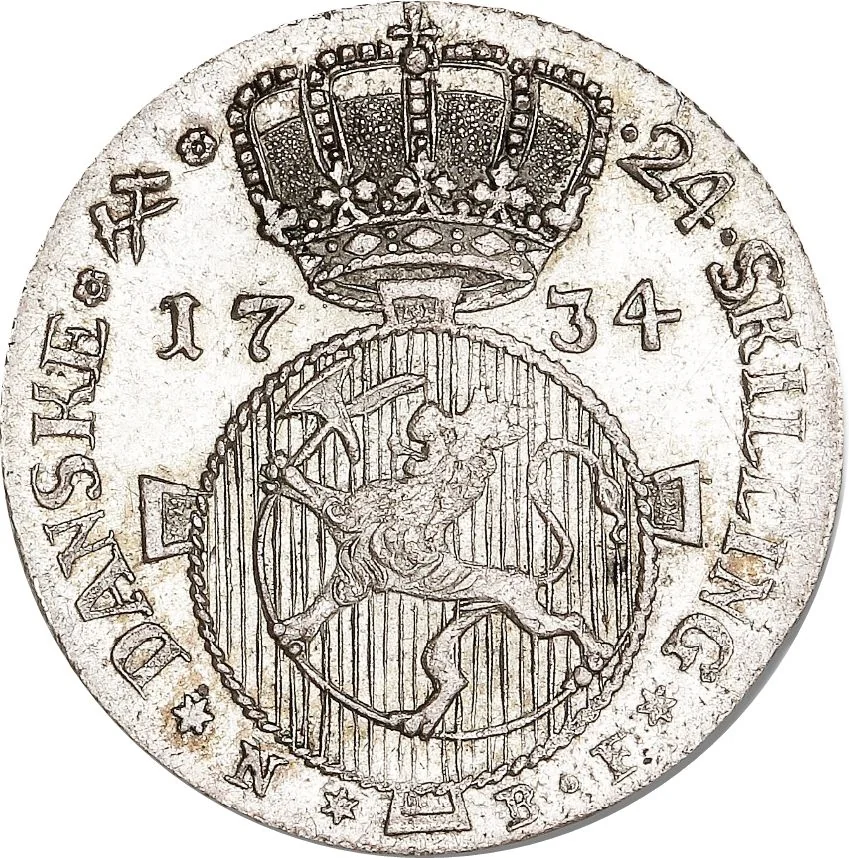
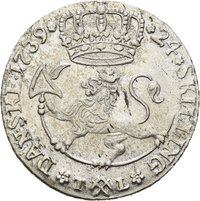
Crowned shield on a cross, containing a crowned lion with a halberd and vertical stripes. Inscription surrounds. Date divided by shield, mintmaster's initials by cross. Beaded edge.
Inscription:
·24·SKILLING | DANSKE🏵⚒🏵
17 | 34
🟌 N 🟌 | B · F 🟌
17 | 34
🟌 N 🟌 | B · F 🟌
Script: Latin
Edge
Mints
| Name | Mark |
|---|---|
| Norwegian Mint | — |
Mintings
| Year | Mint Mark | Mintage | Quality | Collection |
|---|---|---|---|---|
| 1734 | — | 273,100 | ||
| 1735 | — | — |
Historical background
In 1734, Norway was part of the Dano-Norwegian dual monarchy, governed from Copenhagen. The currency situation was complex and problematic, characterized by a severe shortage of official coinage in circulation. While the state minted speciesdaler (specie dollars) and smaller denominations, the vast majority of transactions for ordinary Norwegians were conducted using a bewildering array of credit notes, promissory notes, and commodity money. This scarcity of hard currency was a chronic issue, hampering trade and creating a reliance on unstable local credit systems.
The monetary system was officially on a silver standard, but the value of coins was often tied to the fluctuating kurantdaler, a unit of account used for bookkeeping and paper money. Furthermore, a significant amount of foreign coinage, particularly German and Dutch, circulated alongside domestic issues, adding to the confusion. The state attempted to control this by setting exchange rates, but the intrinsic silver content of foreign coins often differed, leading to Gresham's Law ("bad money drives out good money") in practice, where undervalued good silver coins were hoarded or exported.
This unstable environment culminated in a major monetary reform in 1736, just two years later. The background in 1734 was therefore one of mounting pressure for change. Economic growth was stifled by the lack of a reliable medium of exchange, and the existing system was ripe for the introduction of a more standardized paper currency. This set the stage for the establishment of Den Danske og Norske Speciebank in 1736, which began issuing regulated banknotes intended to stabilize the currency and stimulate commerce across the kingdom.
The monetary system was officially on a silver standard, but the value of coins was often tied to the fluctuating kurantdaler, a unit of account used for bookkeeping and paper money. Furthermore, a significant amount of foreign coinage, particularly German and Dutch, circulated alongside domestic issues, adding to the confusion. The state attempted to control this by setting exchange rates, but the intrinsic silver content of foreign coins often differed, leading to Gresham's Law ("bad money drives out good money") in practice, where undervalued good silver coins were hoarded or exported.
This unstable environment culminated in a major monetary reform in 1736, just two years later. The background in 1734 was therefore one of mounting pressure for change. Economic growth was stifled by the lack of a reliable medium of exchange, and the existing system was ripe for the introduction of a more standardized paper currency. This set the stage for the establishment of Den Danske og Norske Speciebank in 1736, which began issuing regulated banknotes intended to stabilize the currency and stimulate commerce across the kingdom.
✨ Legendary