

8 skilling – Norway
Add to wishlist
Norway
Context
Years: 1730–1735
Issuer: Norway
Ruler: Christian VI
Currency:
(1523—1746)
Demonetized: Yes
Total mintage: 6,600,400
References
KM: #
Numista: #99203
Obverse
Description:
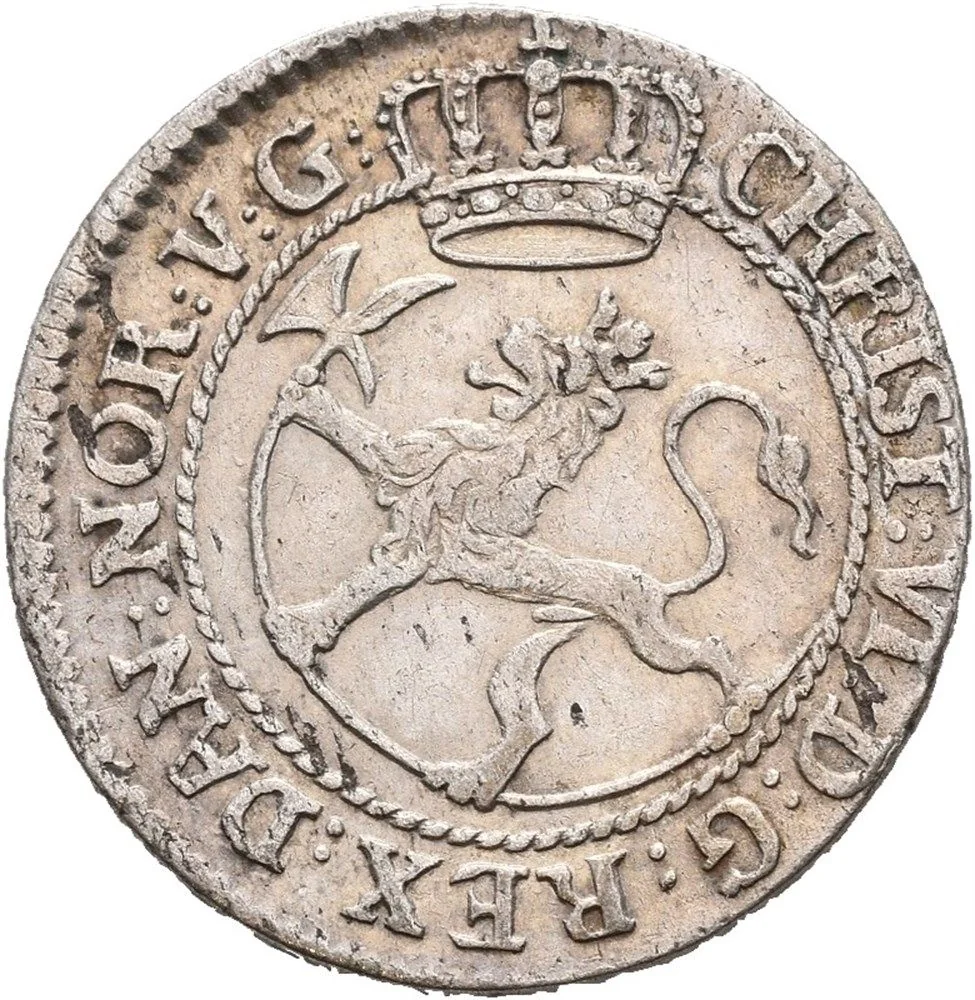
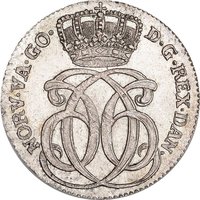
Norwegian lion facing left, crowned and holding an axe, within a beaded ring. A second crown above. Inscription surrounds the design, with a beaded outer border.
Inscription:
CHRIST:VI:D:G:REX:DAN:NOR:V:G:
Script: Latin
Reverse
Description:
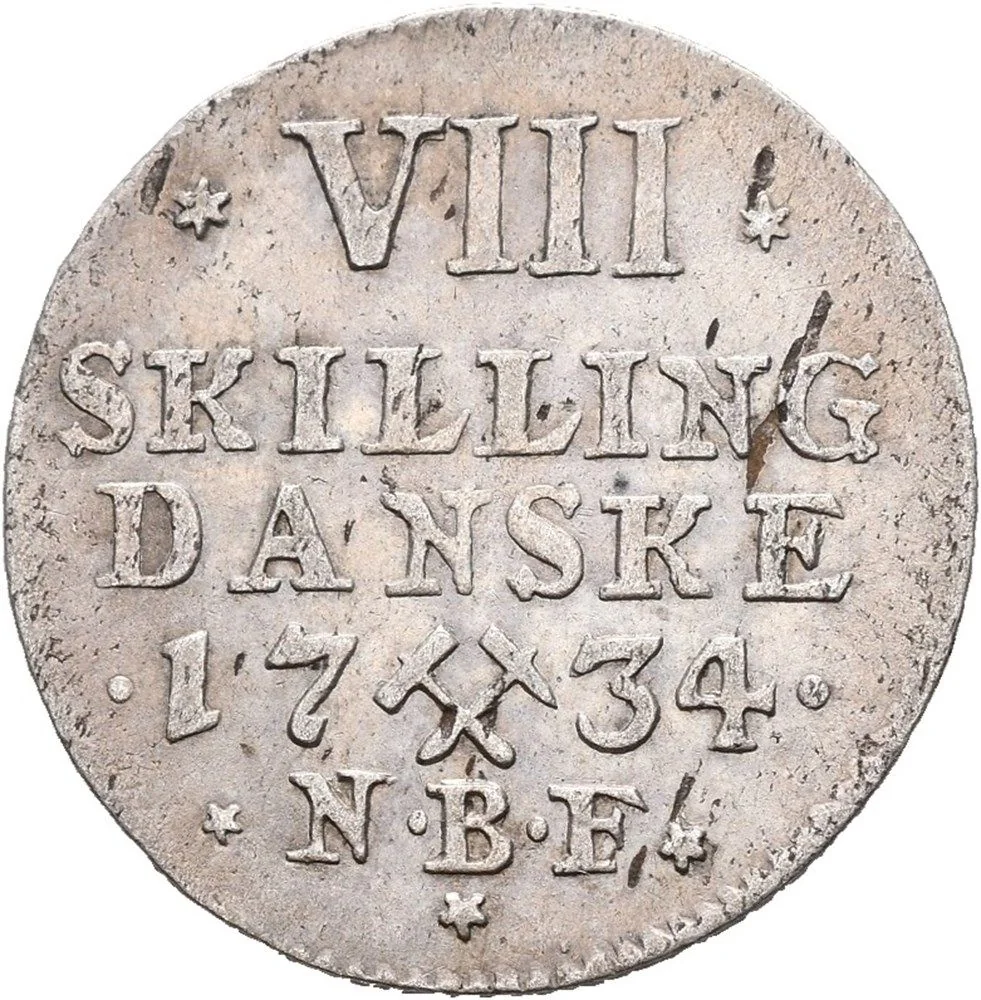
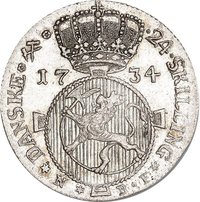
Value and date on four lines.
Date divided by mintmark.
Mintmaster's initials below.
Beaded edge.
Date divided by mintmark.
Mintmaster's initials below.
Beaded edge.
Inscription:
✶VIII✶
SKILLING
DANSKE
·17⚒34·
⋆N·B·F⋆
SKILLING
DANSKE
·17⚒34·
⋆N·B·F⋆
Script: Latin
Edge
Mints
| Name | Mark |
|---|---|
| Norwegian Mint | — |
Mintings
| Year | Mint Mark | Mintage | Quality | Collection |
|---|---|---|---|---|
| 1730 | — | 1,433,000 | ||
| 1731 | — | 1,143,000 | ||
| 1732 | — | 1,243,000 | ||
| 1733 | — | 1,342,000 | ||
| 1734 | — | 1,434,000 | ||
| 1735 | — | 5,400 |
Historical background
In 1730, Norway found itself in a complex monetary situation, operating under a shared monetary system with Denmark as part of the Dano-Norwegian dual monarchy. The official currency was the Danish rigsdaler, a silver-based coin divided into 96 skilling. However, the system was strained by a chronic shortage of official small-denomination coins, which severely hampered everyday trade and local commerce. This scarcity forced communities to rely on a confusing mix of older, worn-out coins, foreign currencies (like German and Dutch coins), and even primitive barter and commodity money, particularly in remote rural areas.
The root of the problem lay in the kingdom's persistent trade deficit, which caused an outflow of silver to settle international debts. Furthermore, the state mint in Copenhagen could not produce enough small change to meet the needs of the Norwegian economy. Attempts to address this, such as the introduction of low-value klipping tokens in the 1690s, had failed disastrously due to overproduction and counterfeiting, leading to a deep public distrust in token coinage. By 1730, the memory of this monetary collapse was still fresh, making both the government and the populace wary of new fiduciary solutions.
Consequently, the Norwegian economy in 1730 was characterized by monetary confusion and inefficiency. The lack of a reliable, standardized medium of exchange for small transactions stifled market activity and created significant practical difficulties for both merchants and the general population. This unstable environment set the stage for future, more successful monetary reforms later in the 18th century, which sought to establish a more robust and unified currency system for the kingdom.
The root of the problem lay in the kingdom's persistent trade deficit, which caused an outflow of silver to settle international debts. Furthermore, the state mint in Copenhagen could not produce enough small change to meet the needs of the Norwegian economy. Attempts to address this, such as the introduction of low-value klipping tokens in the 1690s, had failed disastrously due to overproduction and counterfeiting, leading to a deep public distrust in token coinage. By 1730, the memory of this monetary collapse was still fresh, making both the government and the populace wary of new fiduciary solutions.
Consequently, the Norwegian economy in 1730 was characterized by monetary confusion and inefficiency. The lack of a reliable, standardized medium of exchange for small transactions stifled market activity and created significant practical difficulties for both merchants and the general population. This unstable environment set the stage for future, more successful monetary reforms later in the 18th century, which sought to establish a more robust and unified currency system for the kingdom.
💎 Extremely Rare