

16 Skilling – Norway
Norway
Context
Years: 1715–1717
Issuer: Norway 
Ruler: Frederick IV
Currency:
(1523—1746)
Subdivision: 16 Skilling = 1 Mark
Demonetized: Yes
Total mintage: 1,502,000
Material
References
KM: #Click to copy to clipboard216
Numista: #99350
Value
Bullion value: $9.01
Obverse
Description:
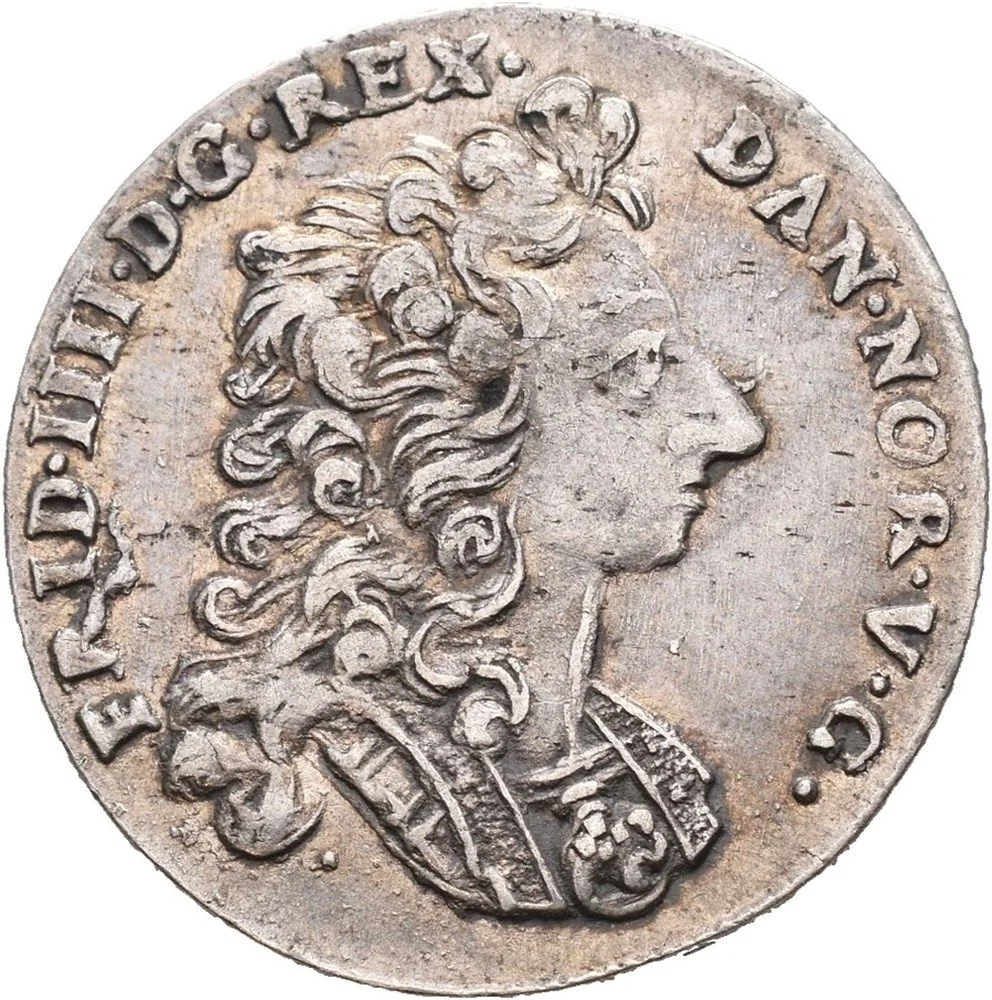
Bust of Frederik IV in armor, facing right, with long hair. Inscription encircles it, surrounded by a beaded edge.
Inscription:
FRID·IIII·D·G·REX· | DAN·NOR·V·G·
Script: Latin
Reverse
Description:
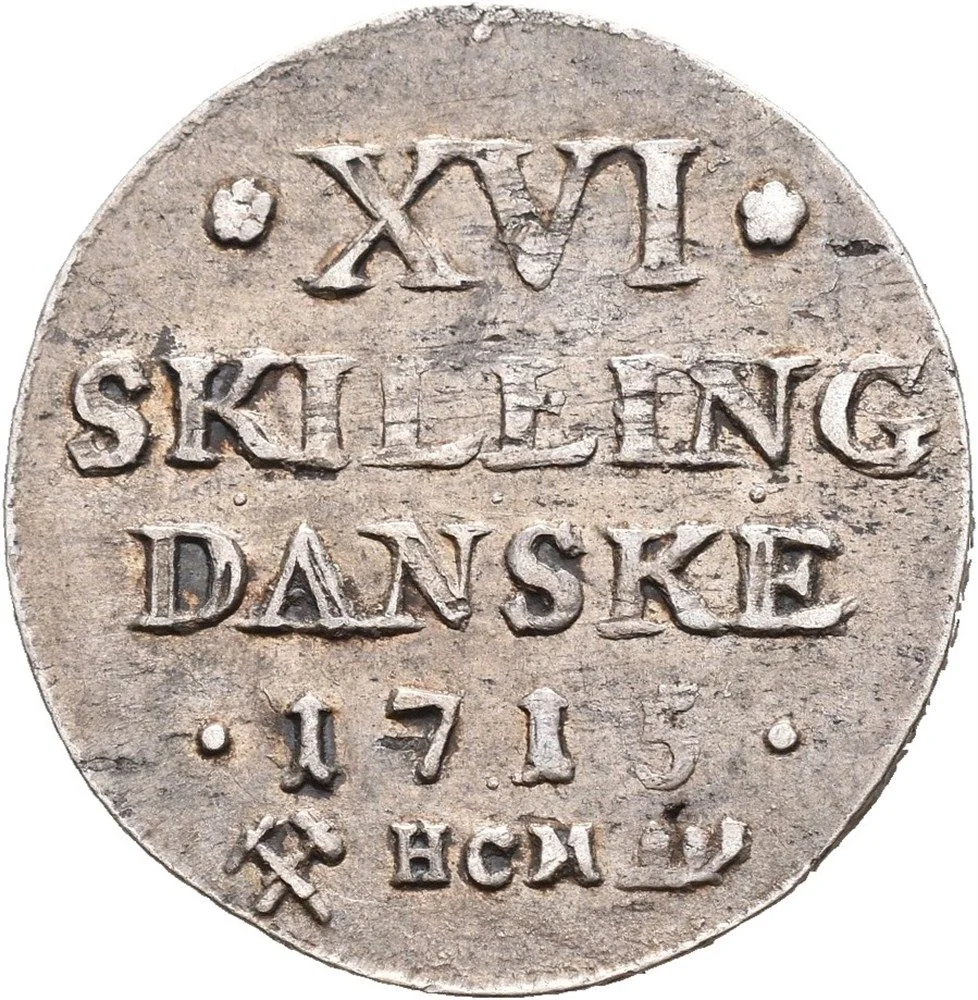
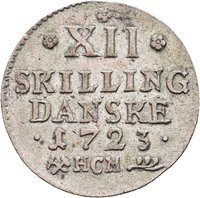
Value and date on four lines.
Mintmark and initials below.
Beaded edge ring.
Mintmark and initials below.
Beaded edge ring.
Inscription:
✿XVI✿
SKILLING
DANSKE
·1715·
⚒HCM🙛
SKILLING
DANSKE
·1715·
⚒HCM🙛
Script: Latin
Edge
Mints
| Name | Mark |
|---|---|
| Norwegian Mint | — |
Mintings
| Year | Mint Mark | Mintage | Quality | Collection |
|---|---|---|---|---|
| 1715 | — | 275,000 | ||
| 1716 | — | 725,000 | ||
| 1717 | — | 502,000 |
Historical background
In 1715, Norway found itself in a precarious monetary situation, deeply entangled in the economic aftermath of the Great Northern War (1700-1721). As a unified kingdom with Denmark under the Danish absolute monarchy, Norway's currency was the Danish rigsdaler. However, the war had placed an immense financial strain on the state, leading to severe coinage debasement. To fund the conflict, the government had repeatedly reduced the silver content in coins, causing a sharp decline in their intrinsic value and a corresponding surge in prices, which hit the Norwegian populace hard.
The domestic economy was further strained by a critical shortage of physical currency in circulation. While the state minted vast quantities of low-value skilling coins made of copper or heavily debased silver, high-value silver coins were hoarded or exported. This created a dysfunctional dual system: prices and large transactions were still nominally calculated in the stable kurant rigsdaler, but everyday commerce relied on a flood of depreciated token coins. The resulting confusion and loss of public trust in the coinage hampered trade and exacerbated economic hardship.
Consequently, 1715 was a year marked by monetary instability and inflationary pressure within a war-weary Norway. The situation underscored the kingdom's dependent economic position and the disruptive fiscal policies of the central government in Copenhagen. This crisis set the stage for subsequent, though only partially successful, monetary reforms later in the decade, as authorities grappled with restoring confidence in a currency system that had been severely compromised to fund the ongoing war effort.
The domestic economy was further strained by a critical shortage of physical currency in circulation. While the state minted vast quantities of low-value skilling coins made of copper or heavily debased silver, high-value silver coins were hoarded or exported. This created a dysfunctional dual system: prices and large transactions were still nominally calculated in the stable kurant rigsdaler, but everyday commerce relied on a flood of depreciated token coins. The resulting confusion and loss of public trust in the coinage hampered trade and exacerbated economic hardship.
Consequently, 1715 was a year marked by monetary instability and inflationary pressure within a war-weary Norway. The situation underscored the kingdom's dependent economic position and the disruptive fiscal policies of the central government in Copenhagen. This crisis set the stage for subsequent, though only partially successful, monetary reforms later in the decade, as authorities grappled with restoring confidence in a currency system that had been severely compromised to fund the ongoing war effort.
💎 Extremely Rare