

4 skilling – Norway
Add to wishlist
Norway
Context
Year: 1788
Issuer: Norway
Ruler: Christian VII
Currency:
(1746—1814)
Demonetized: Yes
Total mintage: 375,300
References
KM: #
Numista: #99119
Obverse
Description:
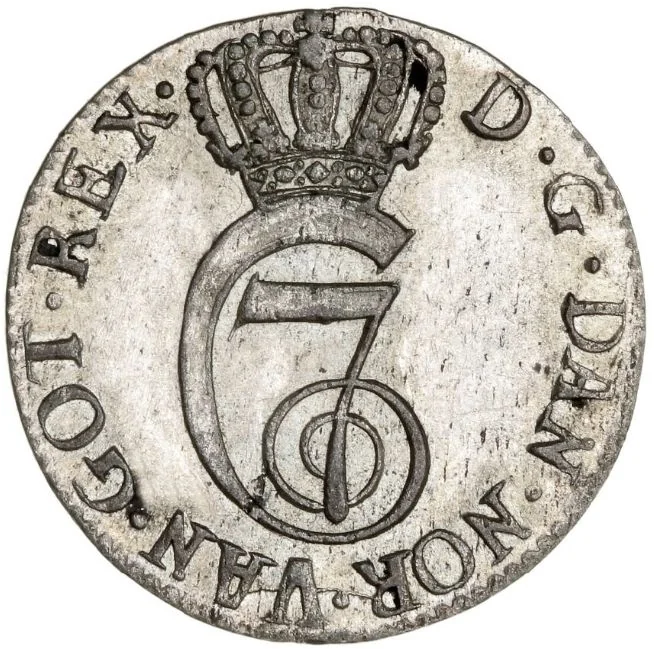
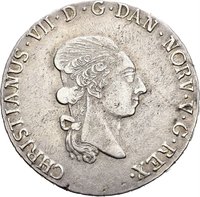
Mirrored monogram of Christian VII within inscription. Beaded edge.
Inscription:
D · G · DAN · NOR · VAN · GOT · REX ·
Script: Latin
Reverse
Description:
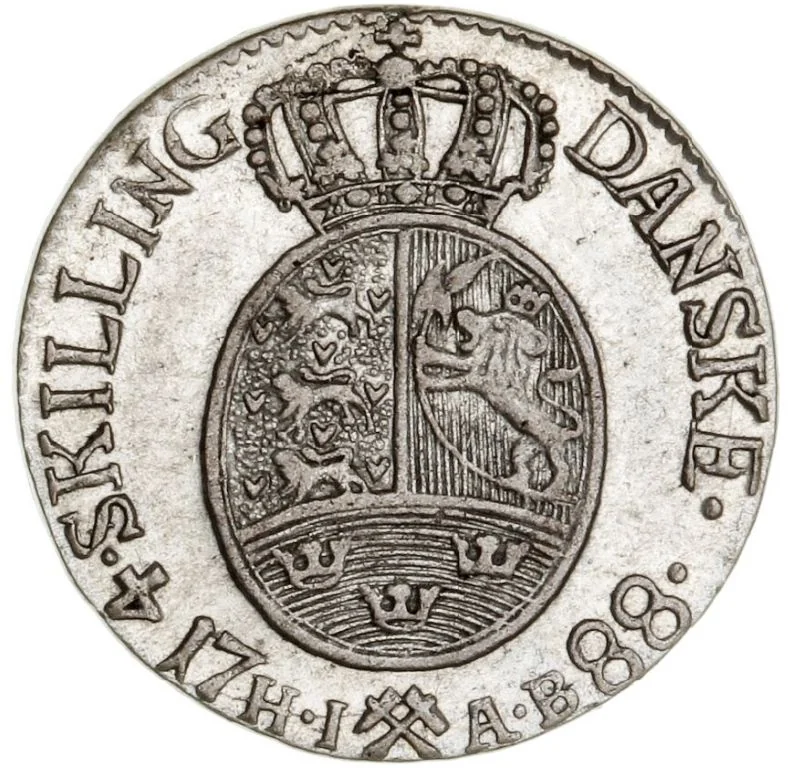
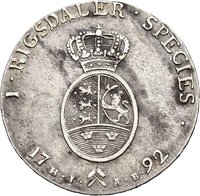
Danish, Norwegian, and Holstein crowned arms on a shield. Inscription surrounds. Date and mintmaster initials flank mintmark below. Beaded edge.
Inscription:
4·SKILLING | DANSKE·
17 H·I ⚒ A·B 88·
17 H·I ⚒ A·B 88·
Script: Latin
Edge
Mints
| Name | Mark |
|---|---|
| Norwegian Mint | — |
Mintings
| Year | Mint Mark | Mintage | Quality | Collection |
|---|---|---|---|---|
| 1788 | — | 375,300 |
Historical background
In 1788, Norway, then in a union with Denmark under the Danish crown, operated within a complex and strained monetary system. The official currency was the Danish rigsdaler, but the economy relied heavily on a chronic shortage of physical specie (coins), leading to widespread use of credit notes issued by the government and private banks. These notes, particularly those from the Kurantbanken (the government's circulating credit bank), formed the backbone of daily transactions, but their value was unstable and often depreciated against silver, creating a dual system of "current money" (notes) and "specie money" (silver).
The situation was exacerbated by Denmark-Norway's involvement in the Russo-Swedish War (1788–1790), which placed severe fiscal pressure on the state. To finance the war, the government increased the issuance of Kurantbank notes without sufficient silver backing, leading to inflation and a growing distrust in paper money. This period saw a pronounced "agio," a premium paid to exchange paper notes for scarce silver coins, which fluctuated and reflected the declining confidence in the paper currency.
Consequently, merchants and the public faced significant uncertainty in trade and contracts. Prices were often quoted in both currency units, and debt repayment could become a contentious issue depending on whether it was settled in devalued notes or valued silver. This fragile and inflationary environment highlighted the structural weaknesses of the union's finances and set the stage for future monetary reforms in the early 19th century, ultimately contributing to Norway's establishment of its own central bank, Norges Bank, in 1816.
The situation was exacerbated by Denmark-Norway's involvement in the Russo-Swedish War (1788–1790), which placed severe fiscal pressure on the state. To finance the war, the government increased the issuance of Kurantbank notes without sufficient silver backing, leading to inflation and a growing distrust in paper money. This period saw a pronounced "agio," a premium paid to exchange paper notes for scarce silver coins, which fluctuated and reflected the declining confidence in the paper currency.
Consequently, merchants and the public faced significant uncertainty in trade and contracts. Prices were often quoted in both currency units, and debt repayment could become a contentious issue depending on whether it was settled in devalued notes or valued silver. This fragile and inflationary environment highlighted the structural weaknesses of the union's finances and set the stage for future monetary reforms in the early 19th century, ultimately contributing to Norway's establishment of its own central bank, Norges Bank, in 1816.
💎 Extremely Rare