

1 Skilling – Norway
Norway
Context
Years: 1782–1786
Issuer: Norway 
Ruler: Christian VII
Currency:
(1746—1814)
Demonetized: Yes
Total mintage: 1,026,900
Material
References
KM: #Click to copy to clipboard245a
Numista: #81301
Obverse
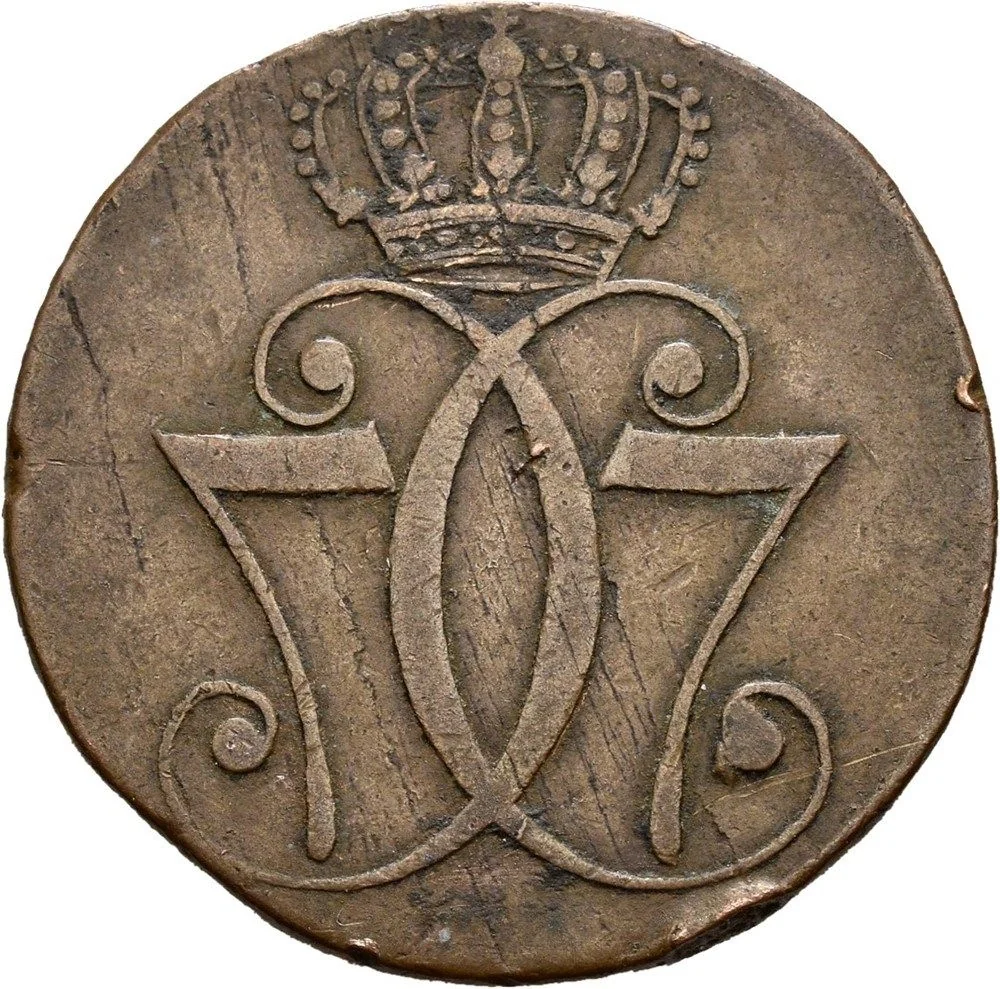
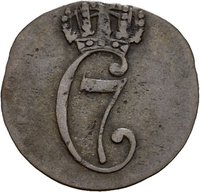
Description:
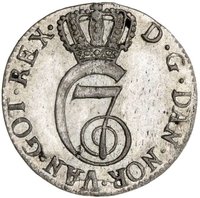
Crowned mirrored monogram of Christian VII. Beaded rim.
Inscription:
C7
Script: Latin
Engravers: Andreas Jonsen Lunde, Nicolai Wilhelm Wright
Reverse
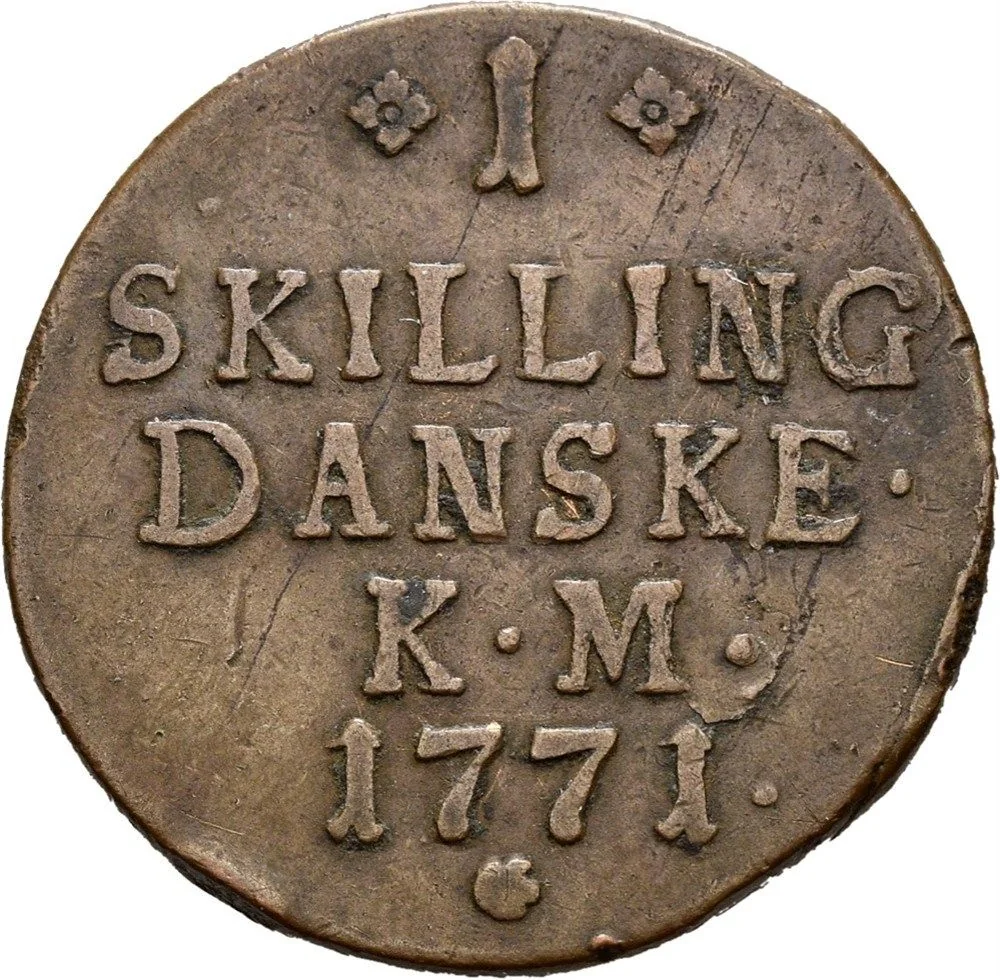
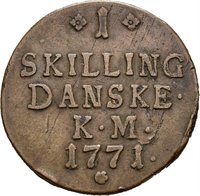
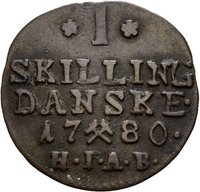
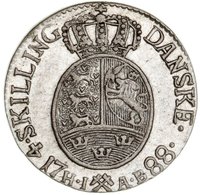
Description:
Value and date.
Beaded rim ring.
Beaded rim ring.
Inscription:
⬦I⬦
SKILLING
DANSKE·
K·M·
1771·
✿
SKILLING
DANSKE·
K·M·
1771·
✿
Script: Latin
Engravers: Andreas Jonsen Lunde, Nicolai Wilhelm Wright
Edge
Mints
| Name | Mark |
|---|---|
| Norwegian Mint | — |
Mintings
| Year | Mint Mark | Mintage | Quality | Collection |
|---|---|---|---|---|
| — | — | 786,900 | ||
| 1784 | — | 240,000 |
Historical background
In 1782, the Kingdom of Denmark-Norway was grappling with a severe and complex currency crisis, rooted in decades of fiscal strain. The state had financed its involvement in expensive wars, particularly the Great Northern War (1700-1721) and more recent conflicts, primarily by printing vast quantities of paper money known as kurantdaler. This currency was not backed by silver, leading to a drastic loss of value and rampant inflation. By the 1780s, the kurantdaler had depreciated to roughly one-fourth of its face value in silver, creating a chaotic monetary system with a wide gap between the official and market exchange rates.
The situation created profound economic distress within Norway, which shared a currency and central bank (the Danish Rigsbank) with Denmark. Merchants and the public faced uncertainty and loss of purchasing power, while international trade was hampered by the unreliable currency. A critical problem was the existence of two parallel systems: the devalued paper kurantdaler used domestically and the stable silver riksdaler specie required for foreign transactions. This duality encouraged speculation and hoarding of silver, further draining the kingdom's precious metal reserves and undermining economic stability.
Recognizing the untenable situation, the government in Copenhagen initiated a major monetary reform in 1782, spearheaded by Finance Minister Ernst Schimmelmann. The key measure was the establishment of the Norges Banks Kurantkontor in Trondheim—a branch of the Danish central bank authorized to issue new, credible banknotes in Norway. This was a significant step toward providing Norway with a more stable and locally administered currency, aiming to restore public confidence, curb inflation, and facilitate commerce, laying early groundwork for Norway's future independent monetary system.
The situation created profound economic distress within Norway, which shared a currency and central bank (the Danish Rigsbank) with Denmark. Merchants and the public faced uncertainty and loss of purchasing power, while international trade was hampered by the unreliable currency. A critical problem was the existence of two parallel systems: the devalued paper kurantdaler used domestically and the stable silver riksdaler specie required for foreign transactions. This duality encouraged speculation and hoarding of silver, further draining the kingdom's precious metal reserves and undermining economic stability.
Recognizing the untenable situation, the government in Copenhagen initiated a major monetary reform in 1782, spearheaded by Finance Minister Ernst Schimmelmann. The key measure was the establishment of the Norges Banks Kurantkontor in Trondheim—a branch of the Danish central bank authorized to issue new, credible banknotes in Norway. This was a significant step toward providing Norway with a more stable and locally administered currency, aiming to restore public confidence, curb inflation, and facilitate commerce, laying early groundwork for Norway's future independent monetary system.
🌟 Limited