

1 speciedaler – Norway
Add to wishlist
Norway
Context
Years: 1791–1792
Issuer: Norway
Ruler: Christian VII
Currency:
(1746—1814)
Demonetized: Yes
Total mintage: 104,500
Material
References
KM: #
Numista: #100312
Value
Bullion value: $62.01
Obverse
Description:
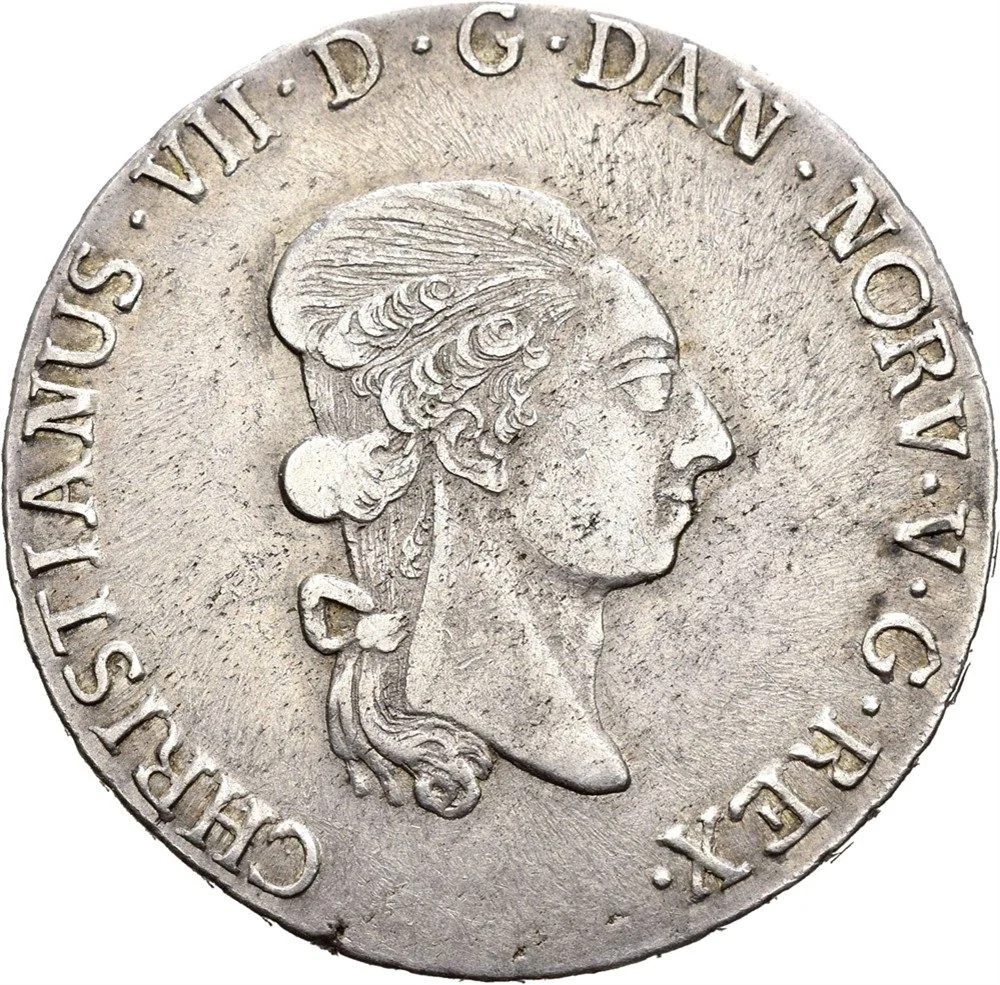
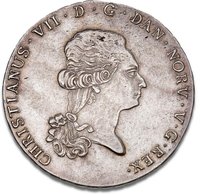
Bust of King Christian VII facing right, with long hair, encircled by an inscription.
Inscription:
CHRISTIANUS · VII · D · G · DAN · NORV · V · G · REX ·
Script: Latin
Engraver: Jesper Johansen Holm
Reverse
Description:
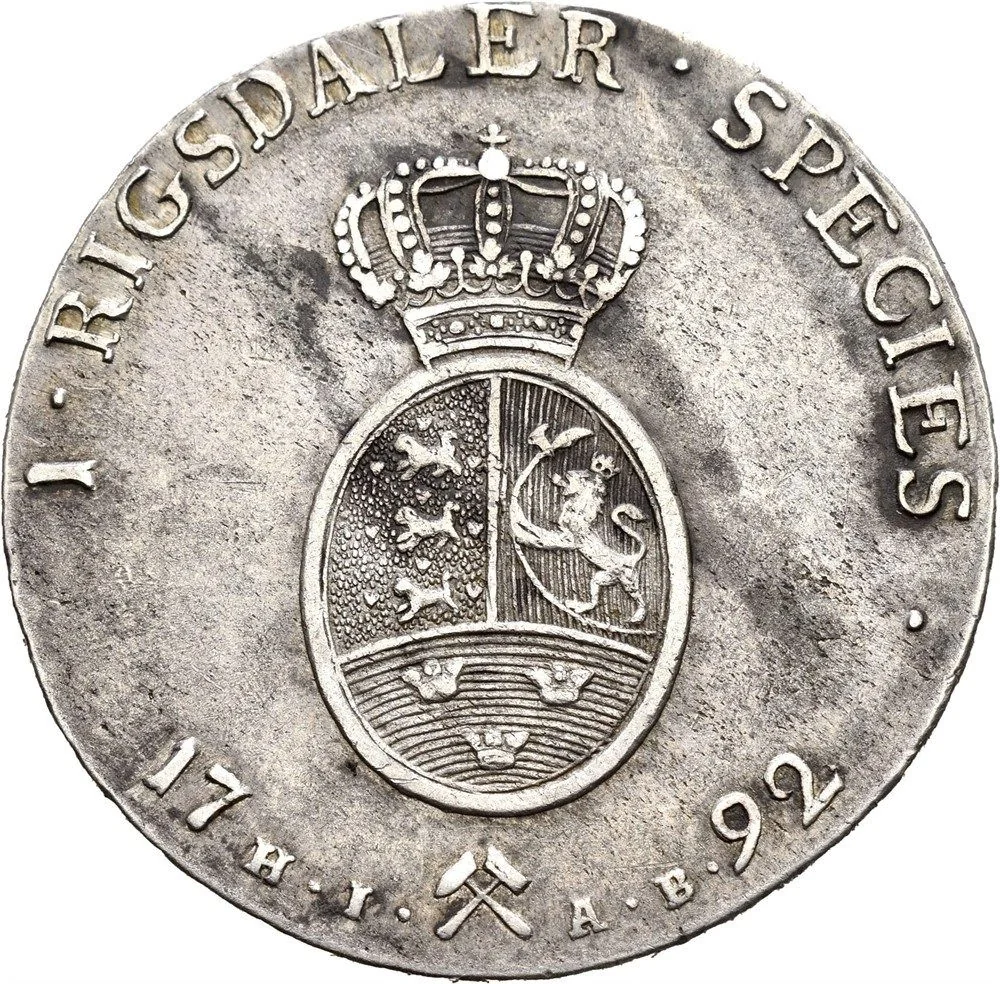
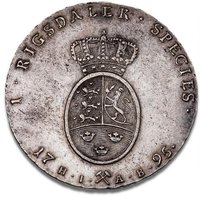
Danish, Norwegian, and Holstein arms in a crowned shield. Inscription surrounds. Date and mintmaster initials flank mintmark below.
Inscription:
· 1 · RIGSDALER · SPECIES ·
17·H·I·⚒·A·B·92
17·H·I·⚒·A·B·92
Script: Latin
Engraver: Jesper Johansen Holm
Edge
Mints
| Name | Mark |
|---|---|
| Norwegian Mint | — |
Mintings
| Year | Mint Mark | Mintage | Quality | Collection |
|---|---|---|---|---|
| 1791 | — | — | BU | |
| 1791 | B | 54,500 | BU | |
| 1791 | H | — | BU | |
| 1792 | — | 50,000 |
Historical background
In 1791, Norway existed in a complex monetary union with Denmark under the Danish-Norwegian monarchy. The official currency was the Danish rigsdaler, a silver-based coin divided into 96 skilling. However, the system was strained and inefficient. A chronic shortage of small change plagued everyday commerce, leading to widespread use of fragmented coins, private token money issued by merchants, and even physical goods like dried fish being used for minor transactions, particularly in rural areas.
This instability was exacerbated by the broader European economic climate. The late 18th century was a period of inflationary pressure and monetary experimentation, influenced by events like the French Revolution. While Norway itself was not at war, its economy was deeply affected by Denmark-Norway's foreign policy and the resulting trade disruptions. The state's finances were also burdened by the costs of maintaining a neutral stance amidst great power conflicts, which limited its ability to reform the currency system effectively.
Consequently, 1791 fell within a prolonged period of monetary dissatisfaction that would eventually lead to significant reform. Just a few years later, in 1797, the Danish-Norwegian state would establish the Rigsbank in Copenhagen and issue the first proper paper money for use in both kingdoms. Therefore, the situation in 1791 can be characterized as the tense prelude to this change—a system still officially tied to silver but struggling with practicality, liquidity, and the pressures of a changing Atlantic economy, highlighting the need for a modernized financial infrastructure.
This instability was exacerbated by the broader European economic climate. The late 18th century was a period of inflationary pressure and monetary experimentation, influenced by events like the French Revolution. While Norway itself was not at war, its economy was deeply affected by Denmark-Norway's foreign policy and the resulting trade disruptions. The state's finances were also burdened by the costs of maintaining a neutral stance amidst great power conflicts, which limited its ability to reform the currency system effectively.
Consequently, 1791 fell within a prolonged period of monetary dissatisfaction that would eventually lead to significant reform. Just a few years later, in 1797, the Danish-Norwegian state would establish the Rigsbank in Copenhagen and issue the first proper paper money for use in both kingdoms. Therefore, the situation in 1791 can be characterized as the tense prelude to this change—a system still officially tied to silver but struggling with practicality, liquidity, and the pressures of a changing Atlantic economy, highlighting the need for a modernized financial infrastructure.
✨ Legendary