

2 Skilling – Norway
Norway
Context
Years: 1742–1745
Issuer: Norway 
Ruler: Christian VI
Currency:
(1523—1746)
Demonetized: Yes
Total mintage: 4,100
References
KM: #Click to copy to clipboard235
Numista: #99112
Obverse
Description:
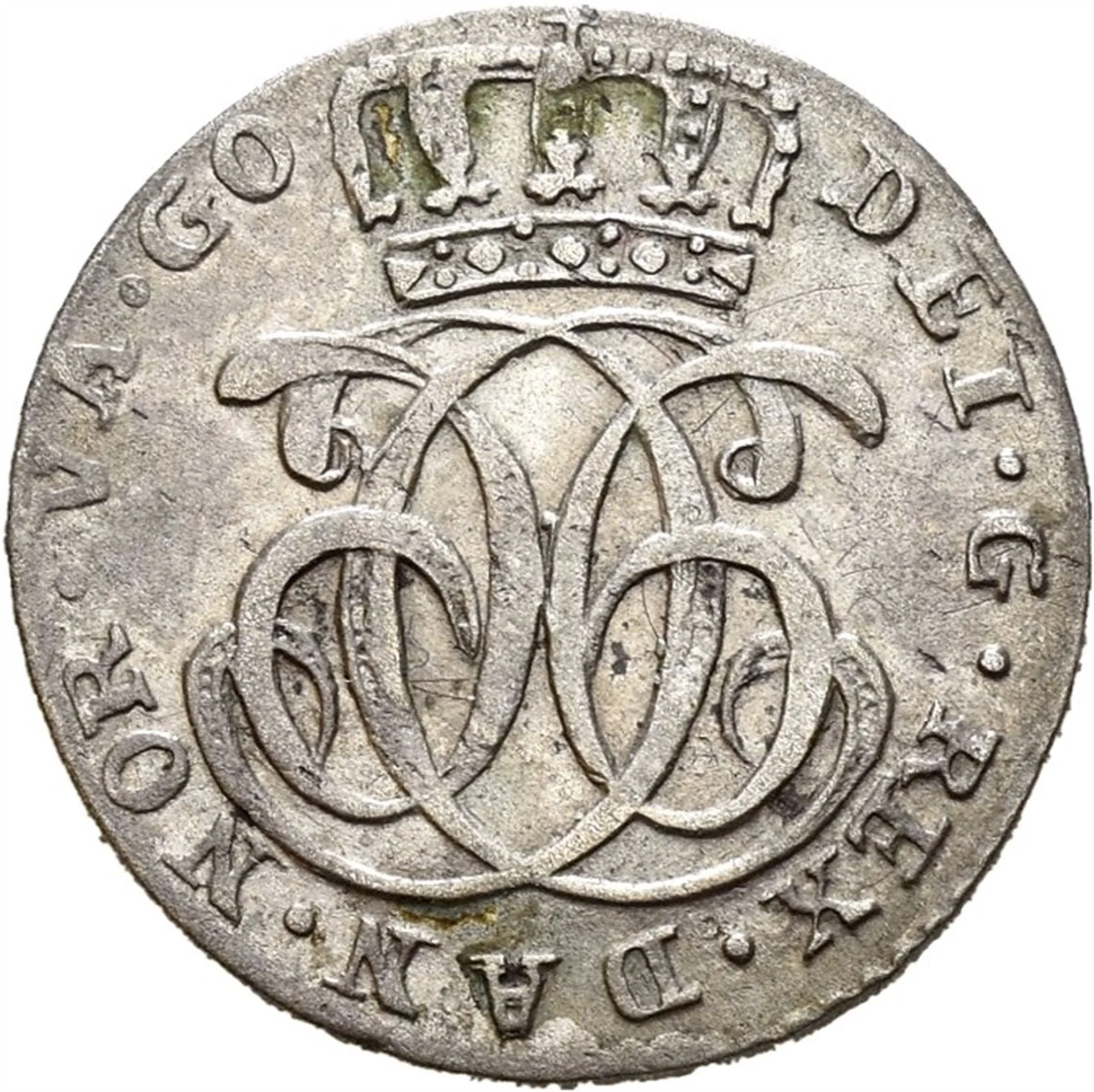
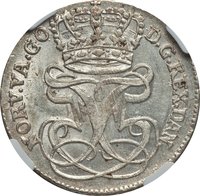
Crowned mirrored monogram of Christian VI. Inscription surrounds. Beaded edge.
Inscription:
DEI·G·REX·DAN·NOR·VA·GO·
Script: Latin
Reverse
Description:
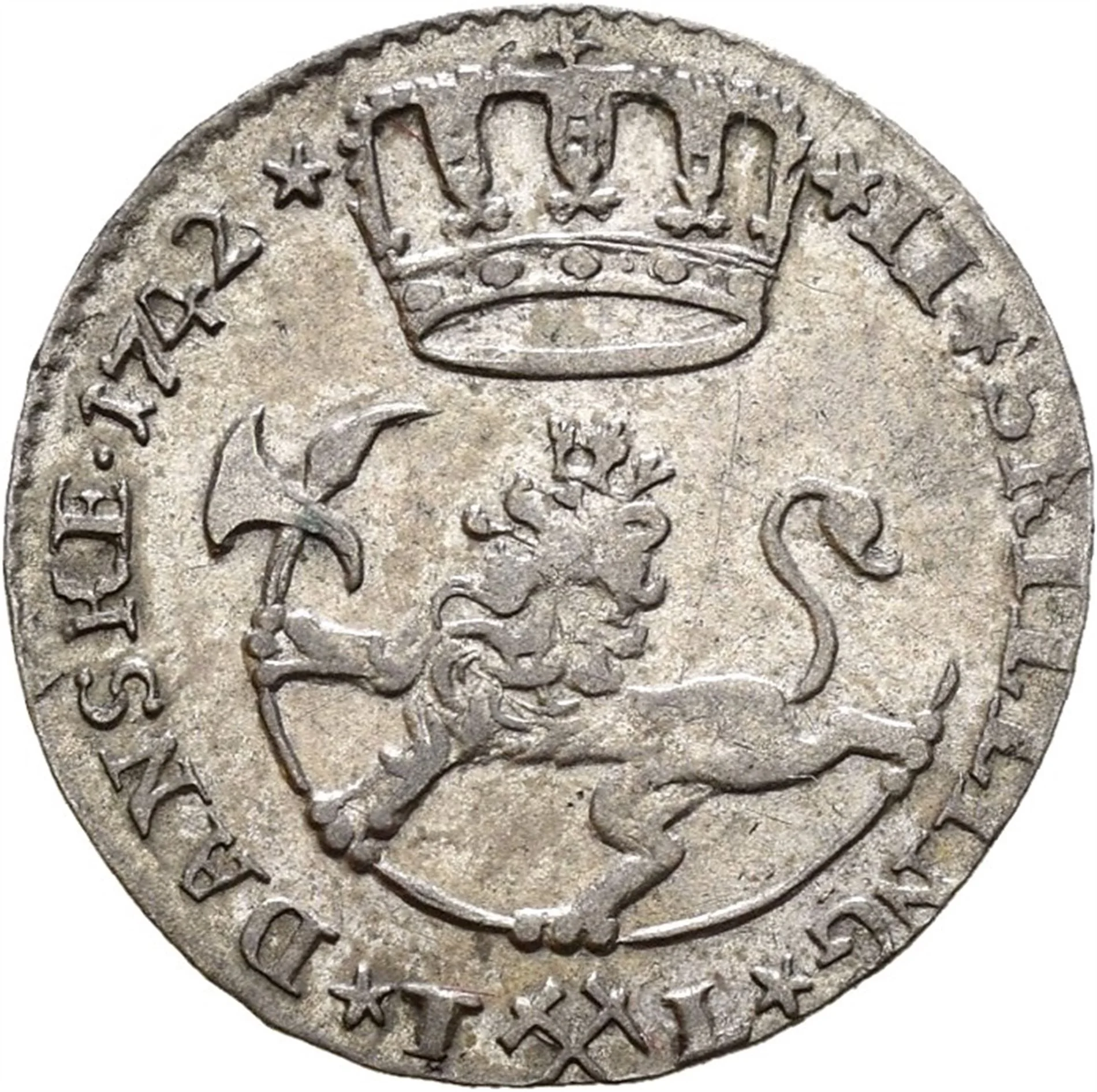
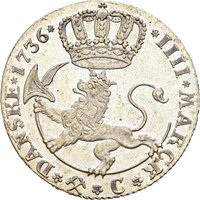
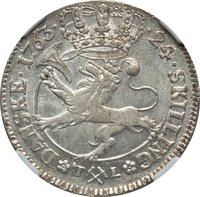
Norwegian lion with axe facing left, crowned twice. Inscription surrounds, mintmark and initials below. Beaded edge.
Inscription:
⋆II⋆SKILLING | DANSKE·1745⋆
⋆ T ⚒ L ⋆
⋆ T ⚒ L ⋆
Script: Latin
Edge
Plain
Mints
| Name | Mark |
|---|---|
| Norwegian Mint | — |
Mintings
| Year | Mint Mark | Mintage | Quality | Collection |
|---|---|---|---|---|
| 1742 | — | 2,000 | ||
| 1743 | — | 2,100 | ||
| 1745 | — | — |
Historical background
In 1742, Norway, then in a union with Denmark under the absolute monarchy of King Christian VI, operated within a complex and strained monetary system. The official currency was the Danish rigsdaler, divided into 96 skilling, but the reality on the ground was one of chronic shortage. Coins, especially smaller denominations for everyday trade, were scarce, leading to widespread use of fragmented coins, private token money issued by merchants, and even commodity exchange in remote areas. This scarcity hampered commerce and created a reliance on unstable and localized substitutes.
The situation was exacerbated by a broader Scandinavian currency crisis. Sweden, a major economic influence, had embarked on an aggressive period of copper-based coinage and later a failed paper money experiment, causing inflationary pressures that spilled across borders. Furthermore, the Danish-Norwegian state was fiscally conservative and hesitant to mint sufficient new coinage, partly due to the costs of sourcing silver and a desire to maintain the currency's value. This conservative approach, however, failed to meet the practical needs of a growing Norwegian economy, particularly its vital timber export sector.
Consequently, 1742 fell within a period of mounting pressure for reform. The inadequate money supply was a recognized obstacle to economic development and tax collection. While a major monetary reform—the establishment of the Rigsbankdaler and a decimal system—would not arrive until 1816 (after the union with Denmark dissolved), the mid-18th century laid bare the system's flaws. The currency situation of 1742 thus reflects a kingdom caught between the rigid financial policies of Copenhagen and the practical demands of its own expanding domestic economy, awaiting a modern and unified monetary solution.
The situation was exacerbated by a broader Scandinavian currency crisis. Sweden, a major economic influence, had embarked on an aggressive period of copper-based coinage and later a failed paper money experiment, causing inflationary pressures that spilled across borders. Furthermore, the Danish-Norwegian state was fiscally conservative and hesitant to mint sufficient new coinage, partly due to the costs of sourcing silver and a desire to maintain the currency's value. This conservative approach, however, failed to meet the practical needs of a growing Norwegian economy, particularly its vital timber export sector.
Consequently, 1742 fell within a period of mounting pressure for reform. The inadequate money supply was a recognized obstacle to economic development and tax collection. While a major monetary reform—the establishment of the Rigsbankdaler and a decimal system—would not arrive until 1816 (after the union with Denmark dissolved), the mid-18th century laid bare the system's flaws. The currency situation of 1742 thus reflects a kingdom caught between the rigid financial policies of Copenhagen and the practical demands of its own expanding domestic economy, awaiting a modern and unified monetary solution.
✨ Legendary