

4 Mark – Norway
Norway
Context
Year: 1736
Issuer: Norway 
Ruler: Christian VI
Currency:
(1523—1746)
Subdivision: 4 Mark = 1 Krone
Demonetized: Yes
Total mintage: 6,000
Material
References
KM: #Click to copy to clipboard233
Numista: #100322
Value
Bullion value: $42.54
Obverse
Description:
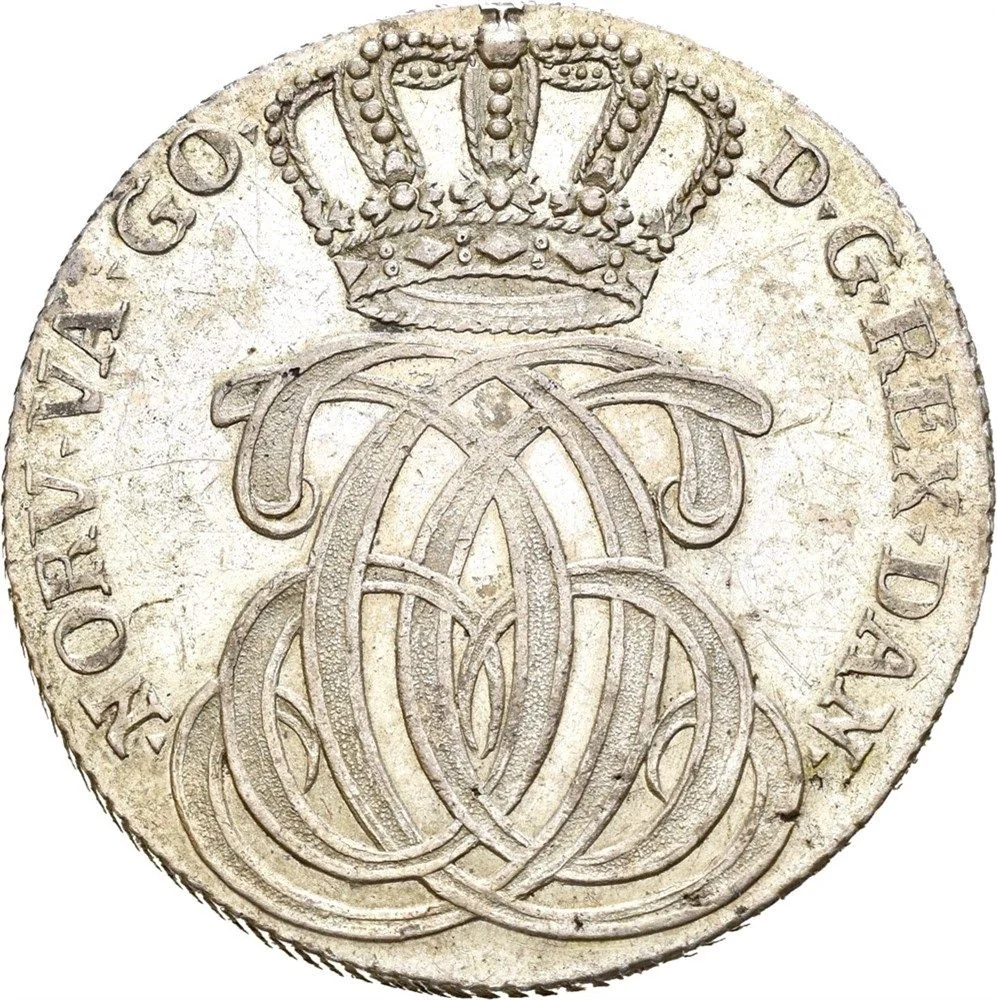
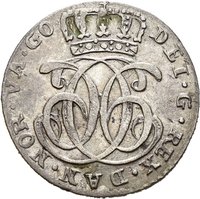
Crowned mirrored monogram of Christian VI. Inscription surrounds. Beaded edge.
Inscription:
D⬩G⬩REX⬩DAN⬩ | ⬩NORV⬩VA⬩GO⬩
Script: Latin
Reverse
Description:
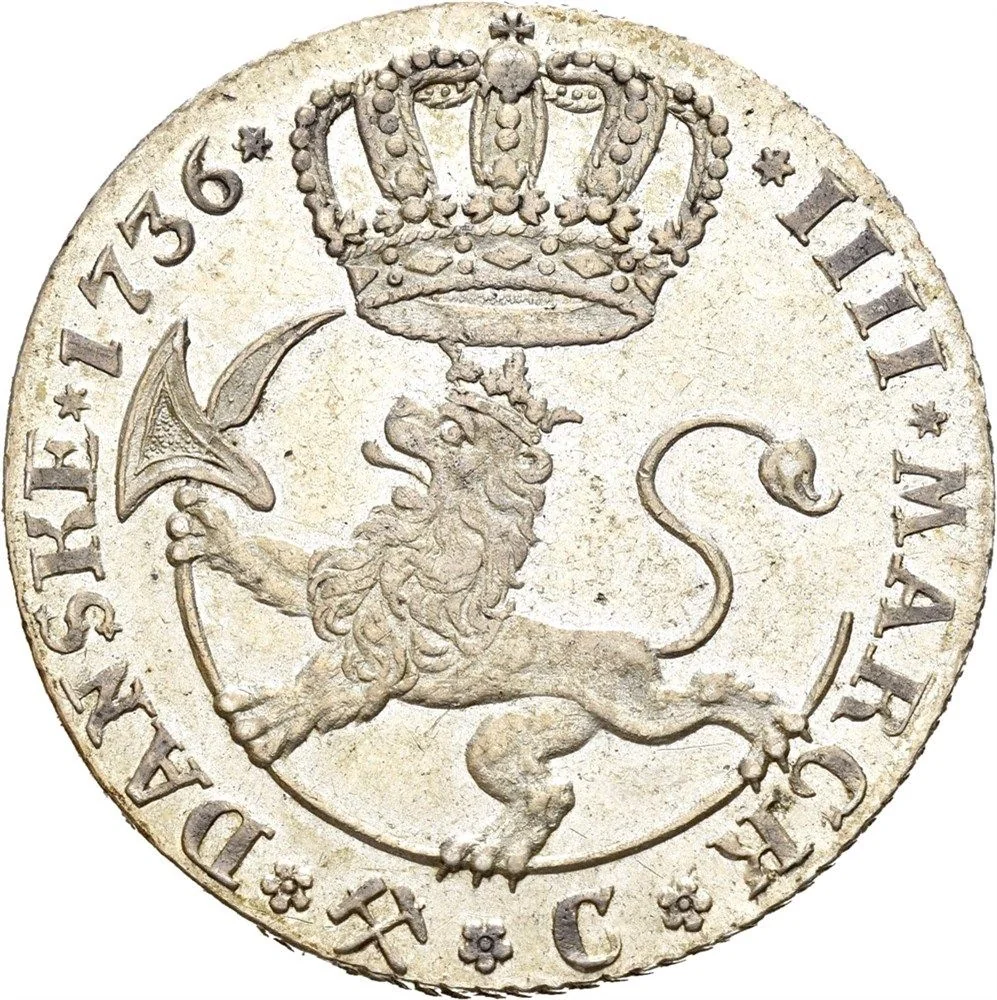
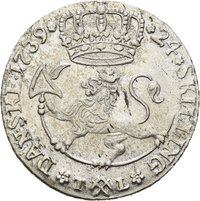
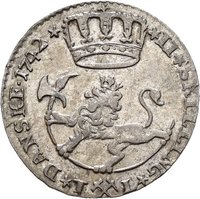
Crowned lion facing left, holding an axe, with a crown above. Inscription surrounds it, mintmark below, and a beaded edge.
Inscription:
✶IIII✶MARCK | DANSKE✶1736✶
🏵 ⚒ 🏵 C 🏵
🏵 ⚒ 🏵 C 🏵
Script: Latin
Edge
Mints
| Name | Mark |
|---|---|
| Norwegian Mint | — |
Mintings
| Year | Mint Mark | Mintage | Quality | Collection |
|---|---|---|---|---|
| 1736 | — | 6,000 |
Historical background
In 1736, Norway found itself in a precarious monetary situation, deeply entangled with its political union with Denmark. The kingdom operated under the Danish-Norwegian rigsdaler, a silver-based currency, but a chronic shortage of physical coinage plagued the economy. This scarcity severely hampered everyday trade and state finances, as the limited supply of official minted coins was insufficient for the needs of the population and growing commercial activities. The resulting reliance on barter and a patchwork of foreign coins created an inefficient and unstable economic environment.
To address this liquidity crisis, the Danish crown, under King Christian VI, authorized the establishment of Norges første og almindelige Handelsbank (Norway’s First and General Commercial Bank) in 1736. This institution, based in Trondheim, was granted the groundbreaking privilege to issue paper credit notes, known as sedler. These notes, representing promises to pay the bearer in silver, were among the earliest forms of paper money in Scandinavia and were intended to stimulate commerce by providing a much-needed, flexible medium of exchange.
However, the bank's foundation was fraught with risk. Its initial capital was insufficient, and crucially, its paper notes were not legally declared forced legal tender (tvungent betalingsmiddel). This meant merchants and the public were not obliged to accept them, undermining trust from the outset. Consequently, the bank’s notes struggled to gain widespread acceptance, foreshadowing the severe difficulties that would culminate in a loss of confidence and the bank's eventual collapse just a decade later, in 1745. Thus, 1736 marks a pivotal but troubled beginning for Norwegian paper currency, born from necessity but weakened by structural flaws.
To address this liquidity crisis, the Danish crown, under King Christian VI, authorized the establishment of Norges første og almindelige Handelsbank (Norway’s First and General Commercial Bank) in 1736. This institution, based in Trondheim, was granted the groundbreaking privilege to issue paper credit notes, known as sedler. These notes, representing promises to pay the bearer in silver, were among the earliest forms of paper money in Scandinavia and were intended to stimulate commerce by providing a much-needed, flexible medium of exchange.
However, the bank's foundation was fraught with risk. Its initial capital was insufficient, and crucially, its paper notes were not legally declared forced legal tender (tvungent betalingsmiddel). This meant merchants and the public were not obliged to accept them, undermining trust from the outset. Consequently, the bank’s notes struggled to gain widespread acceptance, foreshadowing the severe difficulties that would culminate in a loss of confidence and the bank's eventual collapse just a decade later, in 1745. Thus, 1736 marks a pivotal but troubled beginning for Norwegian paper currency, born from necessity but weakened by structural flaws.
✨ Legendary