

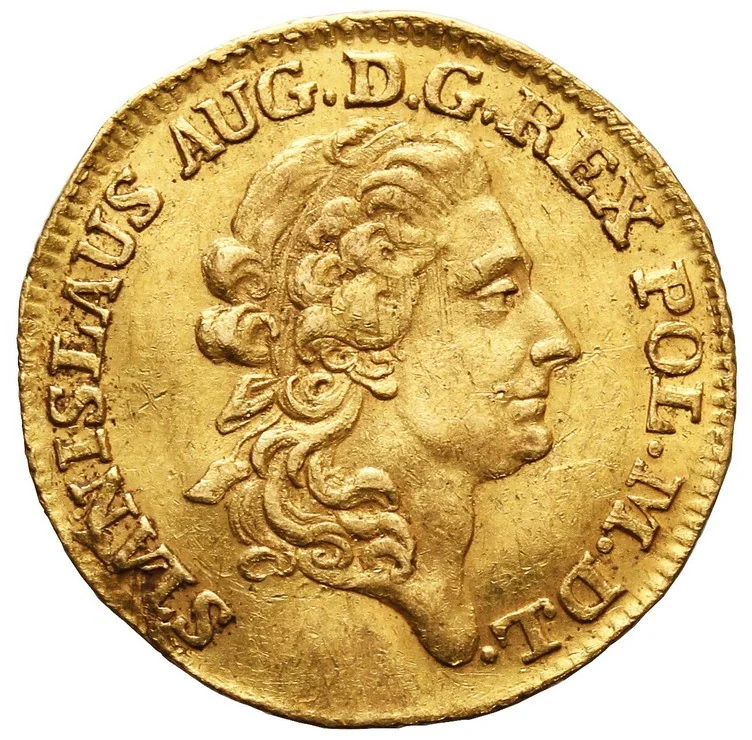
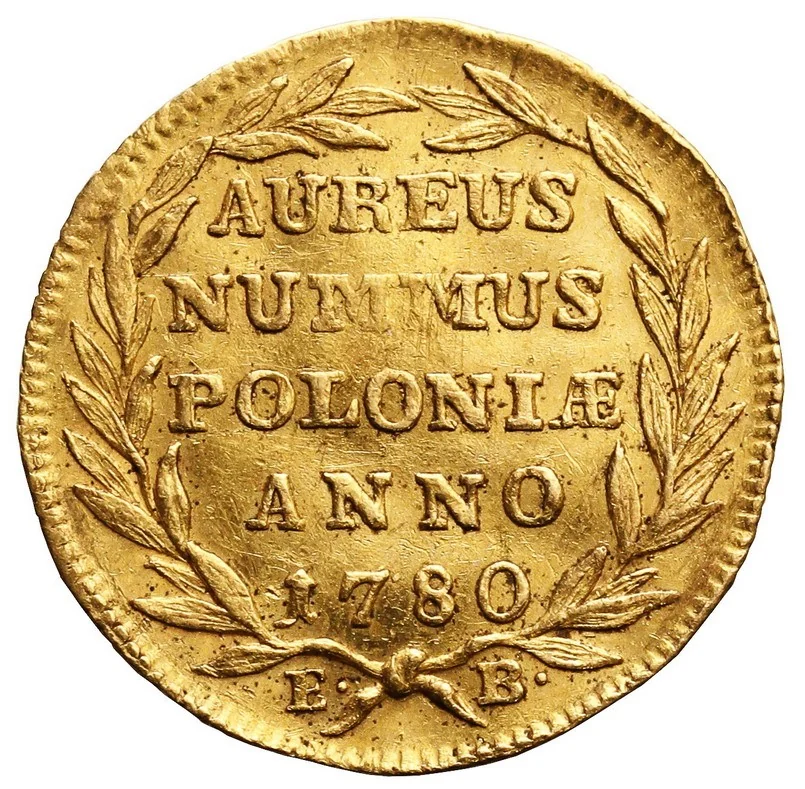
1 ducat – Polish–Lithuanian Commonwealth
Add to wishlist
Poland
Context
Years: 1779–1795
Country: Poland
Issuer: Polish–Lithuanian Commonwealth
Ruler: Stanisław II Augustus
Currency:
(1573—1795)
Demonetized: Yes
Material
References
KM: #
Numista: #98510
Value
Bullion value: $533.89
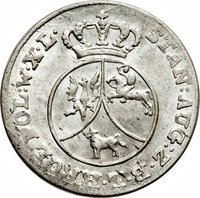
Obverse
Inscription:
STANISLAUS AUG D G REX POL M D L
Script: Latin
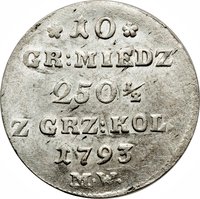
Reverse
Inscription:
AUREUS
NUMMUS
POLONIÆ
ANNO
1780
E-B
NUMMUS
POLONIÆ
ANNO
1780
E-B
Script: Latin
Edge
Mints
| Name | Mark |
|---|---|
| Mint of Poland | — |
Mintings
| Year | Mint Mark | Mintage | Quality | Collection |
|---|---|---|---|---|
| 1779 | — | — | ||
| 1780 | — | — | ||
| 1781 | — | — | ||
| 1782 | — | — | ||
| 1791 | — | — | ||
| 1792 | — | — | ||
| 1793 | — | — | ||
| 1794 | — | — | ||
| 1795 | — | — |
Historical background
By 1779, the currency situation in the Polish–Lithuanian Commonwealth was one of profound crisis and a key symptom of the state's political disintegration. The monetary system was chaotic, characterized by a severe devaluation of the domestic coinage. The primary unit, the Polish złoty, was not a physical coin but a unit of account, and the actual circulating currency consisted largely of debased silver tymfs and copper szelągs (shillings) minted in massive quantities. This inflation was driven directly by the state's weakness; foreign powers, particularly Prussia and Russia, operated illegal mints at the Commonwealth's borders, flooding the country with counterfeit and debased coinage to profit from seigniorage and deliberately destabilize the Polish economy.
The root cause was the political paralysis of the Commonwealth, where the liberum veto allowed any single nobleman to block fiscal and monetary reforms. The Warsaw Mint, under the control of the Crown Treasurer, competed not with legitimate institutions but with these foreign-operated "mint-hells" (mennice-piekła). The sheer volume of low-value copper coinage led to a classic "bad money drives out good" scenario (Gresham's Law), where full-value foreign silver coins like thalers were hoarded or used for foreign trade, leaving the domestic economy saddled with nearly worthless copper.
The consequences were severe economic dislocation, hindering trade and deepening the impoverishment of the state treasury, which could not collect stable revenues. While the Great Sejm of 1788–1792 would later attempt a major monetary reform, introducing a new, stable currency tied to the Cologne mark, the situation in 1779 was at its nadir. The monetary chaos underscored the Commonwealth's inability to exercise one of the fundamental rights of a sovereign state—control over its own currency—and highlighted its vulnerability to predatory neighbors on the eve of the Partitions.
The root cause was the political paralysis of the Commonwealth, where the liberum veto allowed any single nobleman to block fiscal and monetary reforms. The Warsaw Mint, under the control of the Crown Treasurer, competed not with legitimate institutions but with these foreign-operated "mint-hells" (mennice-piekła). The sheer volume of low-value copper coinage led to a classic "bad money drives out good" scenario (Gresham's Law), where full-value foreign silver coins like thalers were hoarded or used for foreign trade, leaving the domestic economy saddled with nearly worthless copper.
The consequences were severe economic dislocation, hindering trade and deepening the impoverishment of the state treasury, which could not collect stable revenues. While the Great Sejm of 1788–1792 would later attempt a major monetary reform, introducing a new, stable currency tied to the Cologne mark, the situation in 1779 was at its nadir. The monetary chaos underscored the Commonwealth's inability to exercise one of the fundamental rights of a sovereign state—control over its own currency—and highlighted its vulnerability to predatory neighbors on the eve of the Partitions.
✨ Legendary