

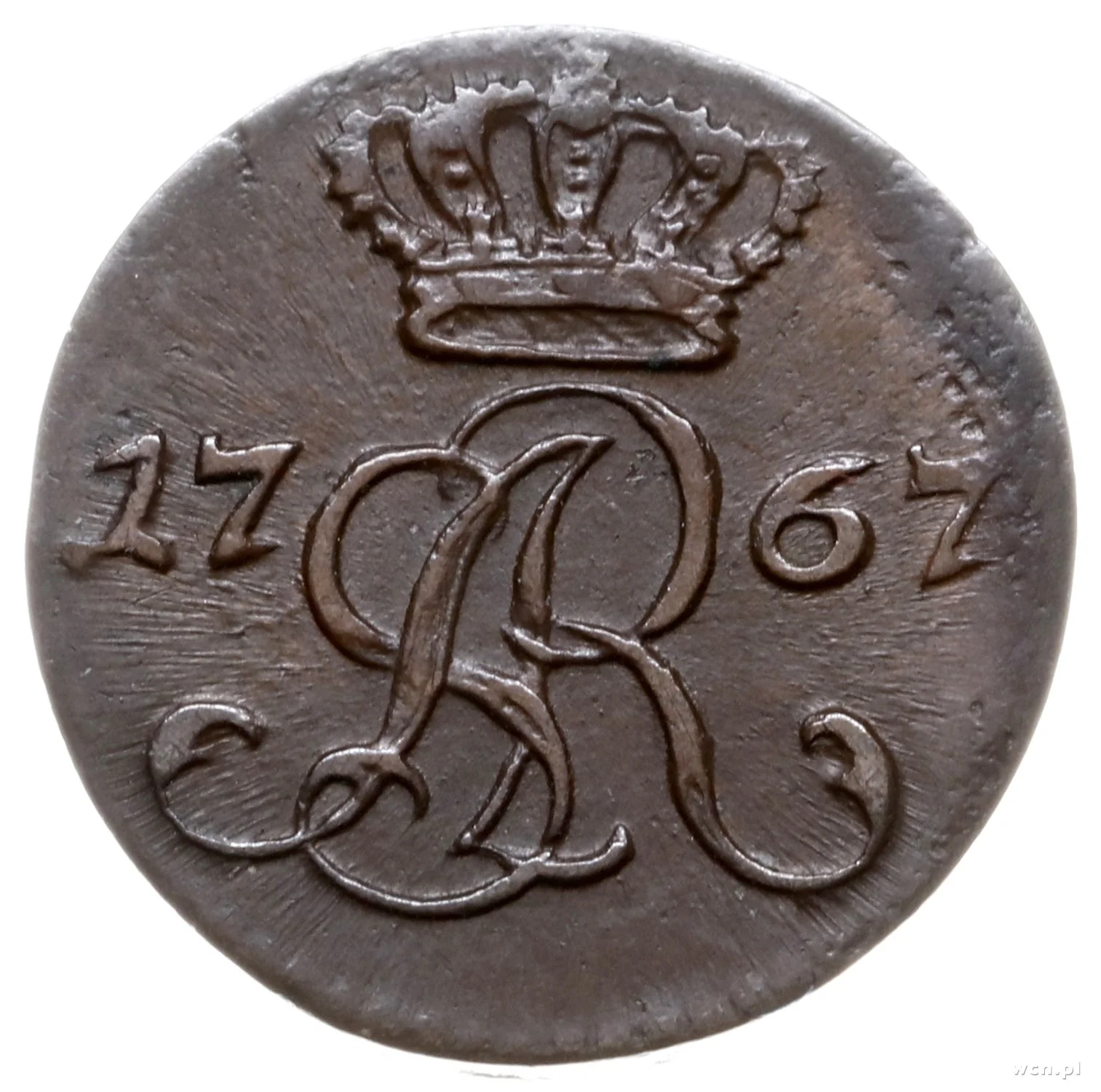
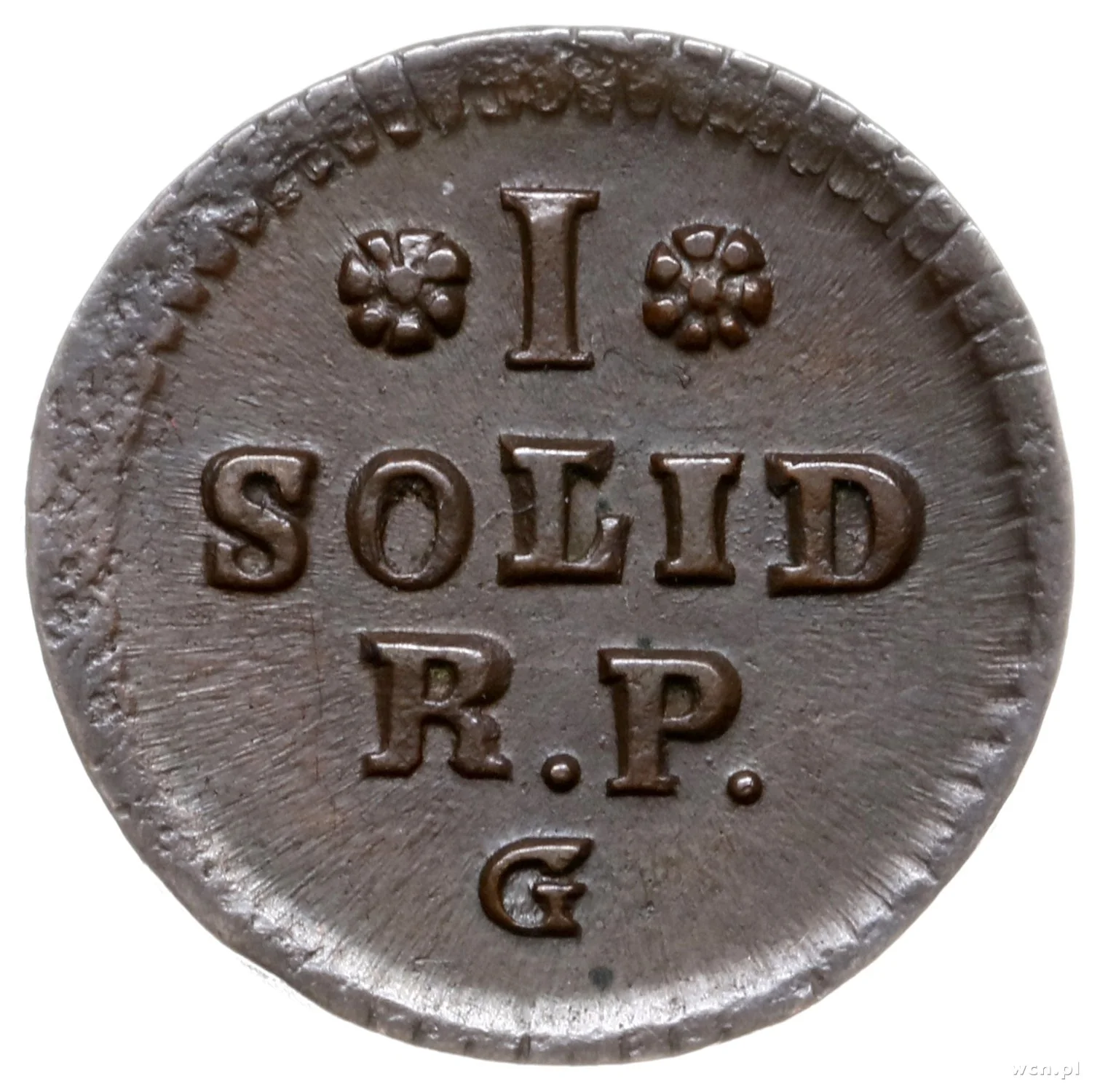
1 schilling – Polish–Lithuanian Commonwealth
Add to wishlist
Poland
Context
Years: 1767–1768
Country: Poland
Issuer: Polish–Lithuanian Commonwealth
Ruler: Stanisław II Augustus
Currency:
(1573—1795)
Demonetized: Yes
Total mintage: 1,599,000
Material
References
KM: #
Numista: #63628
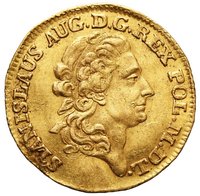
Obverse
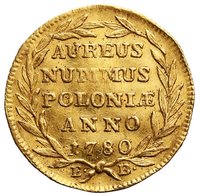
Reverse
Edge
Plain
Mints
| Name | Mark |
|---|---|
| Kraków | — |
Mintings
| Year | Mint Mark | Mintage | Quality | Collection |
|---|---|---|---|---|
| 1767 | G | 1,599,000 | ||
| 1768 | — | — | ||
| 1768 | G | — |
Historical background
By 1767, the currency situation in the Polish–Lithuanian Commonwealth was one of profound crisis and a key symptom of the state's political disintegration. The monetary system was chaotic, characterized by a severe debasement of the coinage. The state mint, under the control of the Crown Treasurer, was frequently exploited by powerful magnates and foreign powers—particularly Russia, which exerted immense political influence following the 1764 election of its client-king, Stanisław August Poniatowski. To finance their lavish courts and private armies, these magnates often struck low-quality coins from their own minting rights, flooding the market with depreciated currency.
This debasement led to rampant inflation and a loss of confidence in the domestic currency. Good-quality foreign coins, like Prussian thalers and Dutch ducats, circulated widely, while the debased Polish coins were used for everyday transactions, creating a destructive two-tier system. The value of money became highly unstable, disrupting trade, crippling the already weak central treasury, and imposing a heavy burden on the peasantry and townsfolk, whose fixed incomes and wages were eroded. The Sejm's (parliament) inability to enact reforms due to the liberum veto paralyzed any coherent monetary policy.
The currency chaos of 1767 was directly entangled with the broader political crisis of that year. As the so-called Repnin Sejm was coerced by Russian ambassador Nicholas Repnin into guaranteeing the "cardinal laws" and the rights of the dissident nobility, the Commonwealth's sovereignty was shattered. In this context, meaningful financial reform was impossible. The monetary disorder thus stood as both a cause and a consequence of the Commonwealth's decline, illustrating how political anarchy enabled economic predation, which in further weakened the state, hastening its path towards the partitions that would begin just five years later.
This debasement led to rampant inflation and a loss of confidence in the domestic currency. Good-quality foreign coins, like Prussian thalers and Dutch ducats, circulated widely, while the debased Polish coins were used for everyday transactions, creating a destructive two-tier system. The value of money became highly unstable, disrupting trade, crippling the already weak central treasury, and imposing a heavy burden on the peasantry and townsfolk, whose fixed incomes and wages were eroded. The Sejm's (parliament) inability to enact reforms due to the liberum veto paralyzed any coherent monetary policy.
The currency chaos of 1767 was directly entangled with the broader political crisis of that year. As the so-called Repnin Sejm was coerced by Russian ambassador Nicholas Repnin into guaranteeing the "cardinal laws" and the rights of the dissident nobility, the Commonwealth's sovereignty was shattered. In this context, meaningful financial reform was impossible. The monetary disorder thus stood as both a cause and a consequence of the Commonwealth's decline, illustrating how political anarchy enabled economic predation, which in further weakened the state, hastening its path towards the partitions that would begin just five years later.
💎 Very Rare