

10 groschens – Polish–Lithuanian Commonwealth
Add to wishlist
Poland
Context
Years: 1787–1795
Country: Poland
Issuer: Polish–Lithuanian Commonwealth
Ruler: Stanisław II Augustus
Currency:
(1573—1795)
Demonetized: Yes
Total mintage: 4,560,000
Material
References
KM: #
Numista: #47863
Obverse
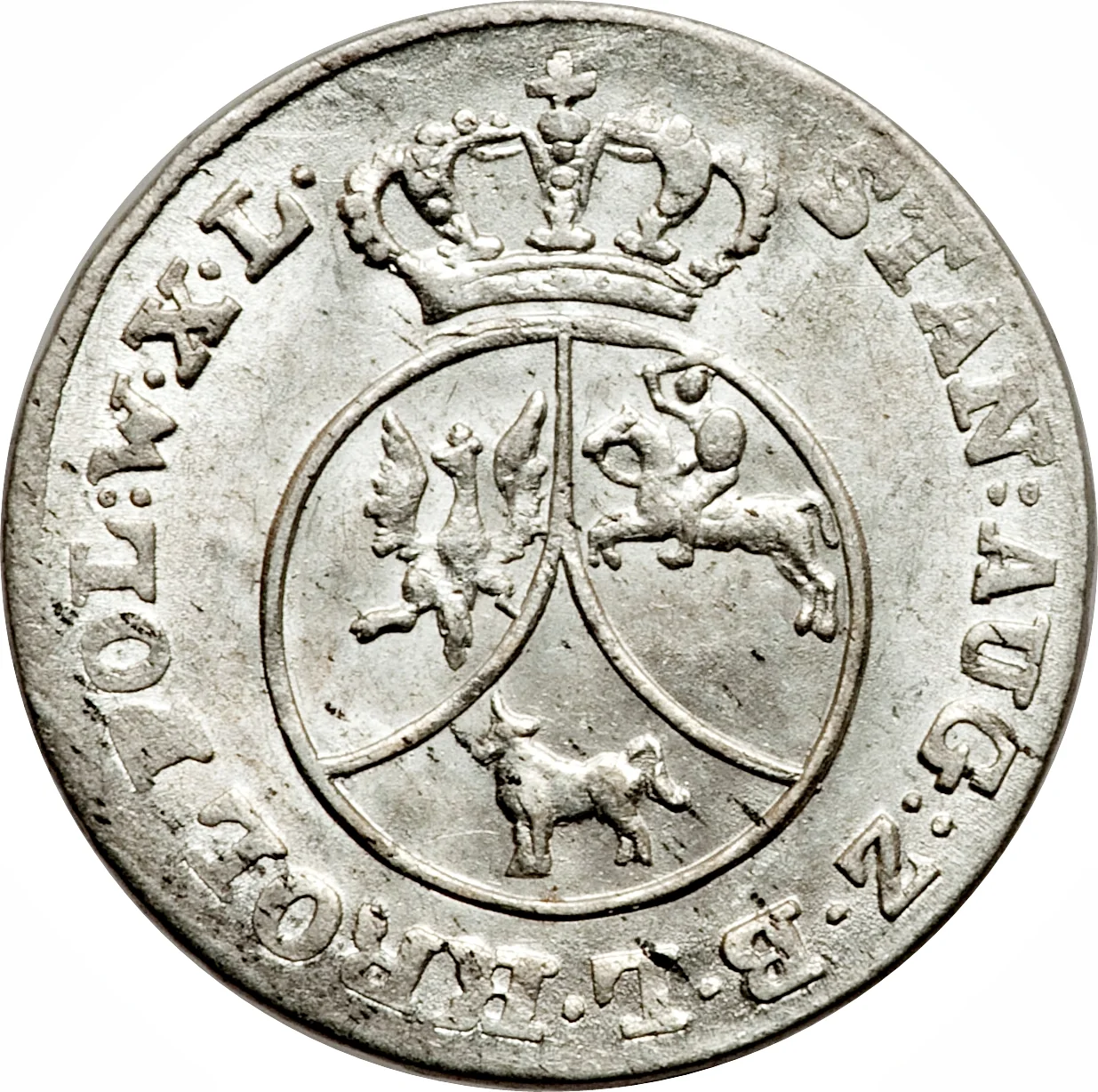
Description:
Crowned coat of arms encircled by text.
Inscription:
STAN:AUG·Z·B·L·KROL POL:W·X·L·
Script: Latin
Reverse
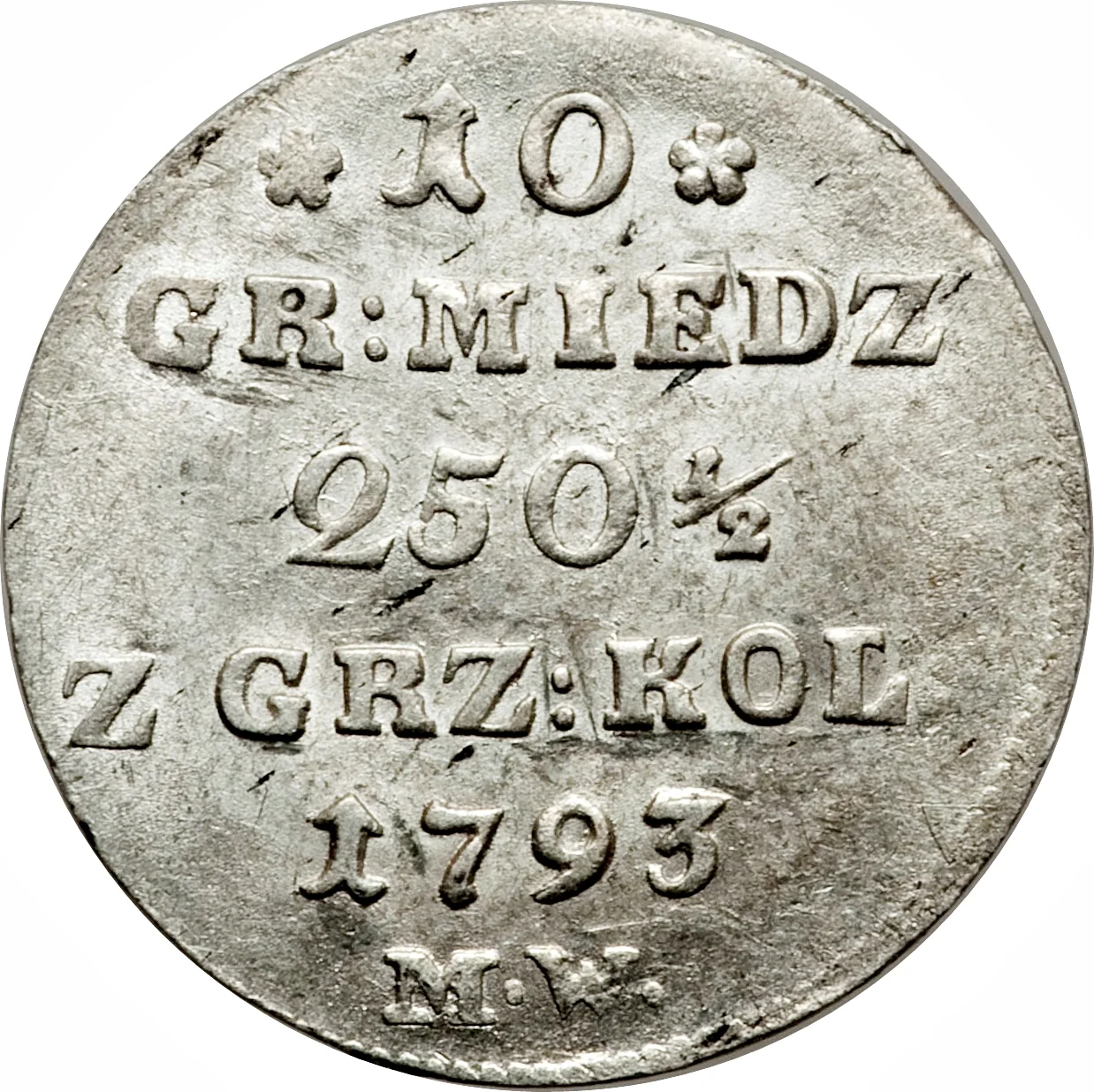
Description:
Denomination, date, mint.
Inscription:
*10*
GR:MIEDZ
250 1/2
Z GRZ:KOL
1793
M·W.
GR:MIEDZ
250 1/2
Z GRZ:KOL
1793
M·W.
Script: Latin
Edge
Plain
Mints
| Name | Mark |
|---|---|
| Mint of Poland | — |
Mintings
| Year | Mint Mark | Mintage | Quality | Collection |
|---|---|---|---|---|
| 1787 | EB | 414,000 | ||
| 1788 | EB | 685,000 | ||
| 1789 | EB | 314,000 | ||
| 1790 | EB | 1,068,000 | ||
| 1791 | EB | 609,000 | ||
| 1792 | MV | — | ||
| 1792 | MW | 594,000 | ||
| 1793 | MW | 876,000 | ||
| 1794 | MW | — | ||
| 1795 | MW | — |
Historical background
In 1787, the currency situation of the Polish–Lithuanian Commonwealth was dire and symptomatic of the broader political paralysis afflicting the state. The monetary system was chaotic, characterized by a proliferation of debased coinage. The primary unit, the złoty, was not a physical coin but a unit of account, and the actual circulating coins included a confusing mix of domestic and foreign specie, notably heavily debated Polish copper szelągi and a flood of inferior Prussian and Austrian coins. This disorder stemmed from the "liberum veto" and noble prerogatives, which prevented the central government (the Crown Treasury Commission) from asserting a unified monetary policy, leaving the minting process vulnerable to corruption and short-term fiscal desperation.
The core of the crisis was the widespread circulation of counterfeit and debased coinage, often produced with the tacit permission or even direct involvement of foreign powers and magnates who controlled private mints. The value of money was unstable, causing severe inflation and harming trade, while state revenues, collected in this depreciated currency, plummeted. This financial collapse directly undermined the military, leaving the Commonwealth unable to maintain a modern army, which in turn made the country vulnerable to its aggressive neighbours—Russia, Prussia, and Austria—who were already exerting overwhelming political and economic influence.
Recognizing this crisis as existential, reformers associated with King Stanisław August Poniatowski saw monetary reform as a cornerstone of national revival. The King himself had long advocated for a modern, stable currency. The immediate background to 1787 was one of preparation for the Great Sejm (1788–92), where financial and military reform were top priorities. The situation created a powerful impetus for change, leading directly to the landmark reforms of the Great Sejm, which would establish a new national mint and introduce a modern, decimal-based currency system anchored by the silver złoty, although these crucial changes were still in the future as the Commonwealth entered this critical period.
The core of the crisis was the widespread circulation of counterfeit and debased coinage, often produced with the tacit permission or even direct involvement of foreign powers and magnates who controlled private mints. The value of money was unstable, causing severe inflation and harming trade, while state revenues, collected in this depreciated currency, plummeted. This financial collapse directly undermined the military, leaving the Commonwealth unable to maintain a modern army, which in turn made the country vulnerable to its aggressive neighbours—Russia, Prussia, and Austria—who were already exerting overwhelming political and economic influence.
Recognizing this crisis as existential, reformers associated with King Stanisław August Poniatowski saw monetary reform as a cornerstone of national revival. The King himself had long advocated for a modern, stable currency. The immediate background to 1787 was one of preparation for the Great Sejm (1788–92), where financial and military reform were top priorities. The situation created a powerful impetus for change, leading directly to the landmark reforms of the Great Sejm, which would establish a new national mint and introduce a modern, decimal-based currency system anchored by the silver złoty, although these crucial changes were still in the future as the Commonwealth entered this critical period.
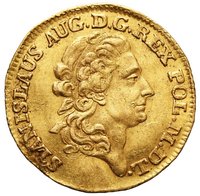
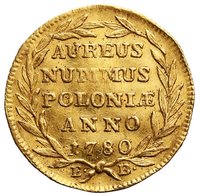
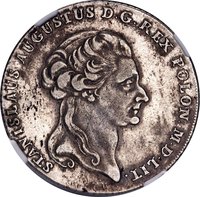
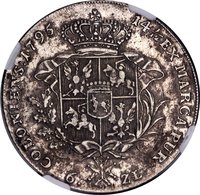
💎 Extremely Rare