

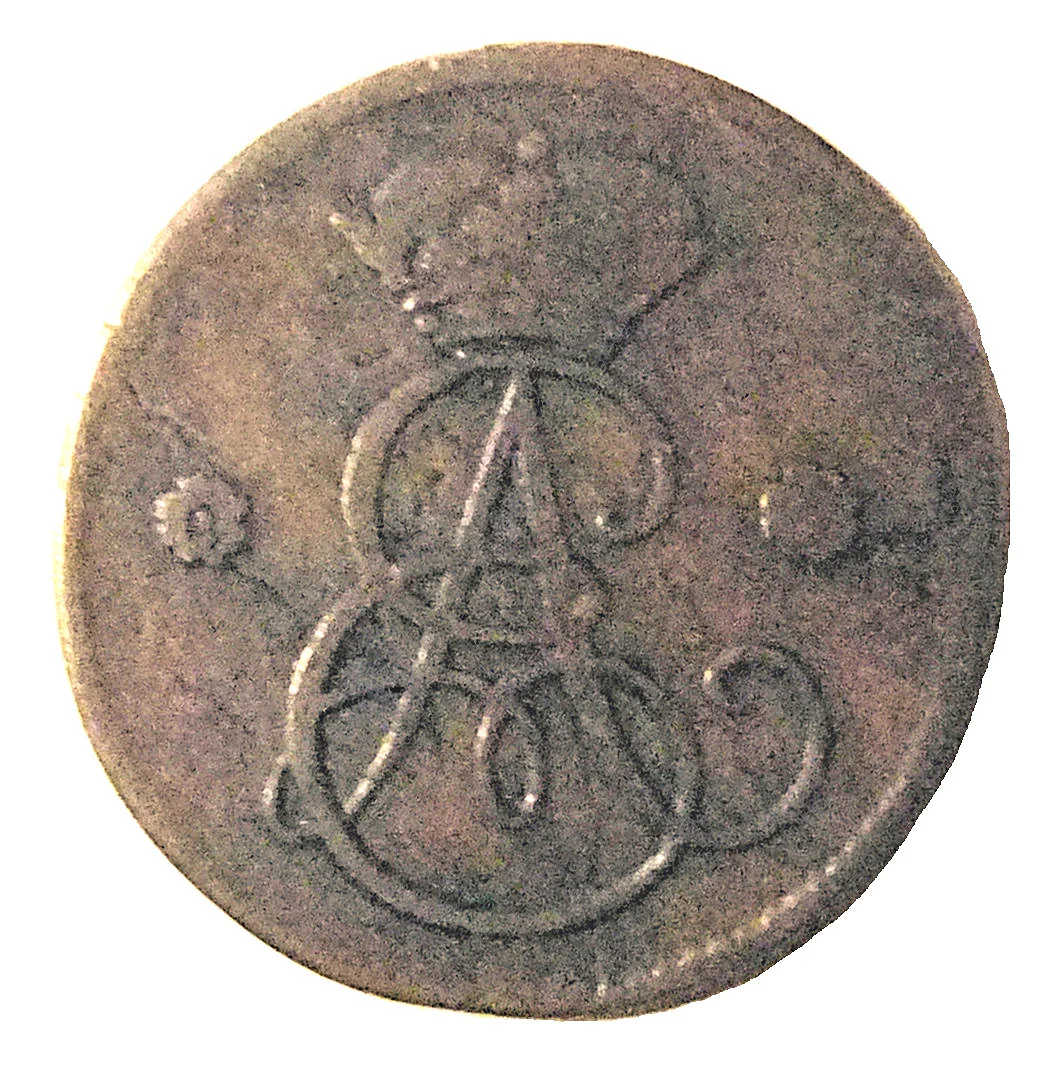
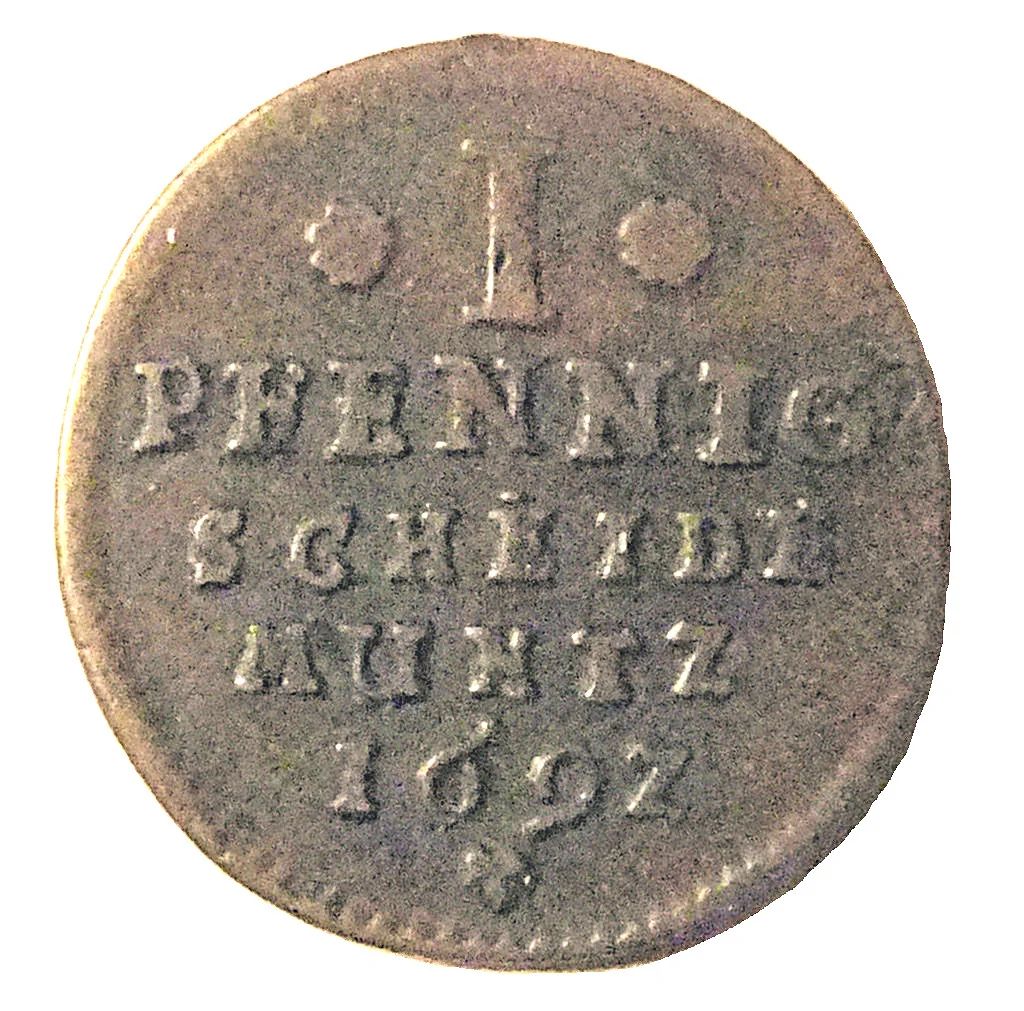
1 Pfennig – Brunswick-Lüneburg-Calenberg
Germany
Context
Years: 1691–1692
Country: Germany 
Issuer: Brunswick-Lüneburg-Calenberg
Ruler: Ernest Augustus
Currency:
Demonetized: Yes
Material
References
KM: #Click to copy to clipboard352
Numista: #98042
Obverse
Reverse
Description:
Dated five-line inscription with denomination.
Inscription:
* I *
PFENNIG
SCHEIDE
MUNTZ
1692
*
PFENNIG
SCHEIDE
MUNTZ
1692
*
Script: Latin
Edge
Mintings
| Year | Mint Mark | Mintage | Quality | Collection |
|---|---|---|---|---|
| 1691 | — | — | ||
| 1692 | — | — |
Historical background
In 1691, the Duchy of Brunswick-Lüneburg, specifically the Principality of Calenberg under Duke Ernst August, was entangled in the complex and debased monetary landscape of the Holy Roman Empire. The period was defined by the widespread crisis of Kipper- und Wipperzeit, an era of coinage manipulation where numerous states, including the Brunswick-Lüneburg territories, systematically debased their coinage to finance local expenditures and wars. By reducing the precious metal content in coins while maintaining their face value, rulers created short-term profit at the cost of severe inflation, loss of public trust, and chaotic exchange rates between territories.
Duke Ernst August, ambitious and focused on securing the prestigious Electorate of Hanover (achieved in 1692), faced significant financial pressures. The need to maintain a court, fund military ventures, and pay political bribes within the Empire necessitated revenue from seigniorage—the profit from minting coins. Consequently, the Calenberg mint likely engaged in producing inferior coinage, contributing to a market flooded with coins of uncertain and varying intrinsic value. This practice eroded both domestic and international commercial confidence, as merchants struggled with the discrepancy between nominal and actual metal worth.
The situation was further complicated by the existence of multiple monetary circuits. While the Reichsthaler served as a common accounting unit across the Empire, daily transactions were conducted in a plethora of actual circulating coins, including local Gute Groschen and Mariengroschen. In 1691, there was no unified territorial currency, and Calenberg's monetary policy was intrinsically linked to its sibling duchies, like Wolfenbüttel, often through regional agreements (Münzvereine) that attempted, with limited success, to standardize weight and fineness to stabilize trade within the Brunswick-Lüneburg region and beyond.
Duke Ernst August, ambitious and focused on securing the prestigious Electorate of Hanover (achieved in 1692), faced significant financial pressures. The need to maintain a court, fund military ventures, and pay political bribes within the Empire necessitated revenue from seigniorage—the profit from minting coins. Consequently, the Calenberg mint likely engaged in producing inferior coinage, contributing to a market flooded with coins of uncertain and varying intrinsic value. This practice eroded both domestic and international commercial confidence, as merchants struggled with the discrepancy between nominal and actual metal worth.
The situation was further complicated by the existence of multiple monetary circuits. While the Reichsthaler served as a common accounting unit across the Empire, daily transactions were conducted in a plethora of actual circulating coins, including local Gute Groschen and Mariengroschen. In 1691, there was no unified territorial currency, and Calenberg's monetary policy was intrinsically linked to its sibling duchies, like Wolfenbüttel, often through regional agreements (Münzvereine) that attempted, with limited success, to standardize weight and fineness to stabilize trade within the Brunswick-Lüneburg region and beyond.
✨ Legendary