

⅔ Thaler – Brunswick-Lüneburg-Calenberg
Germany
Context
Years: 1690–1692
Country: Germany 
Issuer: Brunswick-Lüneburg-Calenberg
Ruler: Ernest Augustus
Currency:
Demonetized: Yes
Material
References
KM: #Click to copy to clipboard348
Numista: #350207
Value
Bullion value: $36.42
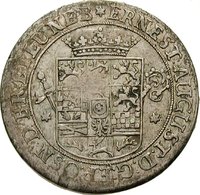
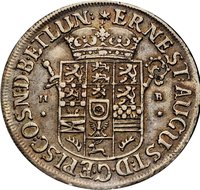
Obverse
Description:
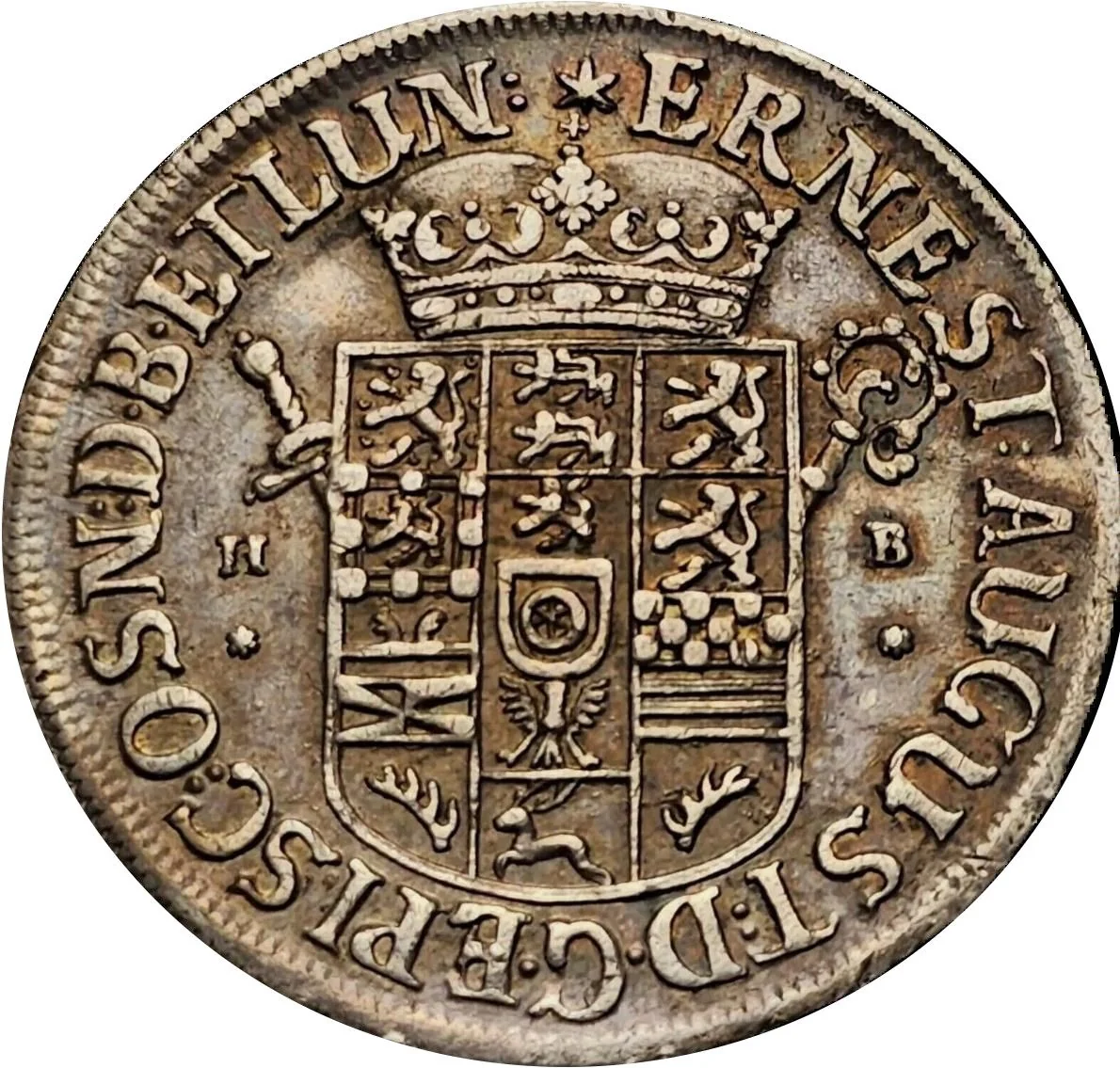
Shield with crown; HB flanking.
Inscription:
ERNEST:AUGUST:D·G·EPISC:OSN:D·B·ET LUNEB*
H B
H B
Script: Latin
Engraver: Heinrich Bonhorst
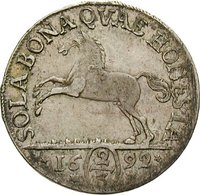
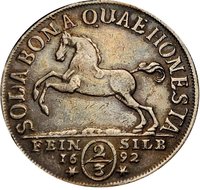
Reverse
Description:
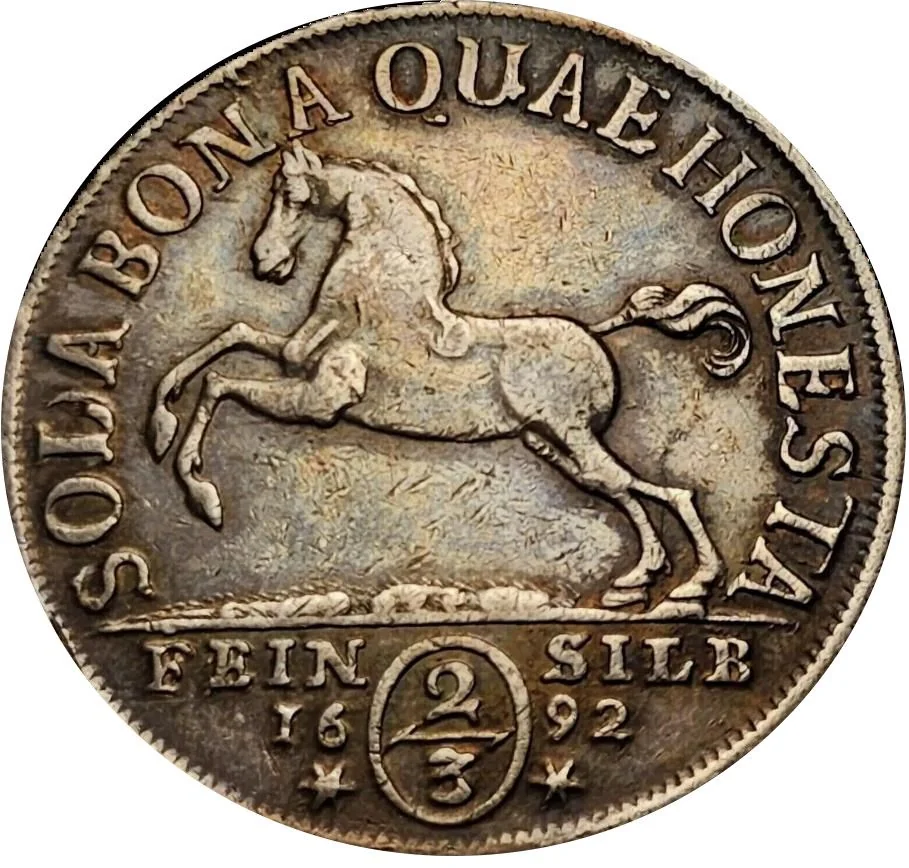
Horse leaping left. Lower third divides date and FEIN-SILB.
Inscription:
SOLA BONA QUAE HONESTA
1692
(2/3)
FEIN SILB
1692
(2/3)
FEIN SILB
Script: Latin
Edge
Mints
| Name | Mark |
|---|---|
| Clausthal | — |
Mintings
| Year | Mint Mark | Mintage | Quality | Collection |
|---|---|---|---|---|
| 1690 | — | — | ||
| 1692 | — | — |
Historical background
In 1690, the Duchy of Brunswick-Lüneburg, specifically the Principality of Calenberg under Duke Ernst August, was entangled in the complex and debased monetary landscape of the Holy Roman Empire. The region was part of the "Kipper und Wipper" era's long aftermath, a period characterized by the proliferation of inferior coins from numerous mints. While the worst excesses of the 1620s were past, the monetary system remained fragmented and unstable. Dozens of imperial states, cities, and even opportunistic individuals operated mints, producing coins of varying silver content, which led to chronic confusion, loss of public trust, and rampant currency speculation as bad money drove good money out of circulation.
Duke Ernst August, ambitious and focused on securing the prince-elector status for his Hanoverian line, faced significant fiscal pressures from maintaining a court and army. The Calenberg government responded by engaging in manipulative minting practices itself, though more strategically than the earlier chaos. It often reduced the silver content in its own coinage to generate seigniorage profit, a common but inflationary practice. This created a dual problem: externally, dealing with the flood of inferior coins from neighboring territories, and internally, managing the economic consequences of its own debased currency. The situation hindered commerce and state finance, as the value of money was uncertain and constantly fluctuating.
Consequently, there were growing calls for standardization and imperial oversight. The year 1690 fell within a period of gradual movement toward the Reichsmünzordnung (Imperial Coinage Ordinance), which would be enacted in 1738. However, at this time, effective solutions were local or regional. The Duchy likely participated in temporary Münzvereine (coinage unions) with neighboring states to try to fix standards, but these were often short-lived. Thus, the currency situation in Calenberg in 1690 was one of managed debasement, economic strain from competing currencies, and slow, fragmented progress toward the monetary stability necessary for the duchy's growing political aspirations.
Duke Ernst August, ambitious and focused on securing the prince-elector status for his Hanoverian line, faced significant fiscal pressures from maintaining a court and army. The Calenberg government responded by engaging in manipulative minting practices itself, though more strategically than the earlier chaos. It often reduced the silver content in its own coinage to generate seigniorage profit, a common but inflationary practice. This created a dual problem: externally, dealing with the flood of inferior coins from neighboring territories, and internally, managing the economic consequences of its own debased currency. The situation hindered commerce and state finance, as the value of money was uncertain and constantly fluctuating.
Consequently, there were growing calls for standardization and imperial oversight. The year 1690 fell within a period of gradual movement toward the Reichsmünzordnung (Imperial Coinage Ordinance), which would be enacted in 1738. However, at this time, effective solutions were local or regional. The Duchy likely participated in temporary Münzvereine (coinage unions) with neighboring states to try to fix standards, but these were often short-lived. Thus, the currency situation in Calenberg in 1690 was one of managed debasement, economic strain from competing currencies, and slow, fragmented progress toward the monetary stability necessary for the duchy's growing political aspirations.
✨ Legendary