

1 Cash – Madras Presidency
India

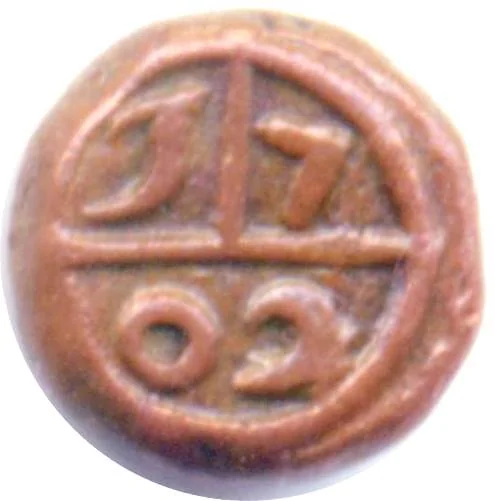
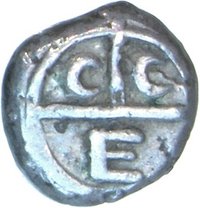
Obverse
Description:
Bale mark: date split between top and bottom halves.
Inscription:
1702
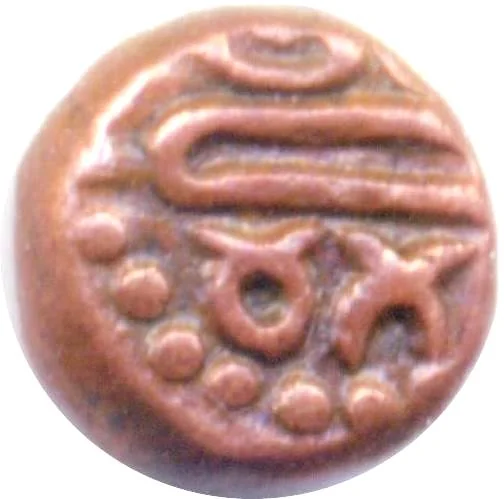
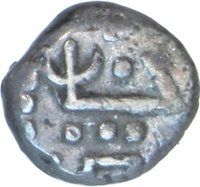
Reverse
Description:
Legend in Telugu,
within an oval.
within an oval.
Inscription:
శ్రీ
రంగ
రంగ
Edge
Plain
Mintings
| Year | Mint Mark | Mintage | Quality | Collection |
|---|---|---|---|---|
| 1702 | — | — | ||
| 1705 | — | — |
Historical background
In 1702, the currency situation in the Madras Presidency was complex and transitional, reflecting its position as a key English East India Company (EIC) settlement within the polyglot monetary systems of the Coromandel Coast. The primary circulating medium consisted of a multitude of Indian and European coins. The most important local currency was the gold pagoda, a thick, small coin issued by various South Indian rulers, which served as the standard unit for large transactions and accounting. Alongside it circulated a plethora of silver rupees (from Mughal mints), copper cash coins for small daily use, and various European coins like Spanish Reales and Dutch Guilders brought by trade.
The EIC’s monetary authority was still nascent. While the Madras Mint (operating at Fort St. George since 1692) struck its own versions of the pagoda and silver rupees, its output could not dominate the market. Consequently, the Presidency’s economy functioned on a system of fixed exchange rates between these different coins, proclaimed periodically by the Company’s government. These "Currency Orders" were essential to stabilize commerce but were frequently challenged by market fluctuations, the inflow of debased or counterfeit coins, and the arbitrage activities of private merchants and money-changers (shroffs).
This period was marked by a persistent tension between the Company’s desire for a stable, controlled currency and the chaotic reality of a global trade hub. The EIC’s finances were further strained by the need to remit silver bullion from Europe to cover its trade deficits, as exports of cloth and other goods from Madras did not fully pay for its investments. Thus, in 1702, the currency system was a fragile patchwork, administratively managed but fundamentally dependent on the ebb and flow of disparate coins from across India and the world, setting the stage for future conflicts and reforms as the Company’s power grew.
The EIC’s monetary authority was still nascent. While the Madras Mint (operating at Fort St. George since 1692) struck its own versions of the pagoda and silver rupees, its output could not dominate the market. Consequently, the Presidency’s economy functioned on a system of fixed exchange rates between these different coins, proclaimed periodically by the Company’s government. These "Currency Orders" were essential to stabilize commerce but were frequently challenged by market fluctuations, the inflow of debased or counterfeit coins, and the arbitrage activities of private merchants and money-changers (shroffs).
This period was marked by a persistent tension between the Company’s desire for a stable, controlled currency and the chaotic reality of a global trade hub. The EIC’s finances were further strained by the need to remit silver bullion from Europe to cover its trade deficits, as exports of cloth and other goods from Madras did not fully pay for its investments. Thus, in 1702, the currency system was a fragile patchwork, administratively managed but fundamentally dependent on the ebb and flow of disparate coins from across India and the world, setting the stage for future conflicts and reforms as the Company’s power grew.
✨ Legendary