

1 Ruble – Russian Empire
Russia
Context
Years: 1733–1734
Country: Russia 
Issuer: Russian Empire
Ruler: Anna I
Currency:
(1700—1917)
Demonetized: Yes
Material
References
KM: #Click to copy to clipboard192.2
Numista: #95665
Value
Bullion value: $59.96
Obverse
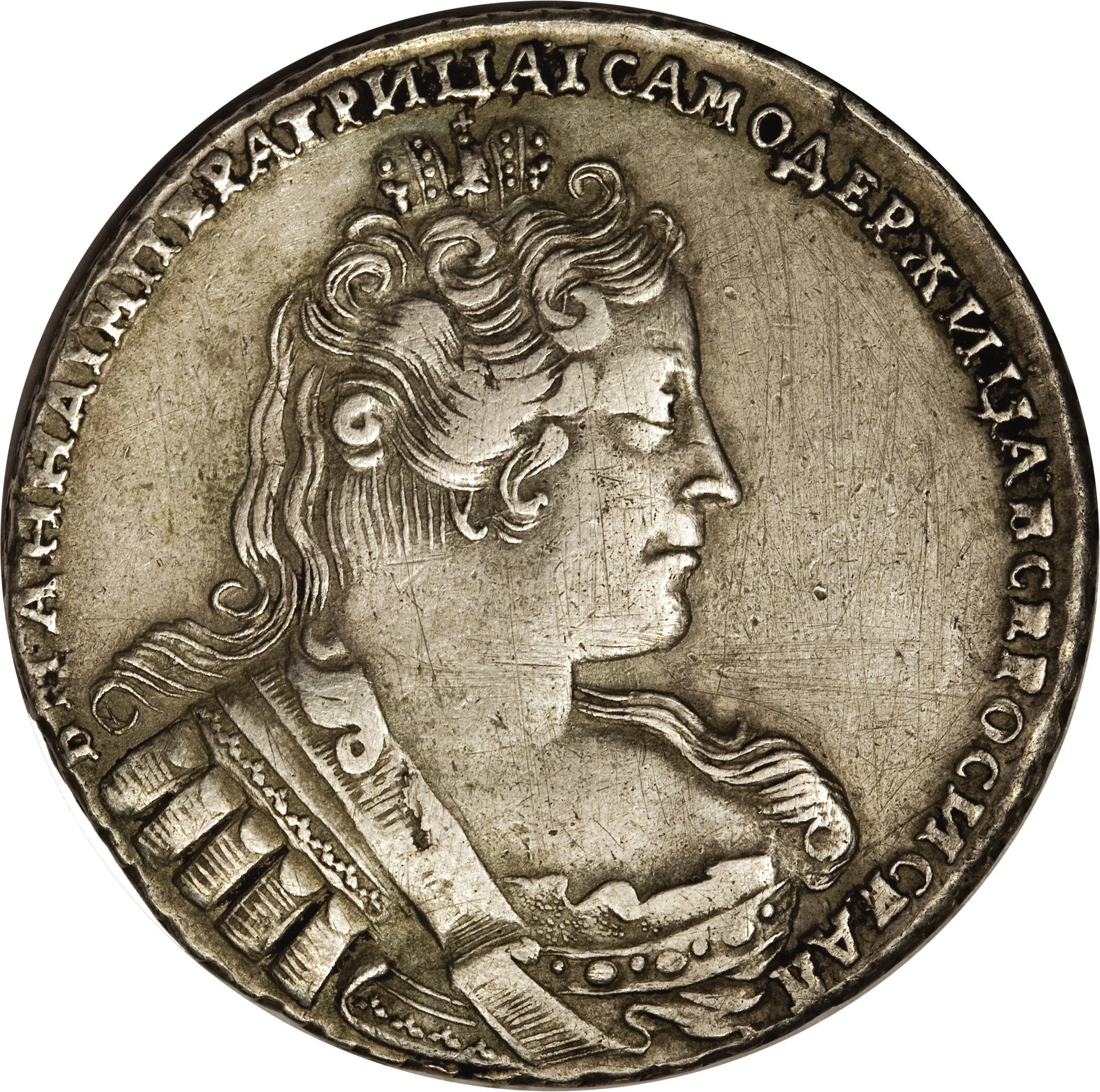
Description:
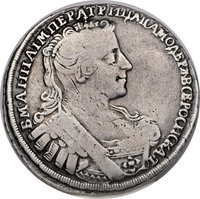
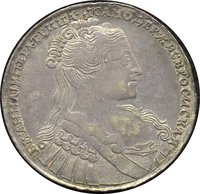
Portrait of Empress Anna, lacking her brooch.
Inscription:
Б∙М∙АННАIИМПЕРАТРИЦА∙IСАМОДЕРЖИЦА∙ВСЕРОСИСКАЯ
Script: Cyrillic
Reverse
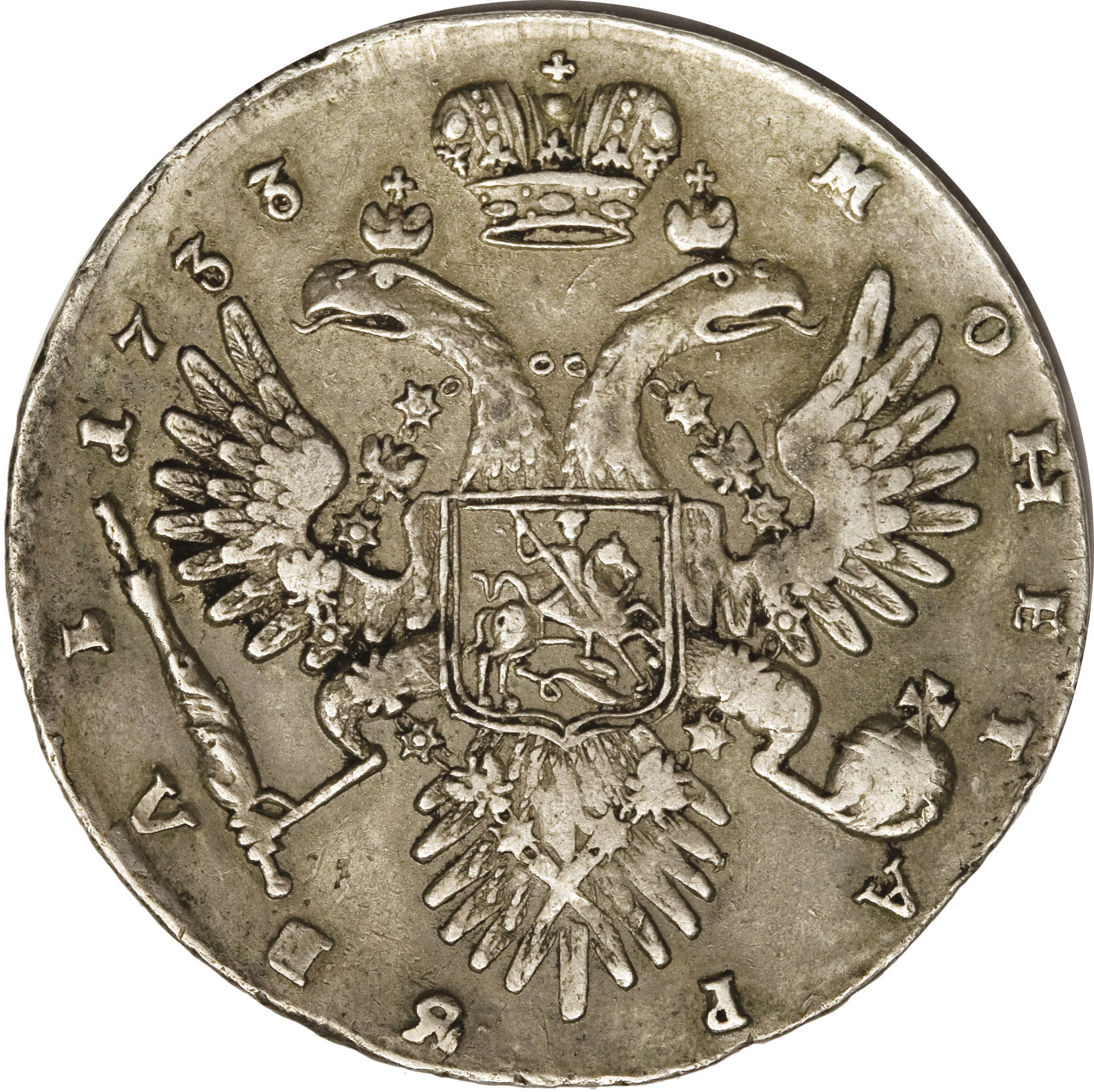
Description:
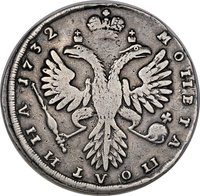
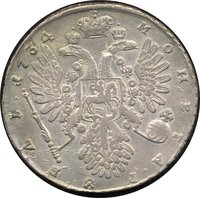
Crowned double-headed eagle surrounded by legend, value, and date.
Inscription:
МОНЕТА РƔБЛЬ 1733
Script: Cyrillic
Edge
Patterned
Categories
| Symbols> Coat of Arms |
| Person> Monarch |
Mints
| Name | Mark |
|---|---|
| Kadashevsky Mint | — |
Mintings
| Year | Mint Mark | Mintage | Quality | Collection |
|---|---|---|---|---|
| 1733 | — | — | ||
| 1734 | — | — |
Historical background
In 1733, the Russian Empire’s currency system was defined by the copper-based monetary reforms initiated by Peter the Great, which were still in effect under the reign of Empress Anna Ioannovna. The system was fundamentally bimetallic, with the silver ruble as the primary unit of account, but it was heavily reliant on a massive and cumbersome copper coinage for everyday circulation. The most iconic coin was the large plate money (platy or shestaki), square copper plates minted since 1726, each weighing over 1.6 kilograms and officially valued at 5 kopecks in silver. This unwieldy system was a direct result of Russia's chronic shortage of domestic silver, forcing the state to use its vast copper resources to facilitate a growing economy and state expenditures.
The currency situation was stable but inefficient and presented significant practical challenges. The sheer weight and size of the copper platy made large transactions physically difficult and transportation costly, hindering commerce. Furthermore, the system was vulnerable to counterfeiting and required strict state control to maintain the fixed exchange rate between copper and silver. Empress Anna’s government continued to manage this structure, focusing on maintaining the integrity of the coinage to fund state projects, including military campaigns and the ongoing construction of St. Petersburg, without causing inflationary debasement.
Looking ahead, the system of 1733 was nearing its end. The impracticalities of the plate money would lead to its abolition just ten years later, in 1743, under Empress Elizabeth. The period thus represents the late stage of Peter the Great’s monetary experiment, a necessary but awkward bridge between the pre-Petrine silver-based system and the more standardized, European-influenced coinage that would evolve later in the 18th century as Russia sought greater integration into the global economy.
The currency situation was stable but inefficient and presented significant practical challenges. The sheer weight and size of the copper platy made large transactions physically difficult and transportation costly, hindering commerce. Furthermore, the system was vulnerable to counterfeiting and required strict state control to maintain the fixed exchange rate between copper and silver. Empress Anna’s government continued to manage this structure, focusing on maintaining the integrity of the coinage to fund state projects, including military campaigns and the ongoing construction of St. Petersburg, without causing inflationary debasement.
Looking ahead, the system of 1733 was nearing its end. The impracticalities of the plate money would lead to its abolition just ten years later, in 1743, under Empress Elizabeth. The period thus represents the late stage of Peter the Great’s monetary experiment, a necessary but awkward bridge between the pre-Petrine silver-based system and the more standardized, European-influenced coinage that would evolve later in the 18th century as Russia sought greater integration into the global economy.
💎 Extremely Rare