

1 Ruble – Russian Empire
Russia
Context
Year: 1734
Country: Russia 
Issuer: Russian Empire
Ruler: Anna I
Currency:
(1700—1917)
Demonetized: Yes
Material
References
KM: #Click to copy to clipboard192.3
Numista: #95664
Value
Bullion value: $59.96
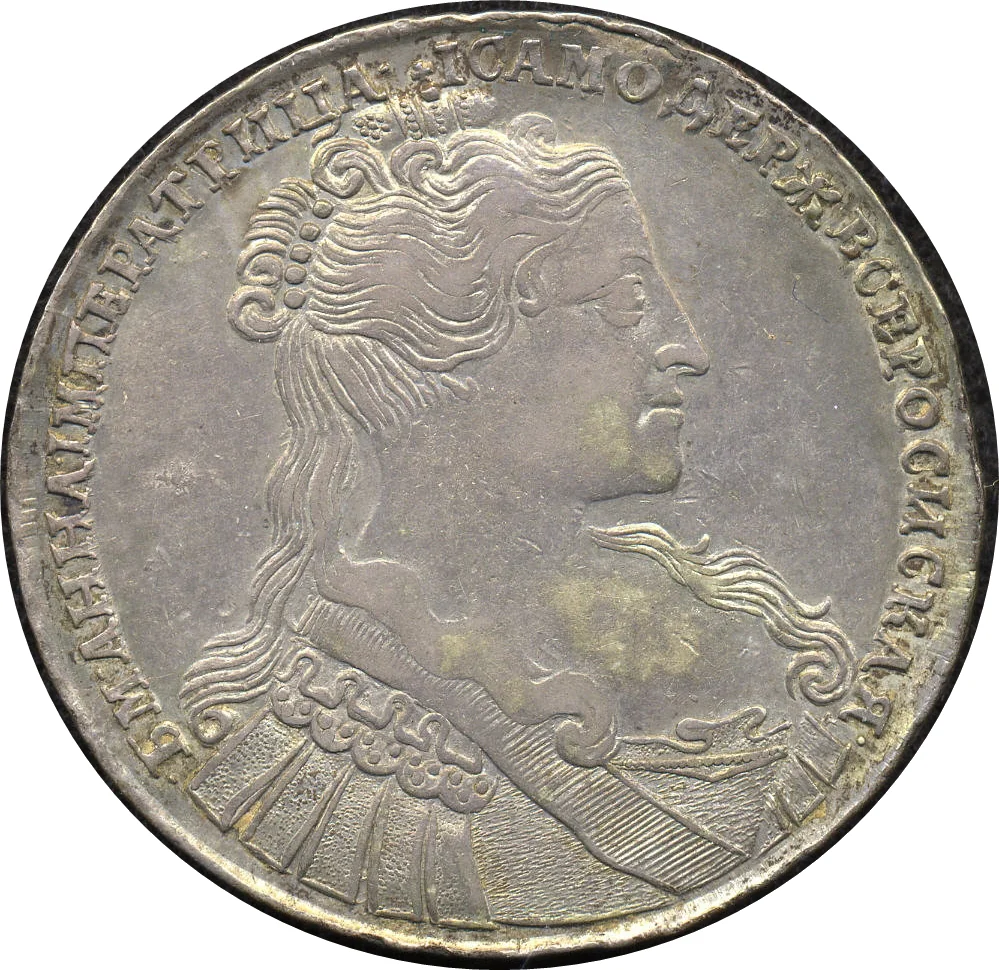
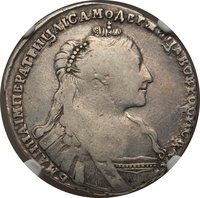
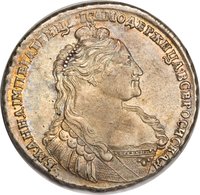
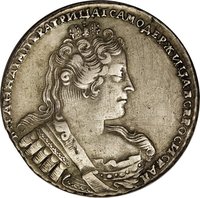
Obverse
Description:
Empress Anna's portrait.
Inscription:
∙Б∙М∙АННА∙IМПЕРАТРИЦА∙ IСАМОДЕРЖ ВСЕРОСИСКАЯ∙
Script: Cyrillic
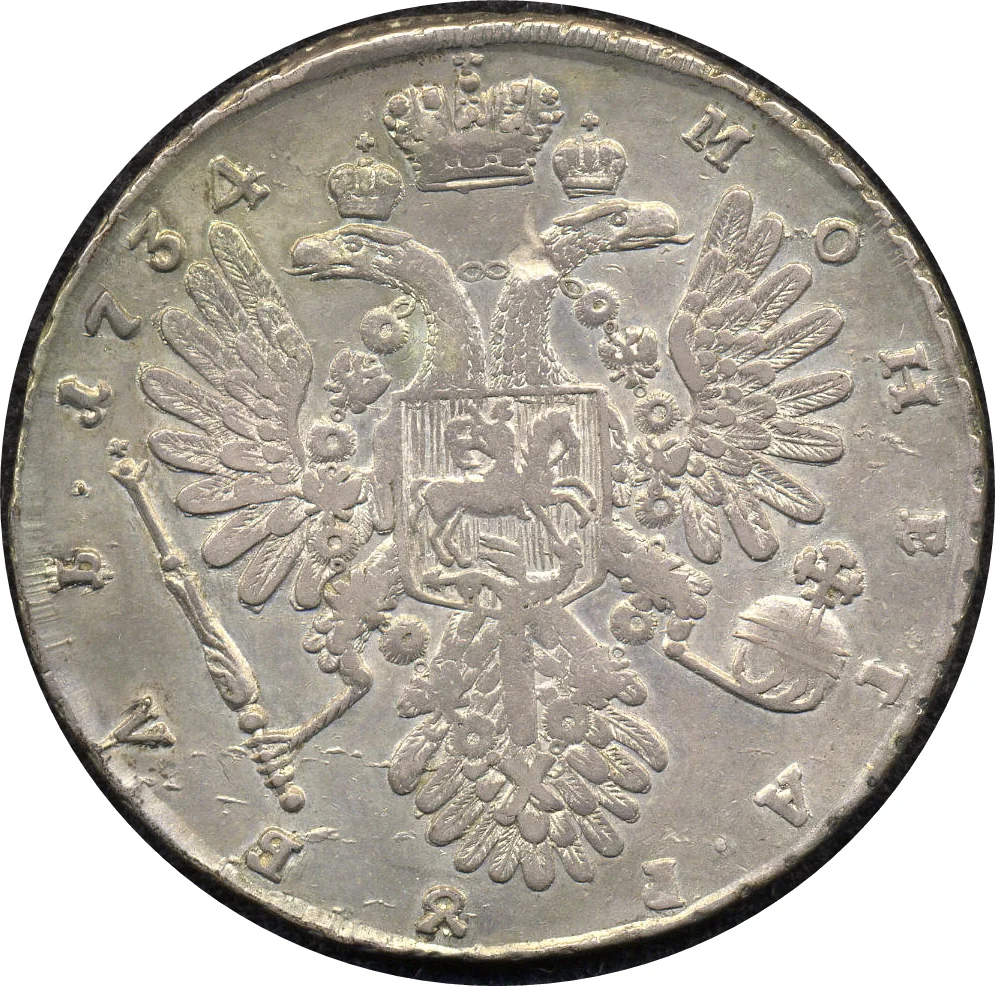
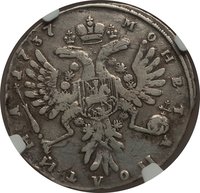
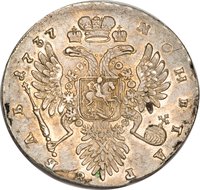
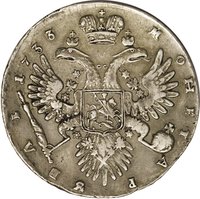
Reverse
Description:
Crowned double-headed eagle surrounded by legend, value, and date.
Inscription:
МОНЕТА ∙ РƔБЛЬ ∙ 1734
Script: Cyrillic
Edge
Patterned
Categories
| Symbols> Coat of Arms |
| Person> Monarch |
Mints
| Name | Mark |
|---|---|
| Kadashevsky Mint | — |
Mintings
| Year | Mint Mark | Mintage | Quality | Collection |
|---|---|---|---|---|
| 1734 | — | — |
Historical background
In 1734, the Russian Empire's currency system was defined by the copper and silver coinage reforms initiated by Peter the Great, which were still being consolidated under the reign of Empress Anna Ioannovna. The foundation was the silver ruble, but the most significant feature of the monetary landscape was the overwhelming prevalence of heavy copper kopeks. Peter's earlier effort to introduce lightweight copper dengi (half-kopeks) alongside a silver-based system had evolved into a reliance on bulky copper coinage for everyday transactions. This created a practical dichotomy: large state payments and foreign trade were conducted in silver, while the domestic economy and army payments were heavily dependent on cumbersome sacks of copper coins.
The system faced persistent challenges, including a chronic shortage of small-denomination silver coinage, which disrupted market trade. Furthermore, the state's need to finance military campaigns, particularly against the Ottoman Empire, led to continued minting of copper coins at state-assigned values, a practice that carried inherent inflationary risks. While not yet in crisis in 1734, the pressure on the currency was evident. Counterfeiting was also a serious problem, exacerbated by the technical simplicity of the copper coins and the vastness of the empire, which made enforcement difficult.
Empress Anna's government was actively engaged in managing these issues. The period saw efforts to improve the quality and security of coinage, including the introduction of new minting technology and the issuance of decrees against counterfeiting. The state treasury carefully regulated the flow and exchange rate between copper and silver to maintain stability. Thus, the currency situation in 1734 was one of a managed but strained bimetallic system, where the imperial administration worked to maintain the functionality of Peter the Great's monetary legacy amid the ongoing fiscal demands of a militaristic and expanding empire.
The system faced persistent challenges, including a chronic shortage of small-denomination silver coinage, which disrupted market trade. Furthermore, the state's need to finance military campaigns, particularly against the Ottoman Empire, led to continued minting of copper coins at state-assigned values, a practice that carried inherent inflationary risks. While not yet in crisis in 1734, the pressure on the currency was evident. Counterfeiting was also a serious problem, exacerbated by the technical simplicity of the copper coins and the vastness of the empire, which made enforcement difficult.
Empress Anna's government was actively engaged in managing these issues. The period saw efforts to improve the quality and security of coinage, including the introduction of new minting technology and the issuance of decrees against counterfeiting. The state treasury carefully regulated the flow and exchange rate between copper and silver to maintain stability. Thus, the currency situation in 1734 was one of a managed but strained bimetallic system, where the imperial administration worked to maintain the functionality of Peter the Great's monetary legacy amid the ongoing fiscal demands of a militaristic and expanding empire.
✨ Legendary