

1 Ducat – Kingdom of Bohemia
Context
Years: 1710–1711
Country: Bohemia
Issuer: Kingdom of Bohemia
Ruler: Joseph I
Currency:
(1520—1754)
Demonetized: Yes
References
KM: #Click to copy to clipboard646
Numista: #95572
Value
Bullion value: $573.62
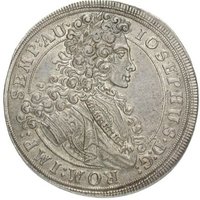
Obverse
Description:
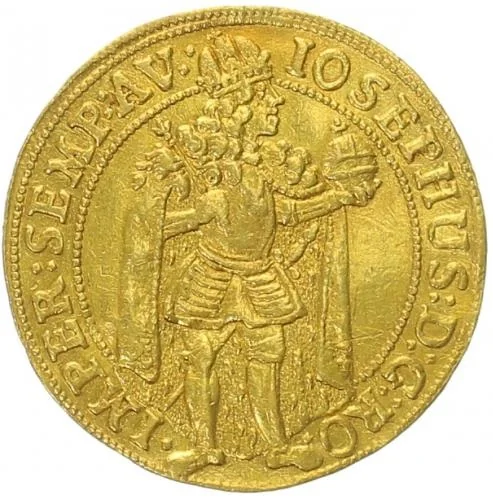
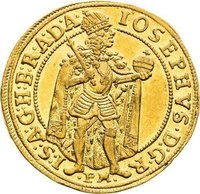
Armored figure holding orb and scepter, titled for Josef I.
Inscription:
IOSEPHUS. D: G: RO: IMPER : SEMP: AV
Script: Latin
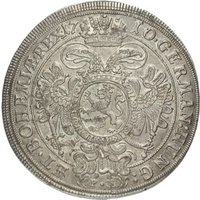
Reverse
Description:
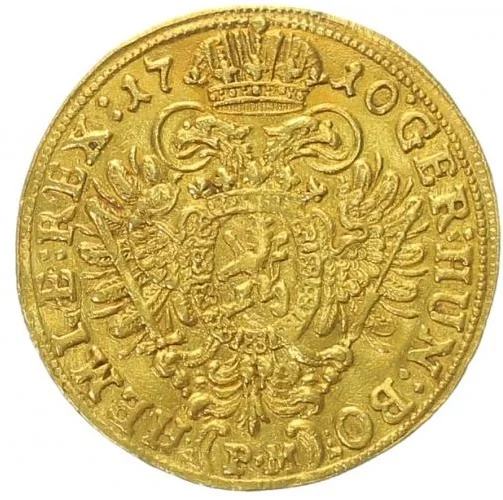
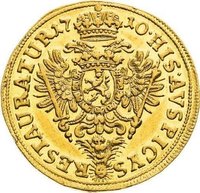
Crowned eagle, no inner ring.
Inscription:
GER: HUN: BO HEMIAE. REX 17 10
(P M)
(P M)
Script: Latin
Edge
Mints
| Name | Mark |
|---|---|
| Prague | — |
Mintings
| Year | Mint Mark | Mintage | Quality | Collection |
|---|---|---|---|---|
| 1710 | PM | — | ||
| 1711 | — | — |
Historical background
In 1710, the Kingdom of Bohemia, a core crown land of the Habsburg Monarchy, was grappling with the severe economic and monetary consequences of the long War of the Spanish Succession (1701-1714). The conflict had placed an enormous fiscal strain on the Habsburg state, leading to repeated debasements of the coinage. The primary circulating coin, the silver krejcar (groschen), had been steadily reduced in its precious metal content to help finance the war, causing its real value to plummet and fueling significant inflation. This period saw a chaotic coexistence of older, full-value coins, which were hoarded, and newer, inferior coins, disrupting everyday trade and market confidence.
The monetary system was officially based on the silver thaler (or tolar), but the everyday reality for most Bohemians was defined by small silver and copper coins. The Vienna court, which controlled Bohemian monetary policy, had authorized mints in Prague, Kutná Hora, and elsewhere to strike these debased coins. The result was a classic "bad money drives out good" scenario (Gresham's Law), where sound money disappeared from circulation. Prices for basic goods rose sharply, causing hardship for peasants, laborers, and those on fixed incomes, while war contractors and speculators often profited.
This unstable currency situation was part of a broader pattern of economic exhaustion in Bohemia, which had not fully recovered from the devastation of the Thirty Years' War a century prior. While the Habsburg authorities recognized the problem, comprehensive monetary reform would only begin after the war's end, culminating in the more stable Conventionsmünze system established in the 1750s. Thus, 1710 represents a low point in a prolonged crisis, characterized by a depreciating currency, economic strain, and a loss of public trust in the coinage.
The monetary system was officially based on the silver thaler (or tolar), but the everyday reality for most Bohemians was defined by small silver and copper coins. The Vienna court, which controlled Bohemian monetary policy, had authorized mints in Prague, Kutná Hora, and elsewhere to strike these debased coins. The result was a classic "bad money drives out good" scenario (Gresham's Law), where sound money disappeared from circulation. Prices for basic goods rose sharply, causing hardship for peasants, laborers, and those on fixed incomes, while war contractors and speculators often profited.
This unstable currency situation was part of a broader pattern of economic exhaustion in Bohemia, which had not fully recovered from the devastation of the Thirty Years' War a century prior. While the Habsburg authorities recognized the problem, comprehensive monetary reform would only begin after the war's end, culminating in the more stable Conventionsmünze system established in the 1750s. Thus, 1710 represents a low point in a prolonged crisis, characterized by a depreciating currency, economic strain, and a loss of public trust in the coinage.
✨ Legendary