

3 Thalers – Austrian Empire
Austria
Context
Years: 1639–1641
Country: Austria 
Issuer: Austrian Empire
Ruler: Ferdinand III
Currency:
(1520—1754)
Demonetized: Yes
References
KM: #Click to copy to clipboard877
Numista: #94513
Value
Bullion value: $231.68
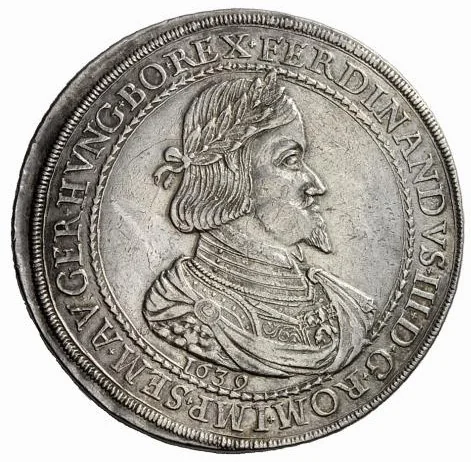
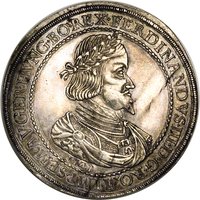
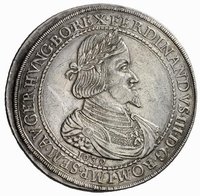
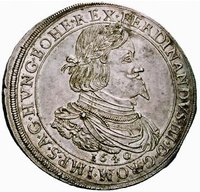
Obverse
Description:
Laureate bust right within a leafy circle, smooth outer border, date below.
Inscription:
FERDINANDVS III D G ROM IMP SEM AV GER HVNG BO REX
Script: Latin
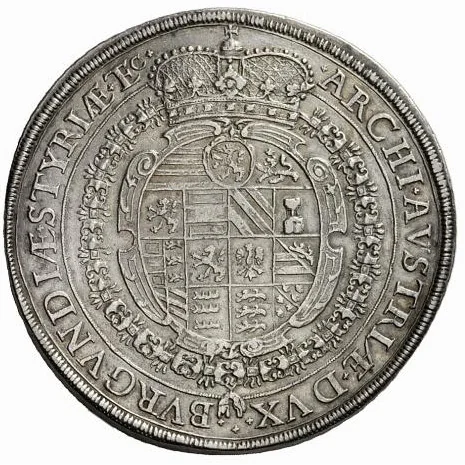
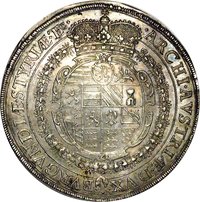
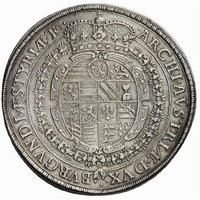
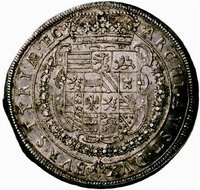
Reverse
Description:
Crowned arms in an oval shield with a small Styrian panther shield above, encircled by the Golden Fleece chain. The crown breaks the surrounding circle and legend.
Inscription:
ARCHI AVSTRIÆ DVX BVRGVNDIÆ STYRIÆ ETc
Script: Latin
Edge
Mints
| Name | Mark |
|---|---|
| Graz | — |
Mintings
| Year | Mint Mark | Mintage | Quality | Collection |
|---|---|---|---|---|
| 1639 | — | — | ||
| 1641 | — | — |
Historical background
In 1639, the Austrian Habsburg lands, deeply embroiled in the Thirty Years' War, faced a severe and worsening currency crisis. The primary unit was the silver Reichsthaler, but the financial demands of prolonged warfare led to rampant debasement. The Habsburgs, particularly under Emperor Ferdinand III, and various provincial estates resorted to minting vast quantities of inferior coinage, notably the small Kipper- und Wipper coins with low silver content, to pay soldiers and meet obligations. This practice, widespread across the Holy Roman Empire in the 1620s, had left a legacy of monetary chaos and shattered public trust.
The situation was characterized by a chaotic multiplicity of currencies. Alongside debased domestic coins, full-weight Reichsthalers from other German states, Hungarian gold ducats, Spanish Reales from New World trade, and even older Guldens circulated at fluctuating and unstable exchange rates. This complexity crippled commerce, as merchants and peasants alike struggled to assess the true value of coins, leading to price inflation, market disruption, and a preference for hoarding good silver. The Vienna Münzstätte (mint) was active, but its output often contributed to the problem rather than solving it.
Despite the crisis, 1639 falls within a period of tentative stabilization attempts. The 1623 Münzordnung (coinage ordinance) had temporarily restored the Reichsthaler standard, but war pressures repeatedly undermined such reforms. By 1639, authorities were grappling with the consequences of debasement, recognizing the need for sound money to fund the war effort itself. Thus, the background is one of a fragile and contested monetary system caught between the dire exigencies of war finance and the long-term economic necessity of stable currency, setting the stage for more concerted imperial reforms later in the century.
The situation was characterized by a chaotic multiplicity of currencies. Alongside debased domestic coins, full-weight Reichsthalers from other German states, Hungarian gold ducats, Spanish Reales from New World trade, and even older Guldens circulated at fluctuating and unstable exchange rates. This complexity crippled commerce, as merchants and peasants alike struggled to assess the true value of coins, leading to price inflation, market disruption, and a preference for hoarding good silver. The Vienna Münzstätte (mint) was active, but its output often contributed to the problem rather than solving it.
Despite the crisis, 1639 falls within a period of tentative stabilization attempts. The 1623 Münzordnung (coinage ordinance) had temporarily restored the Reichsthaler standard, but war pressures repeatedly undermined such reforms. By 1639, authorities were grappling with the consequences of debasement, recognizing the need for sound money to fund the war effort itself. Thus, the background is one of a fragile and contested monetary system caught between the dire exigencies of war finance and the long-term economic necessity of stable currency, setting the stage for more concerted imperial reforms later in the century.
✨ Legendary