

1 Thaler – Austrian Empire
Austria
Context
Years: 1630–1636
Country: Austria 
Issuer: Austrian Empire
Ruler: Ferdinand II
Currency:
(1520—1754)
Demonetized: Yes
References
KM: #Click to copy to clipboard749.1
Numista: #94167
Value
Bullion value: $81.79
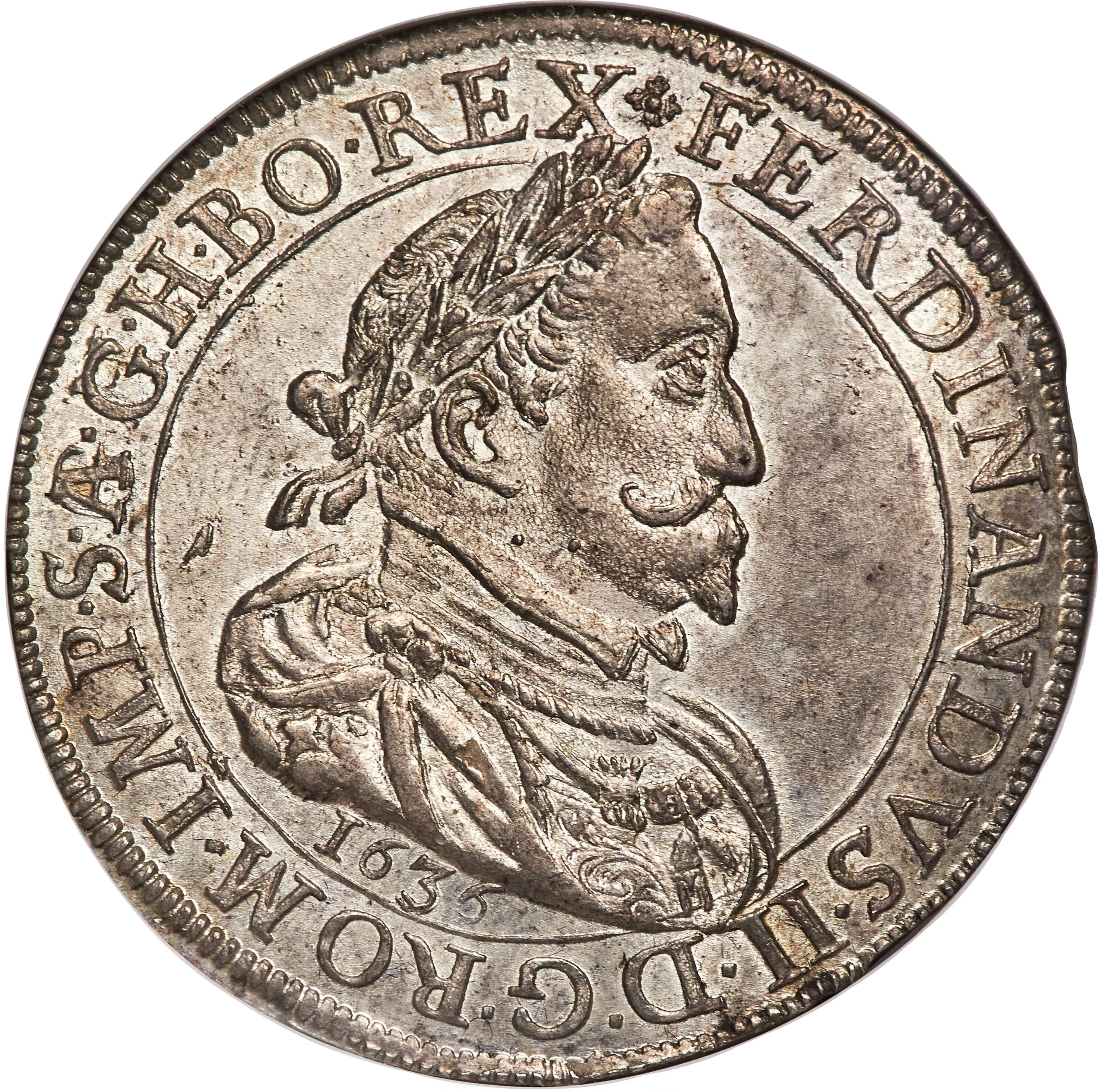
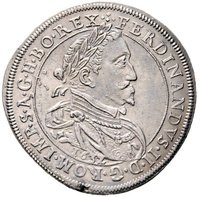
Obverse
Description:
Laureate bust right in inner circle, date below.
Inscription:
FERDINAN II D // G ROM IMP S A G H BO REX
Script: Latin
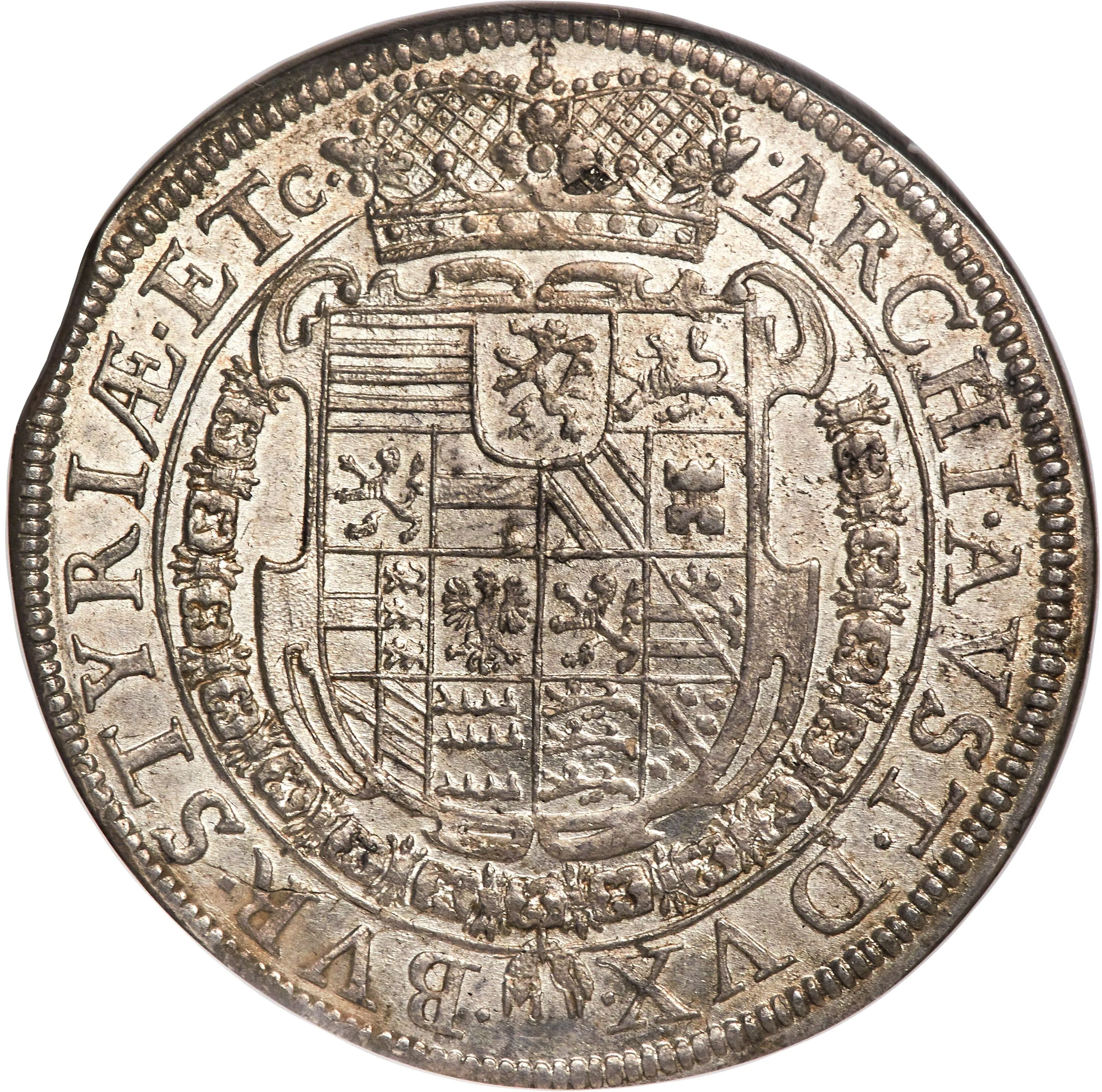
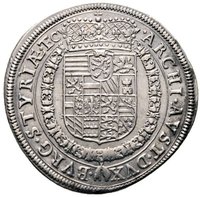
Reverse
Description:
Crowned baroque arms encircled by the Order of the Golden Fleece chain, with the small shield of Styria above.
Inscription:
ARCHI AVST DVX // BVR STYRIÆ ETC
Script: Latin
Edge
Mints
| Name | Mark |
|---|---|
| Graz | — |
Mintings
| Year | Mint Mark | Mintage | Quality | Collection |
|---|---|---|---|---|
| 1630 | — | — | ||
| 1631 | — | — | ||
| 1632 | — | — | ||
| 1633 | — | — | ||
| 1636 | — | — |
Historical background
In 1630, the Habsburg-ruled Austrian Empire was deeply embroiled in the Thirty Years' War (1618-1648), a conflict that placed immense fiscal strain on its economy and currency system. The primary currency in circulation was the silver Reichsthaler, a standard imperial coin, alongside a plethora of regional and local coins issued by various estates and cities. However, the crown's desperate need to finance massive military expenditures led to repeated currency debasement. Authorities, notably under Emperor Ferdinand II, reduced the silver content in minted coins while officially maintaining their face value, a practice that generated short-term revenue but eroded public trust and sparked inflation.
This period was characterized by a chaotic "Kipper und Wipper" (tipper and see-saw) crisis, which had peaked in the early 1620s but whose disruptive effects lingered throughout the decade. The crisis involved the systematic clipping and melting of good coins to create debased ones, and the frantic exchange of currencies across borders to exploit minute differences in metal content. While the most severe phase had passed, the monetary system remained fragile and complex, with a confusing mix of older, purer coins hoarded by the populace and newer, inferior coins driving everyday transactions.
Consequently, the Austrian economy in 1630 suffered from significant price instability, a lack of uniform currency, and a deep-seated distrust in coinage. The government's attempts to stabilize the situation, such as the 1623 Münzordnung (coinage ordinance), had limited success against the overwhelming pressures of war finance. The currency situation thus reflected the broader state of the empire: administratively fragmented, financially exhausted, and struggling to maintain authority and economic order amidst a protracted and devastating European war.
This period was characterized by a chaotic "Kipper und Wipper" (tipper and see-saw) crisis, which had peaked in the early 1620s but whose disruptive effects lingered throughout the decade. The crisis involved the systematic clipping and melting of good coins to create debased ones, and the frantic exchange of currencies across borders to exploit minute differences in metal content. While the most severe phase had passed, the monetary system remained fragile and complex, with a confusing mix of older, purer coins hoarded by the populace and newer, inferior coins driving everyday transactions.
Consequently, the Austrian economy in 1630 suffered from significant price instability, a lack of uniform currency, and a deep-seated distrust in coinage. The government's attempts to stabilize the situation, such as the 1623 Münzordnung (coinage ordinance), had limited success against the overwhelming pressures of war finance. The currency situation thus reflected the broader state of the empire: administratively fragmented, financially exhausted, and struggling to maintain authority and economic order amidst a protracted and devastating European war.
✨ Legendary