

3 kreuzer – Austrian Empire
Add to wishlist
Austria
Context
Years: 1629–1637
Country: Austria
Issuer: Austrian Empire
Ruler: Ferdinand II
Currency:
(1520—1754)
Demonetized: Yes
Material
Diameter: 21 mm
Weight: 1.55 g
Silver Weight:: 0.78 g
Shape: Round
Composition: 50% Silver
Standard: Gold twentieth ounce
Magnetic: No
Alignment: Medal alignment
flip
References
KM: #
Numista: #73093
Value
Bullion value: $1.93
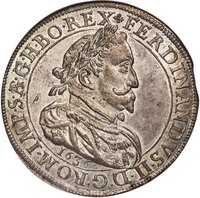
Obverse
Description:
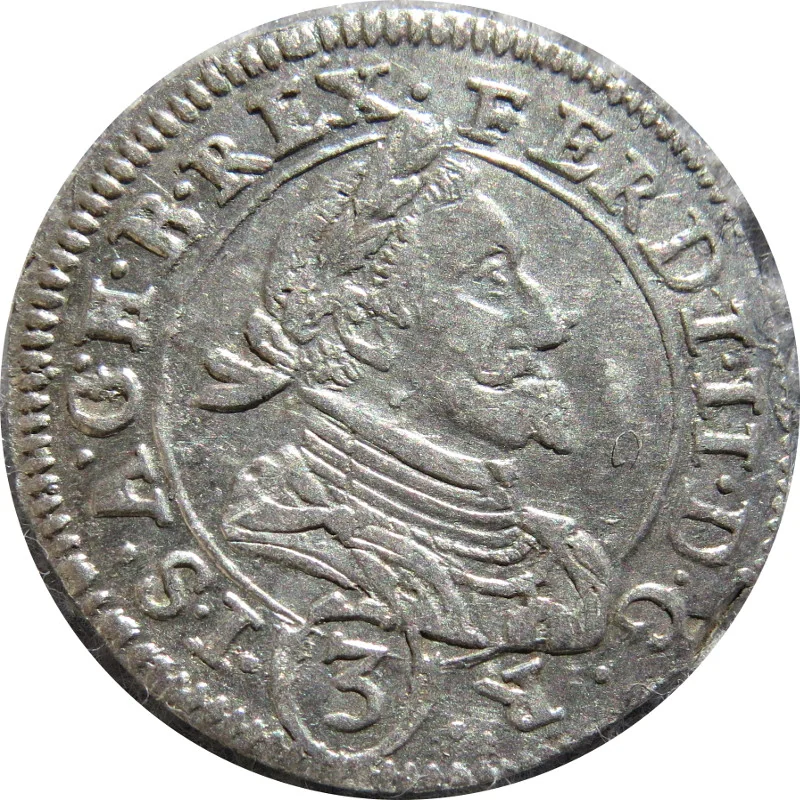
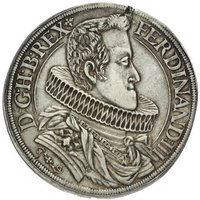
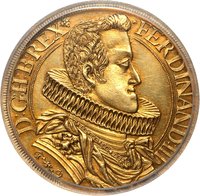
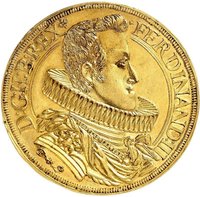
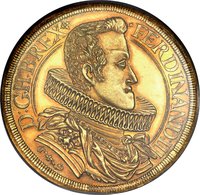
Portrait of Ferdinand II facing right within a circle, with value below. Legend: "Ferdinand II Dei Gratia Romanorum Imperator Germaniae Hungariae Bohemiae Rex".
Inscription:
FERDI II D G R (3) I S A G H B REX
Script: Latin
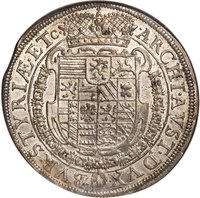
Reverse
Description:
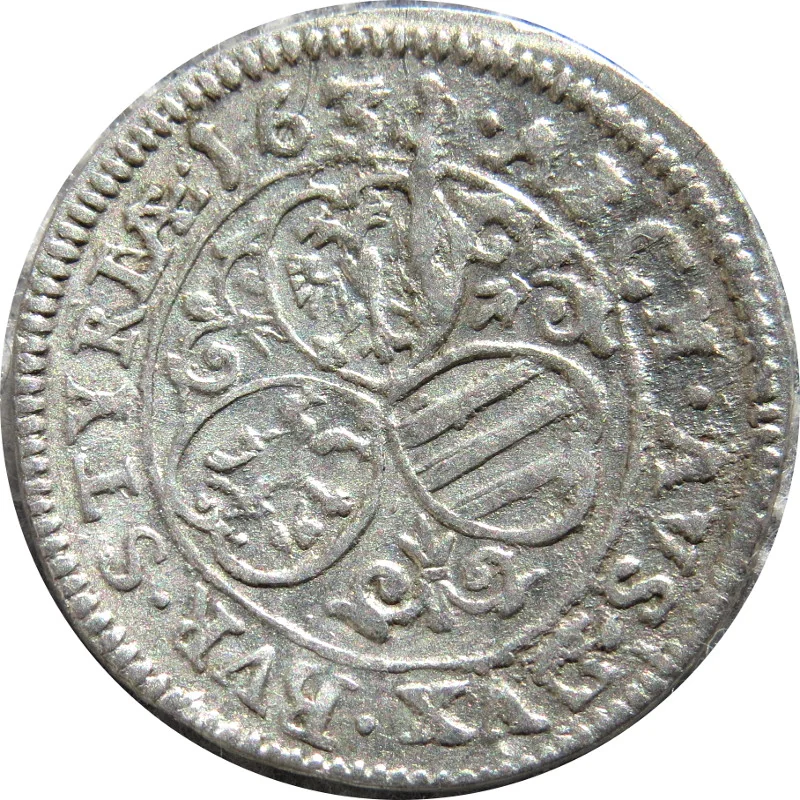
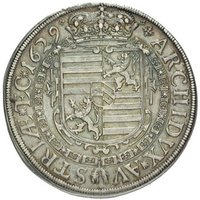
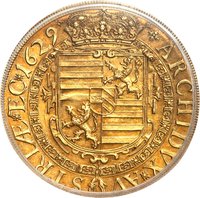
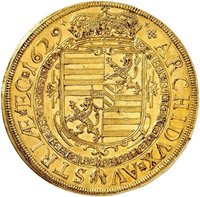
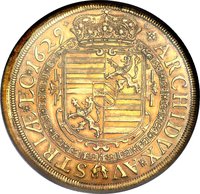
Three heart-shaped shields—Austria (top), Burgundy (right), Styria (left)—point inward, with ornaments between them, within a circle. Legend: "Archidux Austriae Dux Burgundiae et Styriae."
Inscription:
ARCH AVS DVX BVR STYRIÆ 1630
ou
ARCHI
ou
ARCHI
Script: Latin
Edge
Mints
| Name | Mark |
|---|---|
| Graz | — |
Mintings
| Year | Mint Mark | Mintage | Quality | Collection |
|---|---|---|---|---|
| 1629 | — | — | ||
| 1630 | — | — | ||
| 1631 | — | — | ||
| 1632 | — | — | ||
| 1633 | — | — | ||
| 1634 | — | — | ||
| 1635 | — | — | ||
| 1636 | — | — | ||
| 1637 | — | — |
Historical background
In 1629, the Austrian Habsburg monarchy, a constituent part of the Holy Roman Empire, was embroiled in the devastating Thirty Years' War (1618-1648). The financial demands of maintaining large mercenary armies were catastrophic, leading to a severe fiscal crisis. Emperor Ferdinand II's policy of financing the war through repeated debasement of the coinage had triggered a classic currency crisis. Mints, often leased to private operators for quick profit, produced massive quantities of lightweight, low-quality coins like Kipper and Wipper pennies, flooding the economy and causing rampant inflation.
This period, known as the Kipper- und Wipperzeit (roughly 1619-1623), had peaked a few years earlier, but its consequences were deeply felt in 1629. While the most extreme debasement had been officially halted, the monetary system remained broken and public trust was shattered. The circulation was a chaotic mix of old, full-weight coins, which were hoarded, and the newer, debased coins, which nobody wanted. This led to a severe shortage of reliable currency for everyday trade, stifling commerce and causing widespread economic hardship, particularly among peasants and soldiers paid in worthless money.
Ferdinand II attempted reform with the Münzedikt (Coin Edict) of 1623, which recalled the bad coinage and reintroduced a stable Reichsthaler. However, by 1629, the relentless costs of war continued to strain this system. The treasury was empty, and the crown's credit was exhausted. Thus, while not in the absolute frenzy of the early 1620s, the currency situation in 1629 was one of fragile stability built on a mountain of war debt, with the underlying pressures of imperial finance ensuring that monetary stability remained precarious at best.
This period, known as the Kipper- und Wipperzeit (roughly 1619-1623), had peaked a few years earlier, but its consequences were deeply felt in 1629. While the most extreme debasement had been officially halted, the monetary system remained broken and public trust was shattered. The circulation was a chaotic mix of old, full-weight coins, which were hoarded, and the newer, debased coins, which nobody wanted. This led to a severe shortage of reliable currency for everyday trade, stifling commerce and causing widespread economic hardship, particularly among peasants and soldiers paid in worthless money.
Ferdinand II attempted reform with the Münzedikt (Coin Edict) of 1623, which recalled the bad coinage and reintroduced a stable Reichsthaler. However, by 1629, the relentless costs of war continued to strain this system. The treasury was empty, and the crown's credit was exhausted. Thus, while not in the absolute frenzy of the early 1620s, the currency situation in 1629 was one of fragile stability built on a mountain of war debt, with the underlying pressures of imperial finance ensuring that monetary stability remained precarious at best.
⭐ Rare