

1 ducat – Danish West Indies
Add to wishlist
United States
Context
Year: 1749
Country: United States
Issuer: Danish West Indies
Ruler: Frederick V
Currency:
(1740—1849)
Demonetized: Yes
Material
References
KM: #
Numista: #94099
Value
Bullion value: $537.27
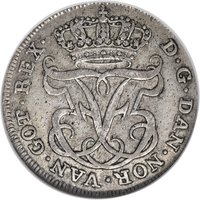
Obverse
Description:
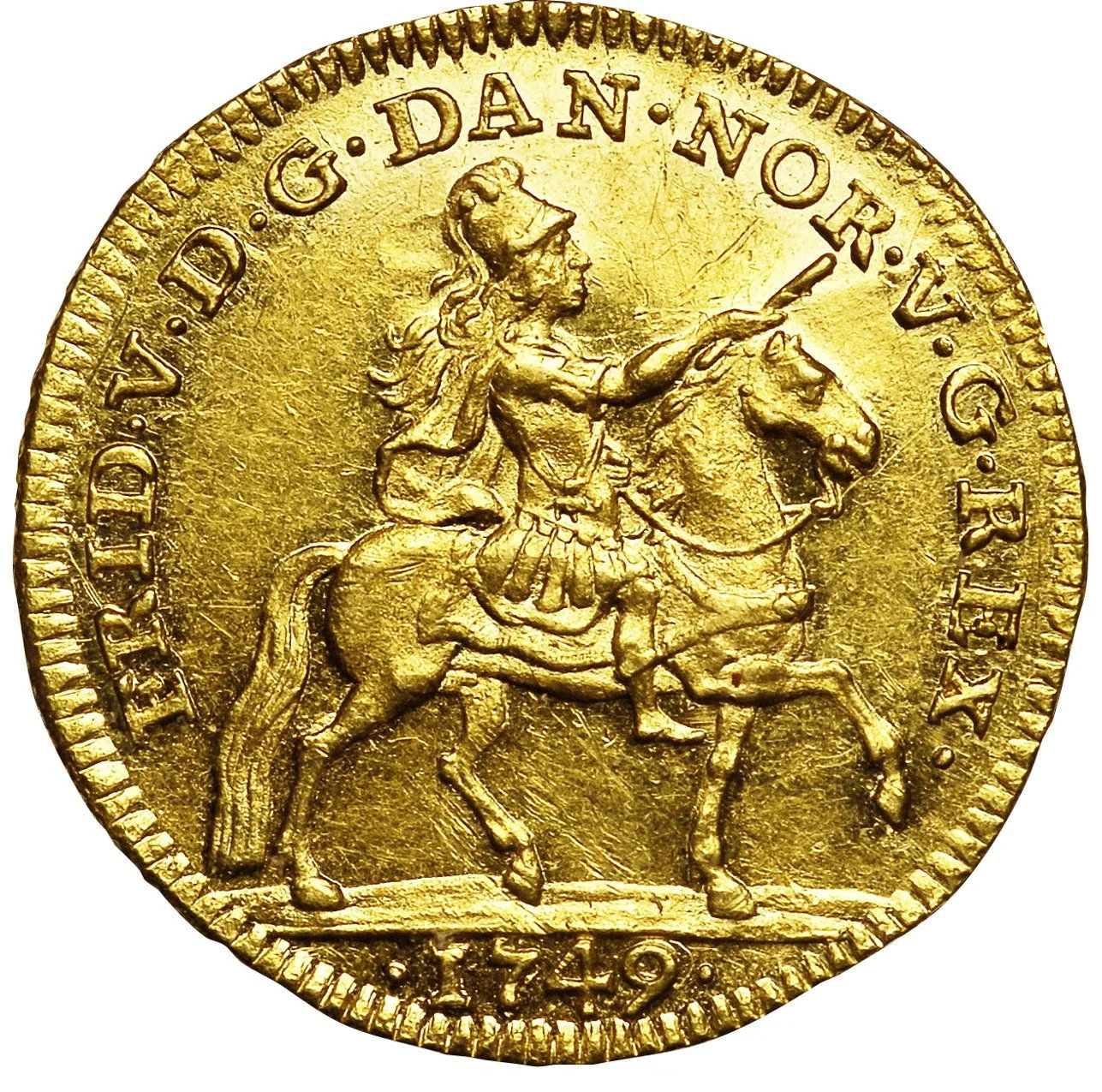
Mounted king encircled by text.
Inscription:
FRID·V·D·G·DAN·NOR·V·G·REX·
·1749·
·1749·
Script: Latin
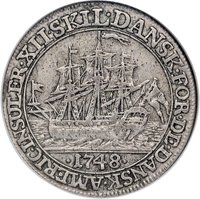
Reverse
Description:
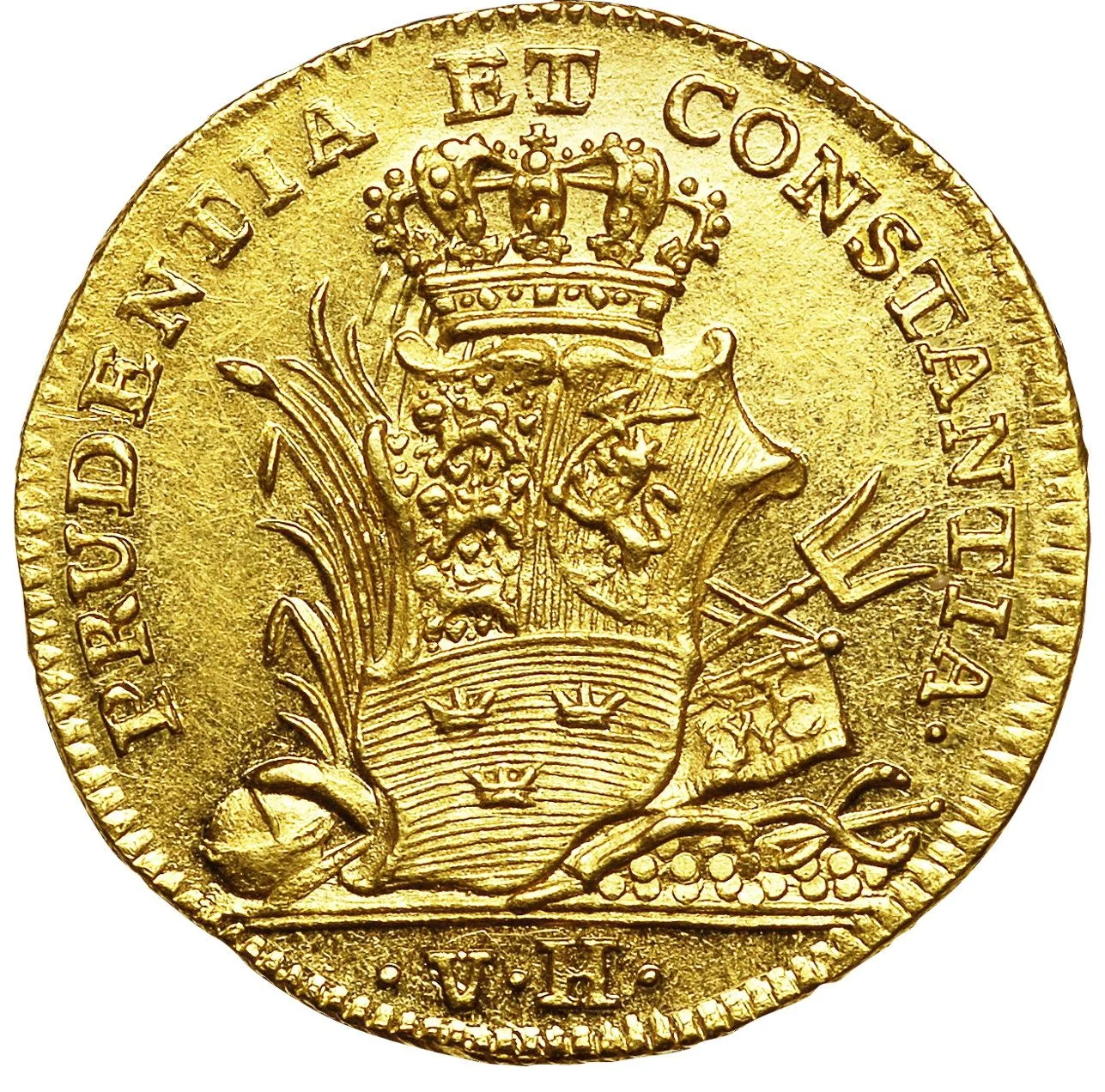
Arms with a crown.
Inscription:
PRUDENTIA ET CONSTANTIA·
·V·H·
·V·H·
Script: Latin
Engraver: Peter Nicholai von Haven
Edge
Engrailed
Categories
| Animal> Horse |
| Object> Armour |
| Person> Monarch |
| Symbol> Crown |
| Symbol> Caduceus |
| Symbols> Coat of Arms |
| Object> Cold weapons |
Mintings
| Year | Mint Mark | Mintage | Quality | Collection |
|---|---|---|---|---|
| 1749 | VH | — |
Historical background
In 1749, the currency situation in the Danish West Indies (present-day U.S. Virgin Islands) was characterized by chronic scarcity and chaotic multiplicity. The official currency was the Danish rigsdaler, divided into 96 skilling, but these coins were seldom seen in daily island commerce. The plantation-based sugar economy was fundamentally international, and the islands operated on a de facto system of "bookkeeping money," where transactions were recorded in a theoretical rigsdaler but often settled in a bewildering array of foreign coinage that circulated physically.
The most prevalent and trusted coins in actual circulation were Spanish and Spanish colonial silver pieces, particularly the peso or piece of eight (8 reales), alongside Portuguese gold Johannes coins and Dutch ducats. This foreign specie arrived through trade with neighboring islands, illicit commerce, and payments for the colony's sugar and rum exports. The Danish administration was forced to issue periodic proclamations assigning official exchange rates to these foreign coins, a practice that acknowledged reality but could not stabilize a system where the value of a Spanish dollar fluctuated based on its wear, clip, and the market's immediate needs.
This monetary confusion created significant problems for administration and commerce. It facilitated fraud, complicated tax collection, and caused constant disputes between planters, merchants, and laborers over the true value of payments. The situation in 1749 was part of a long-standing pattern that reflected the colony's embeddedness in the non-Danish Caribbean economic sphere, highlighting the weakness of metropolitan monetary control and the pragmatic, if disorderly, adaptation of a slave-based plantation economy to the fluid realities of Atlantic trade.
The most prevalent and trusted coins in actual circulation were Spanish and Spanish colonial silver pieces, particularly the peso or piece of eight (8 reales), alongside Portuguese gold Johannes coins and Dutch ducats. This foreign specie arrived through trade with neighboring islands, illicit commerce, and payments for the colony's sugar and rum exports. The Danish administration was forced to issue periodic proclamations assigning official exchange rates to these foreign coins, a practice that acknowledged reality but could not stabilize a system where the value of a Spanish dollar fluctuated based on its wear, clip, and the market's immediate needs.
This monetary confusion created significant problems for administration and commerce. It facilitated fraud, complicated tax collection, and caused constant disputes between planters, merchants, and laborers over the true value of payments. The situation in 1749 was part of a long-standing pattern that reflected the colony's embeddedness in the non-Danish Caribbean economic sphere, highlighting the weakness of metropolitan monetary control and the pragmatic, if disorderly, adaptation of a slave-based plantation economy to the fluid realities of Atlantic trade.
✨ Legendary