

12 skilling – Danish West Indies
Add to wishlist
United States
Context
Years: 1748–1765
Country: United States
Issuer: Danish West Indies
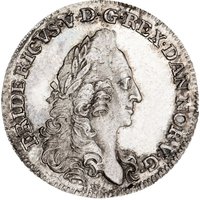
Ruler: Frederick V
Currency:
(1740—1849)
Demonetized: Yes
Total mintage: 537,000
Material
References
KM: #
Numista: #29557
Value
Bullion value: $4.15
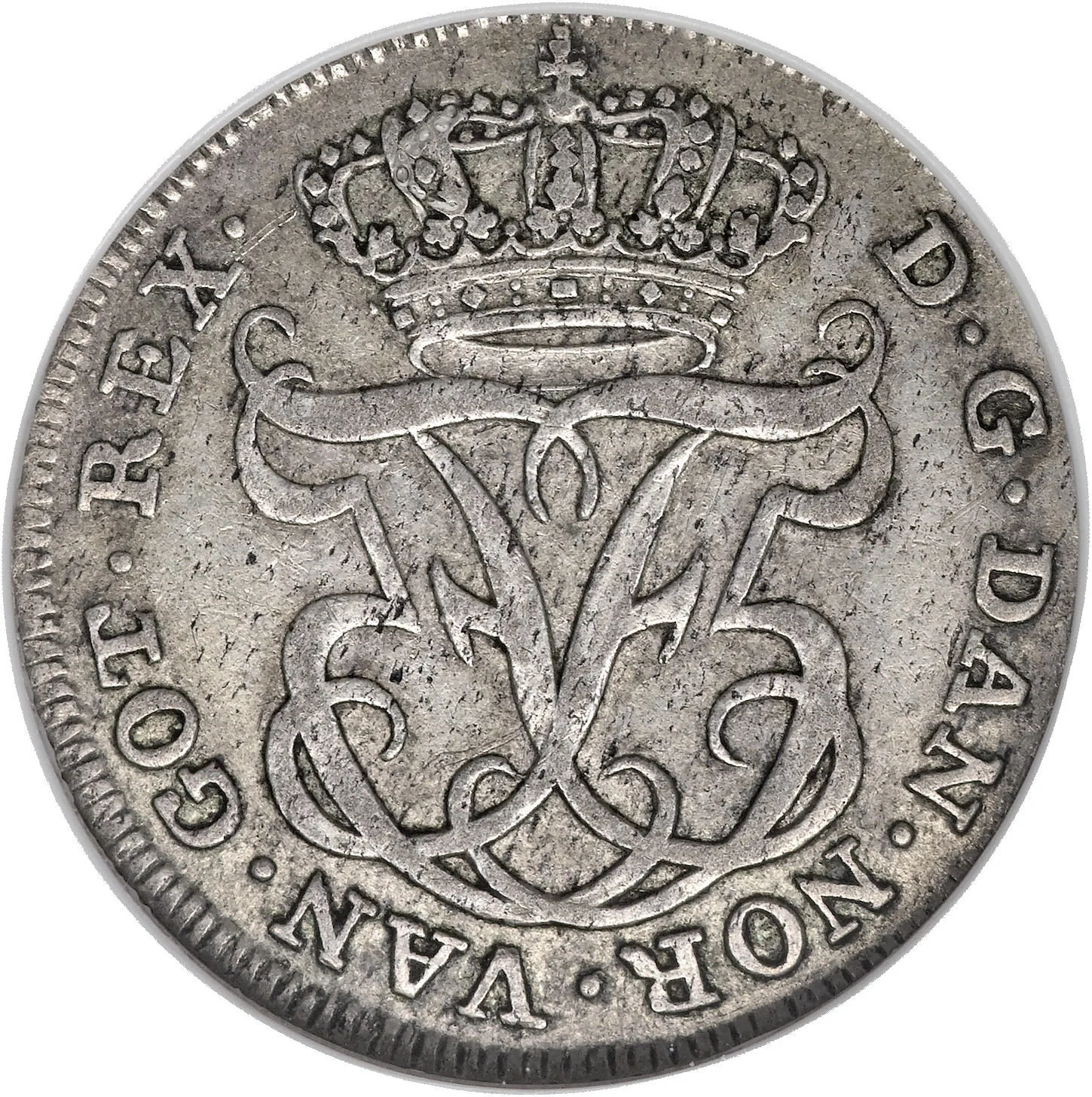
Obverse
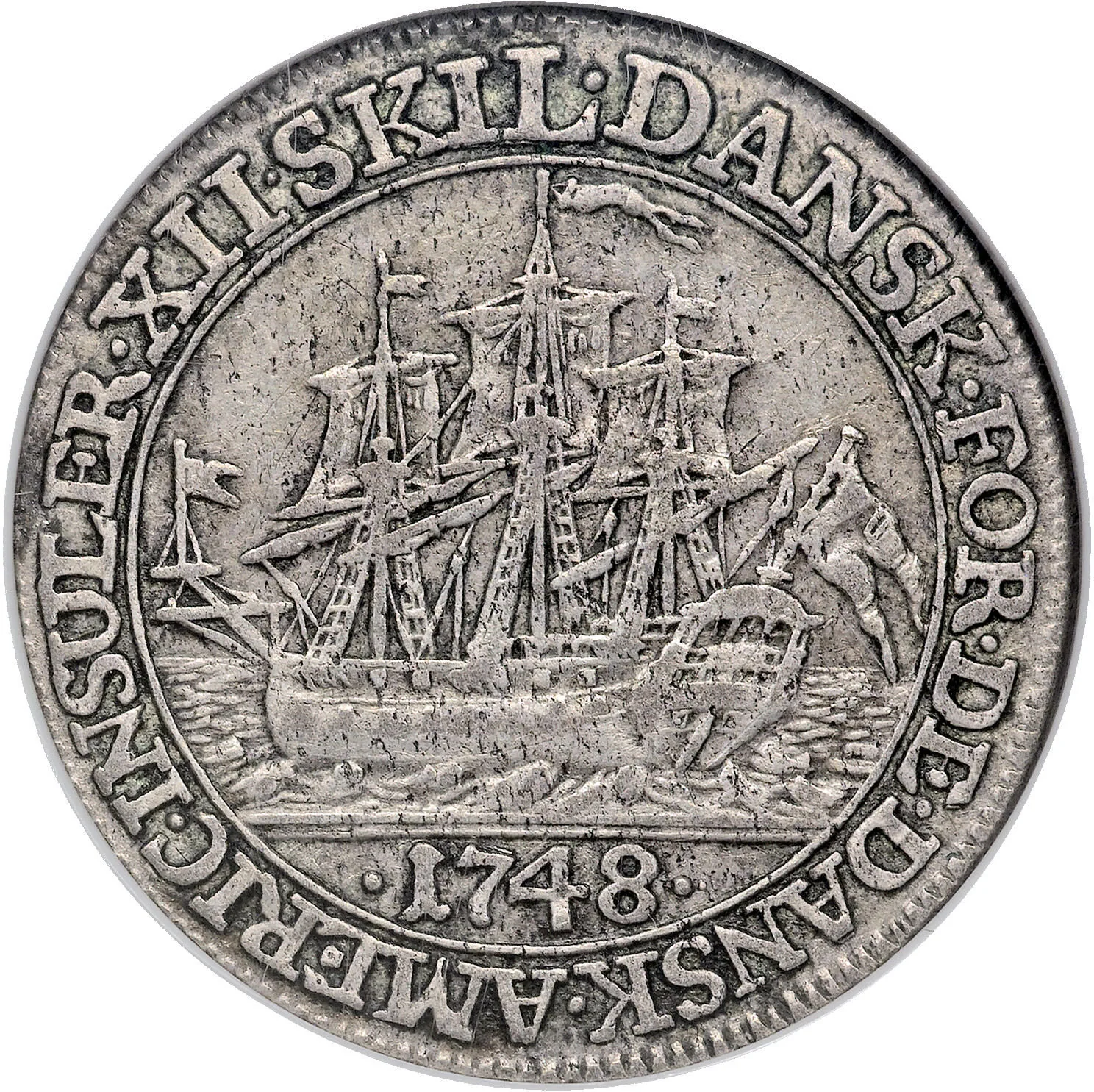
Reverse
Description:
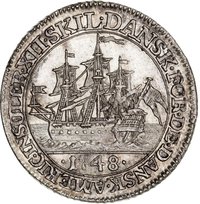
Ship in circle
Inscription:
.XII. SKIL. DANSK. FOR. DE. DANSK. AMERIC. INSULER
.1748.
.1748.
Script: Latin
Edge
Plain
Categories
| Symbols> Monogram |
| Symbol> Flag |
| Transportation> Watercraft |
| Symbol> Crown |
Mintings
| Year | Mint Mark | Mintage | Quality | Collection |
|---|---|---|---|---|
| 1748 | — | 51,000 | ||
| 1757 | — | 81,000 | ||
| 1763 | — | 160,000 | ||
| 1764 | — | 199,000 | ||
| 1765 | — | 46,000 |
Historical background
In 1748, the Danish West Indies (present-day U.S. Virgin Islands) operated within a complex and strained monetary environment typical of Caribbean plantation colonies. The official currency was the Danish rigsdaler, but it was chronically scarce in circulation. The colony's economy was almost entirely export-driven, centered on sugar, cotton, and tobacco produced by enslaved labor, with profits flowing primarily to Danish planters and the crown. Consequently, actual day-to-day transactions relied heavily on a confusing patchwork of foreign coinage, most notably Spanish pieces of eight and Portuguese gold johannes, which arrived through extensive regional trade and smuggling with neighboring islands and North America.
This reliance on foreign specie created significant administrative and commercial problems. The fluctuating values of these various coins led to constant confusion, disputes in commerce, and vulnerability to exchange rate manipulations. To bring order, the Danish government periodically issued proclamation rates, legally fixing the value of foreign coins in terms of the rigsdaler. However, these official rates often failed to reflect the true market value, leading to Gresham's Law in practice: undervalued coins (like the official rigsdaler) were hoarded or exported, while overvalued foreign coins flooded the market, further destabilizing local trade.
The year 1748 itself fell within a period of particular economic pressure. The islands were still recovering from the disruptions of the War of the Austrian Succession (1740-1748), which had hampered trade and exposed the colonies to privateering. Furthermore, the Danish crown, under the mercantilist system of the Generaltoldkammer (General Customs Board), strictly controlled trade to benefit the metropolis, often limiting the colony's access to currency. The resulting liquidity crisis meant that even common business transactions were cumbersome, and planters frequently resorted to using negotiable bills of exchange or commodity credits, embedding monetary instability into the very fabric of the slave-based plantation economy.
This reliance on foreign specie created significant administrative and commercial problems. The fluctuating values of these various coins led to constant confusion, disputes in commerce, and vulnerability to exchange rate manipulations. To bring order, the Danish government periodically issued proclamation rates, legally fixing the value of foreign coins in terms of the rigsdaler. However, these official rates often failed to reflect the true market value, leading to Gresham's Law in practice: undervalued coins (like the official rigsdaler) were hoarded or exported, while overvalued foreign coins flooded the market, further destabilizing local trade.
The year 1748 itself fell within a period of particular economic pressure. The islands were still recovering from the disruptions of the War of the Austrian Succession (1740-1748), which had hampered trade and exposed the colonies to privateering. Furthermore, the Danish crown, under the mercantilist system of the Generaltoldkammer (General Customs Board), strictly controlled trade to benefit the metropolis, often limiting the colony's access to currency. The resulting liquidity crisis meant that even common business transactions were cumbersome, and planters frequently resorted to using negotiable bills of exchange or commodity credits, embedding monetary instability into the very fabric of the slave-based plantation economy.
💎 Extremely Rare