

5 Centimes – France
France

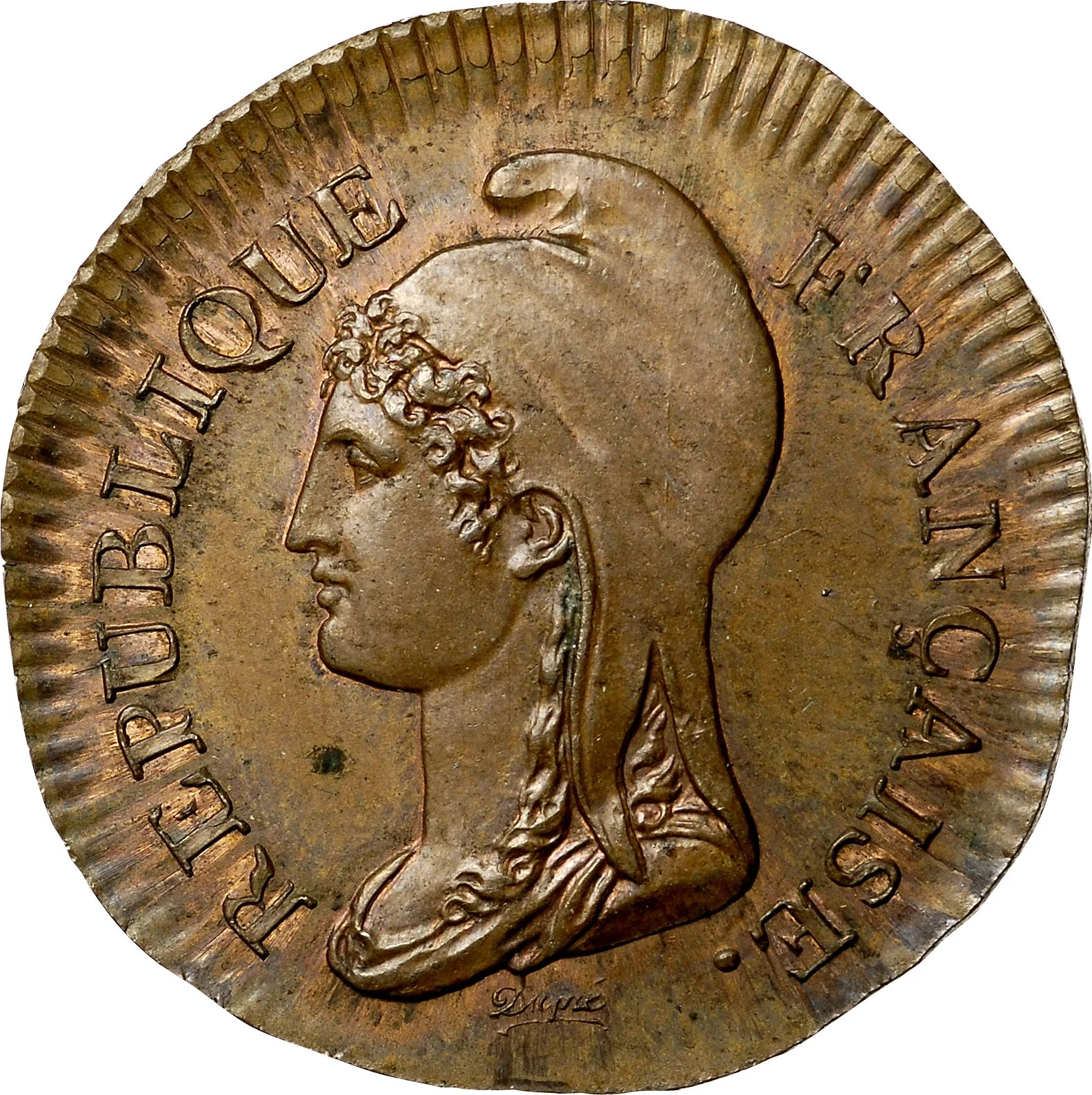
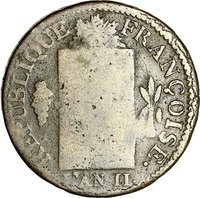
Obverse
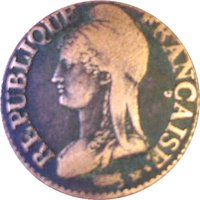
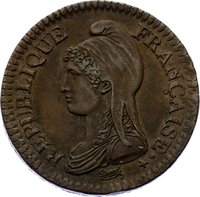
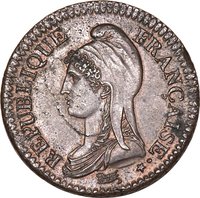
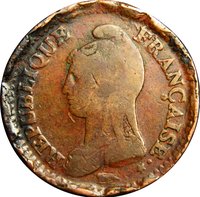
Description:
Leftward bust.
Inscription:
REPUBLIQUE FRANÇAISE.
Script: Latin
Engraver: Augustin Dupré
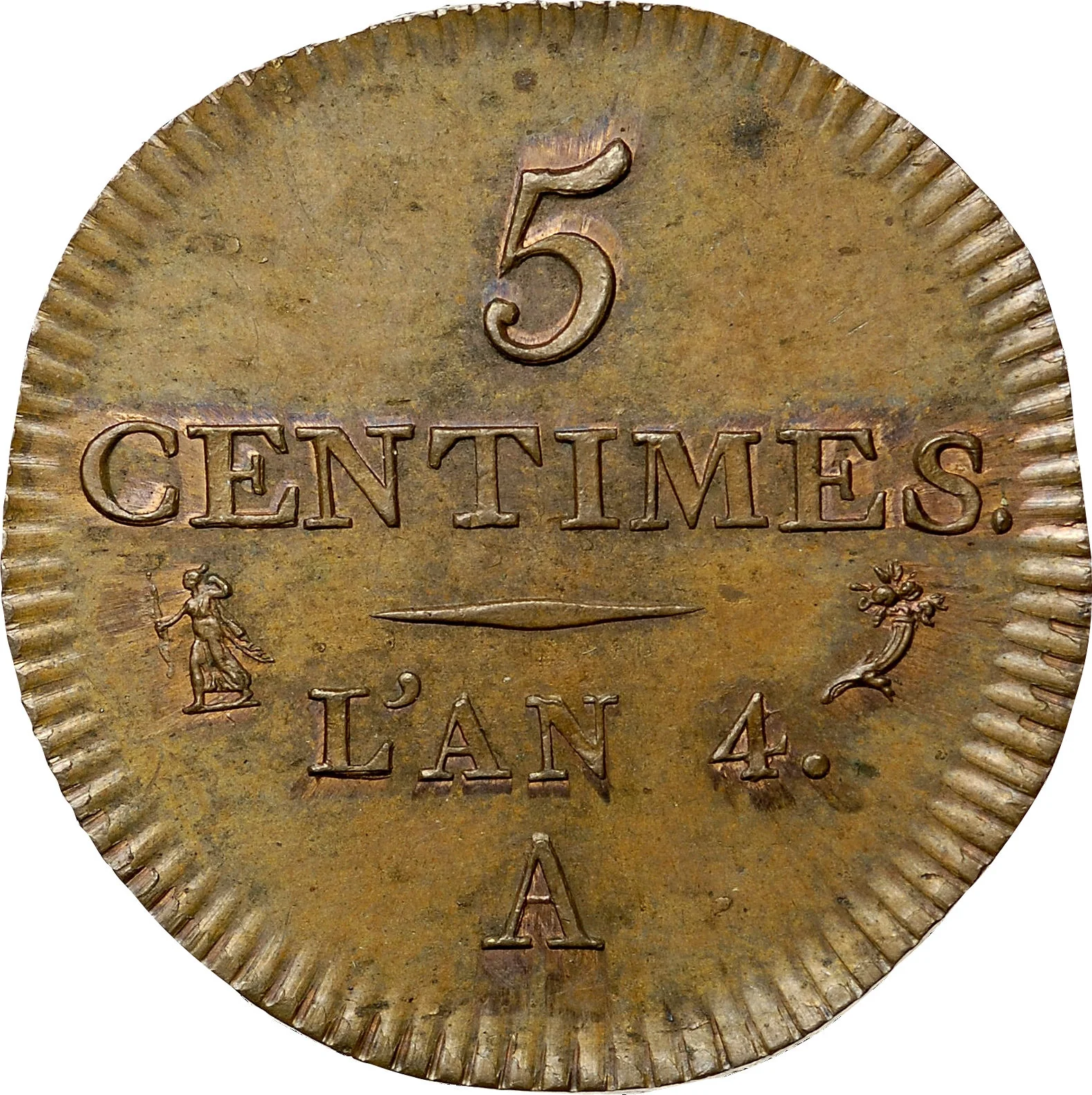
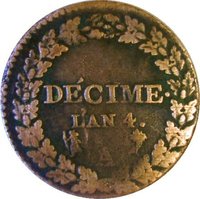
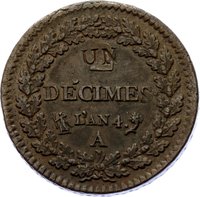
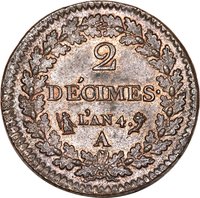
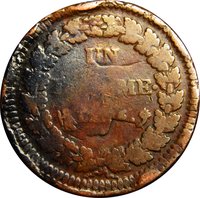
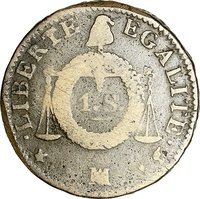
Reverse
Edge
Oblique-reeded
Mints
| Name | Mark |
|---|---|
| Monnaie de Paris | A |
| Limoges | I |
| Bayonne | L |
| Nantes | T |
| Lille | W |
Mintings
| Year | Mint Mark | Mintage | Quality | Collection |
|---|---|---|---|---|
| 1795 | — | 11,589,079 | ||
| 1796 | — | 719,393 |
Historical background
By 1795, the currency situation in the French Republic was one of catastrophic collapse, a direct legacy of the radical measures taken to finance the Revolution. In 1789, the National Assembly had issued the assignat, a paper currency backed by the value of confiscated church lands. Initially successful, the assignat became a tool for endless printing to cover state deficits, especially as war erupted with European monarchies in 1792. This led to rampant inflation, with the value of the assignat plummeting and prices soaring. The economic crisis bred widespread misery, speculation, and black-market trading, severely undermining public trust in the revolutionary government and contributing to the instability that toppled the Robespierrist Jacobins in July 1794.
The Thermidorian regime that followed sought to stabilize the economy and abandon the disastrous monetary experiment. Their solution, enacted in the spring of 1795, was to introduce a new currency called the mandat territorial. Like the assignat, it was theoretically backed by national lands, but it was intended to be more secure by allowing for the direct and immediate exchange of the paper for property. However, this plan failed almost instantly. Public confidence was irreparably broken, and the new notes were printed in such excessive quantities that they suffered an even faster hyperinflation than the assignats they replaced. Within months, the mandat became virtually worthless, and a barter economy re-emerged in many areas.
This monetary chaos set the stage for a return to metallic currency. By the end of 1795, as the new Directory government was established under the Constitution of Year III, the mandat was officially demonetized. The state began to reassert fiscal discipline, demanding tax payments in coin (espèces métalliques) and slowly retiring the paper notes at a fraction of their face value. The disastrous experience with paper money left a deep scar, fostering a lasting French preference for hard currency and paving the way for Napoleon Bonaparte's future establishment of the stable, silver-based Franc Germinal in 1803.
The Thermidorian regime that followed sought to stabilize the economy and abandon the disastrous monetary experiment. Their solution, enacted in the spring of 1795, was to introduce a new currency called the mandat territorial. Like the assignat, it was theoretically backed by national lands, but it was intended to be more secure by allowing for the direct and immediate exchange of the paper for property. However, this plan failed almost instantly. Public confidence was irreparably broken, and the new notes were printed in such excessive quantities that they suffered an even faster hyperinflation than the assignats they replaced. Within months, the mandat became virtually worthless, and a barter economy re-emerged in many areas.
This monetary chaos set the stage for a return to metallic currency. By the end of 1795, as the new Directory government was established under the Constitution of Year III, the mandat was officially demonetized. The state began to reassert fiscal discipline, demanding tax payments in coin (espèces métalliques) and slowly retiring the paper notes at a fraction of their face value. The disastrous experience with paper money left a deep scar, fostering a lasting French preference for hard currency and paving the way for Napoleon Bonaparte's future establishment of the stable, silver-based Franc Germinal in 1803.
Series: 1795 France circulation coins
🌱 Common