

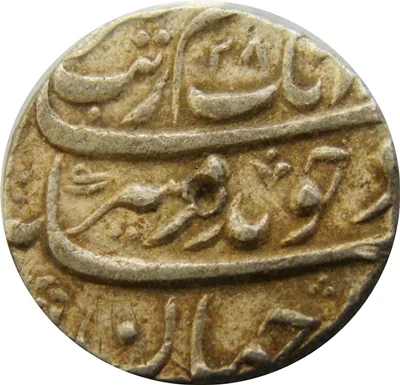
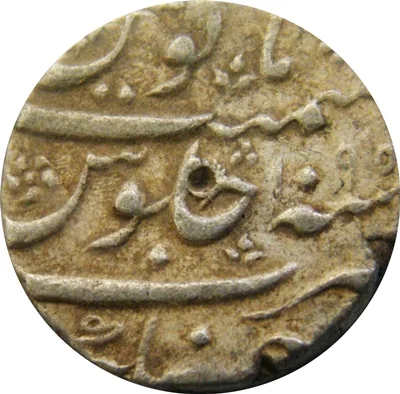
1 Rupee – Mughal Empire
India
Context
Years: 1681–1707
Country: India 
Issuer: Mughal Empire
Ruler: Aurangzeb
Currency:
(1540—1842)
Demonetized: Yes
Material
References
KM: #Click to copy to clipboard300.40
Numista: #93565
Value
Bullion value: $33.37
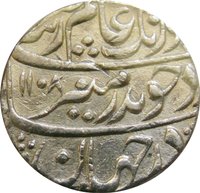
Obverse
Description:
Inscription: "badr munir" couplet with AH date.
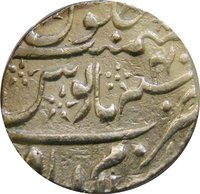
Reverse
Description:
Inscription, regnal year, mint at base.
Edge
Mints
| Name | Mark |
|---|---|
| Jahangirnagar | — |
Mintings
| Year | Mint Mark | Mintage | Quality | Collection |
|---|---|---|---|---|
| — | — | — | ||
| 1681 | — | — | ||
| 1682 | — | — | ||
| 1683 | — | — | ||
| 1684 | — | — | ||
| 1685 | — | — | ||
| 1688 | — | — | ||
| 1689 | — | — | ||
| 1690 | — | — | ||
| 1691 | — | — | ||
| 1692 | — | — | ||
| 1693 | — | — | ||
| 1694 | — | — | ||
| 1695 | — | — | ||
| 1696 | — | — | ||
| 1697 | — | — | ||
| 1698 | — | — | ||
| 1699 | — | — | ||
| 1700 | — | — | ||
| 1701 | — | — | ||
| 1702 | — | — | ||
| 1703 | — | — | ||
| 1704 | — | — | ||
| 1706 | — | — | ||
| 1707 | — | — |
Historical background
In 1681, the Mughal Empire's currency system was a sophisticated and highly standardized bimetallic structure, underpinning its vast economy. The foundation was the silver rupee (minted from high-quality silver, often termed rupaiya) and the gold mohur, with a fluctuating exchange rate typically around 12-16 rupees to one mohur. These coins were renowned for their purity and consistent weight, established by imperial farmans (decrees) and minted in numerous dar-ul-zarbs (mints) across the subcontinent. The system also included a plethora of smaller copper and billon (alloy) coins, such as the dam, for everyday local transactions, creating a multi-tiered monetary network that serviced everything from imperial treasure to village markets.
This year fell within the later reign of Emperor Aurangzeb Alamgir (r. 1658-1707), a period marked by immense military expenditure, particularly the ongoing, costly campaigns in the Deccan against the Maratha Confederacy. The demand for specie to pay massive armies placed significant strain on the treasury and required a constant flow of precious metals. Fortunately, the empire was a magnet for global bullion, with vast quantities of New World silver entering via European trading companies in exchange for Indian textiles and spices, thus replenishing the mint's stocks and preventing a monetary crisis despite the heavy fiscal drain.
However, the uniformity of the central system was often challenged at the periphery. While imperial coins were supreme for official and long-distance trade, regional and older currencies remained in local circulation. Furthermore, the empire's sheer size and the autonomy of some regional mints could lead to minor variations. In 1681, the system was fundamentally robust, but the pressures of Aurangzeb's expansionist wars were setting the stage for future fiscal strain, as the relentless military costs would eventually contribute to the weakening of central economic control in the decades following his death.
This year fell within the later reign of Emperor Aurangzeb Alamgir (r. 1658-1707), a period marked by immense military expenditure, particularly the ongoing, costly campaigns in the Deccan against the Maratha Confederacy. The demand for specie to pay massive armies placed significant strain on the treasury and required a constant flow of precious metals. Fortunately, the empire was a magnet for global bullion, with vast quantities of New World silver entering via European trading companies in exchange for Indian textiles and spices, thus replenishing the mint's stocks and preventing a monetary crisis despite the heavy fiscal drain.
However, the uniformity of the central system was often challenged at the periphery. While imperial coins were supreme for official and long-distance trade, regional and older currencies remained in local circulation. Furthermore, the empire's sheer size and the autonomy of some regional mints could lead to minor variations. In 1681, the system was fundamentally robust, but the pressures of Aurangzeb's expansionist wars were setting the stage for future fiscal strain, as the relentless military costs would eventually contribute to the weakening of central economic control in the decades following his death.
✨ Legendary