

1 Rupee – Mughal Empire
India
Context
Years: 1683–1701
Country: India 
Issuer: Mughal Empire
Ruler: Aurangzeb
Currency:
(1540—1842)
Demonetized: Yes
Material
References
KM: #Click to copy to clipboard300.36
Numista: #91665
Value
Bullion value: $31.62
Obverse
Description:
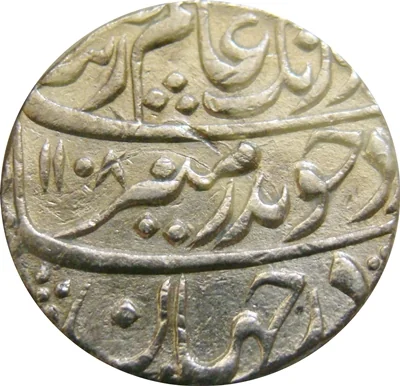
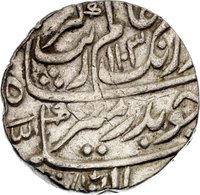
Badr Munir couplet, AH date.
Reverse
Description:
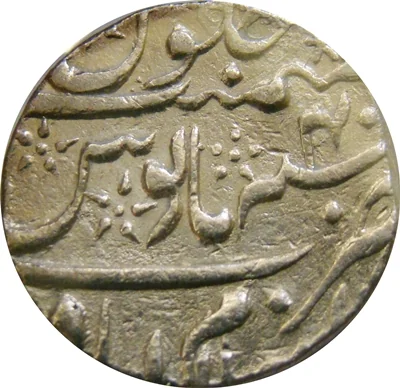
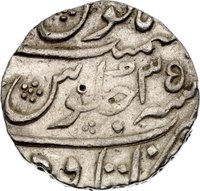
Reign year, mint below.
Edge
Mintings
| Year | Mint Mark | Mintage | Quality | Collection |
|---|---|---|---|---|
| 1683 | — | — | ||
| 1687 | — | — | ||
| 1688 | — | — | ||
| 1692 | — | — | ||
| 1695 | — | — | ||
| 1696 | — | — | ||
| 1697 | — | — | ||
| 1698 | — | — | ||
| 1700 | — | — | ||
| 1701 | — | — |
Historical background
In 1683, the Mughal Empire under Emperor Aurangzeb Alamgir was at the zenith of its territorial expanse but also deeply embroiled in the protracted and costly Deccan Wars. The currency system, a pillar of imperial administration, reflected this duality of immense wealth and mounting fiscal strain. The empire operated on a sophisticated bimetallic system centered on the silver rupee and the gold mohur, with a vast array of copper dam coins facilitating everyday trade. The primary currency, the silver rupee, was renowned for its high and consistent purity, minted at imperial mints (dar al-ẓarb) across the subcontinent, which ensured its acceptance as a reliable medium of exchange both within the empire and in international trade from the Persian Gulf to Southeast Asia.
However, the year 1683 fell within a period of significant monetary pressure. Aurangzeb's massive military campaigns in the Deccan, requiring the payment of huge armies, were draining the imperial treasury. This led to a critical shortage of silver, the lifeblood of the currency, as bullion was hoarded or diverted to finance the war. In response, the imperial mints began to increasingly debase the copper dam, the common man's currency, by reducing its weight and metal content. This effectively created a hidden inflation tax on the populace, as more debased coins were needed to purchase the same goods, while the elite and military transactions in silver rupees remained relatively stable.
Despite these stresses, the system demonstrated remarkable resilience. The imperial administration maintained strict, centralized control over the minting process and coinage standards, even as provincial mints expanded production. Furthermore, the influx of New World silver via European trade, particularly through the English East India Company at ports like Surat, provided a crucial, if fluctuating, injection of bullion. Thus, in 1683, the Mughal currency was a system showing early signs of strain from imperial overreach, yet it remained fundamentally intact, underpinning what was still the world's largest economy and a paradigm of pre-industrial monetary sophistication.
However, the year 1683 fell within a period of significant monetary pressure. Aurangzeb's massive military campaigns in the Deccan, requiring the payment of huge armies, were draining the imperial treasury. This led to a critical shortage of silver, the lifeblood of the currency, as bullion was hoarded or diverted to finance the war. In response, the imperial mints began to increasingly debase the copper dam, the common man's currency, by reducing its weight and metal content. This effectively created a hidden inflation tax on the populace, as more debased coins were needed to purchase the same goods, while the elite and military transactions in silver rupees remained relatively stable.
Despite these stresses, the system demonstrated remarkable resilience. The imperial administration maintained strict, centralized control over the minting process and coinage standards, even as provincial mints expanded production. Furthermore, the influx of New World silver via European trade, particularly through the English East India Company at ports like Surat, provided a crucial, if fluctuating, injection of bullion. Thus, in 1683, the Mughal currency was a system showing early signs of strain from imperial overreach, yet it remained fundamentally intact, underpinning what was still the world's largest economy and a paradigm of pre-industrial monetary sophistication.
✨ Legendary