

1 Thaler – Austrian Empire
Austria
Context
Years: 1698–1705
Country: Austria 
Issuer: Austrian Empire
Ruler: Leopold I
Currency:
(1520—1754)
Demonetized: Yes
Material
References
KM: #Click to copy to clipboard1348.3
Numista: #93420
Value
Bullion value: $79.51
Obverse
Description:
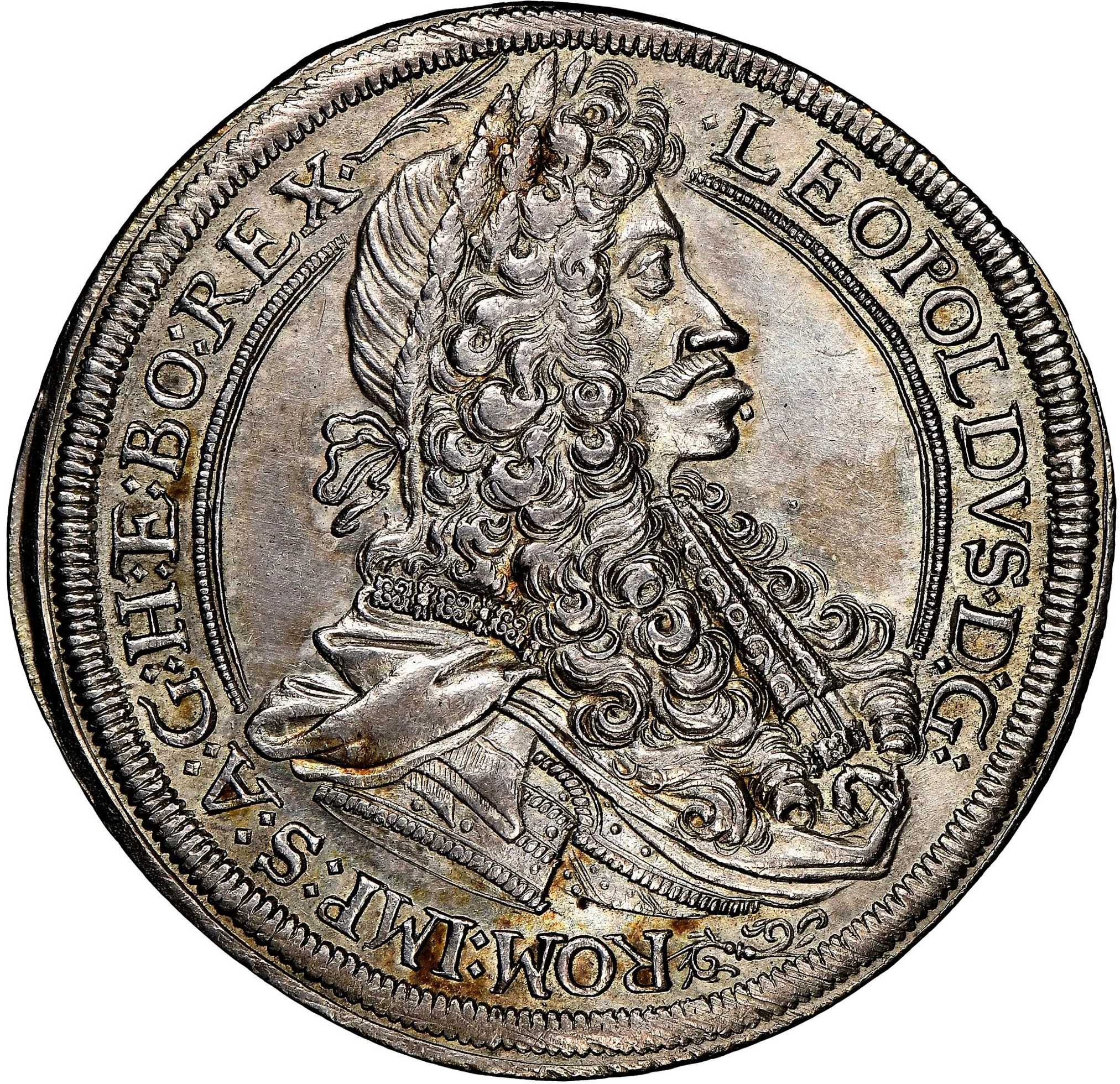
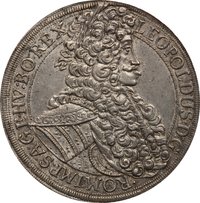
Laureate portrait right, legend above and below, double inner circle.
Inscription:
LEOPOLDVS D G // ROM IMP S A G H ET BO REX
Script: Latin
Reverse
Description:
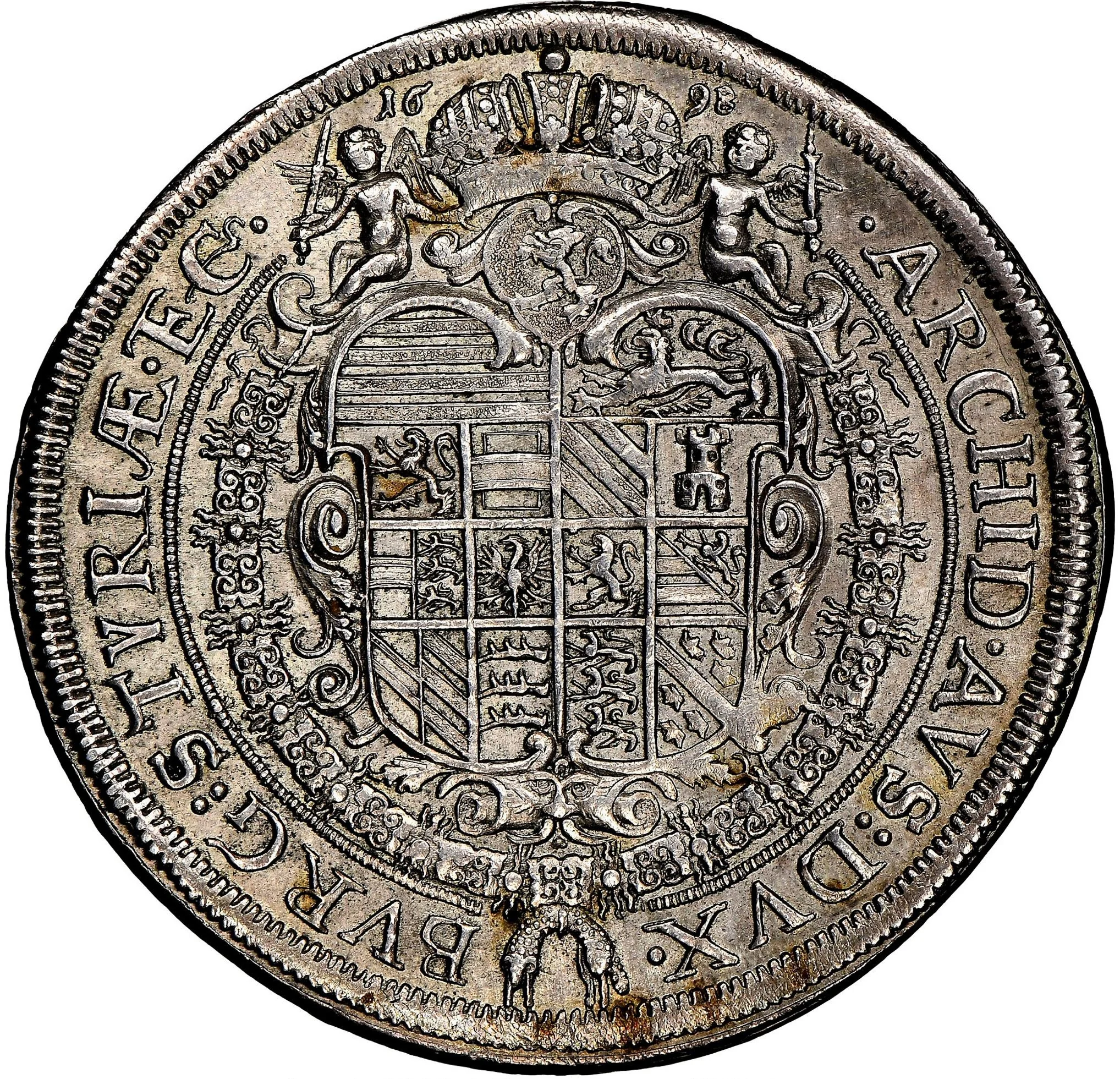
Composite arms with a small Styria shield below the crown. Date in small digits above the crown.
Inscription:
ARCHID AVS DVX BVRG STYRIÆ ETC
Script: Latin
Edge
Mints
| Name | Mark |
|---|---|
| Graz | — |
Mintings
| Year | Mint Mark | Mintage | Quality | Collection |
|---|---|---|---|---|
| 1698 | — | — | ||
| 1705 | — | — |
Historical background
In 1698, the currency situation within the Habsburg-ruled Austrian Empire was one of profound complexity and instability, a direct legacy of the financial exhaustion from the ongoing Great Turkish War (1683-1699) and the Nine Years' War. The state treasury was depleted, and to meet colossal military expenses, the government had repeatedly debased the coinage, notably the small-denomination kreuzer and the silver thaler. This practice, involving reducing the precious metal content while maintaining face value, led to a severe divergence between the official and market value of coins, rampant inflation, and a crisis of public trust. The monetary system was a chaotic patchwork of over a dozen different regional currencies and minting rights, with the Empire lacking a unified, centrally controlled coinage.
The primary unit of account was the Guiden (gulden), divided into 60 kreuzer, but its value in actual circulating silver was unstable. A key problem was the proliferation of debased Landmünzen (provincial coins) used for local payments, while international trade demanded full-weight Reichsthaler. This created a destructive cycle where good silver coins were hoarded or exported, leaving only poorer currency in domestic circulation—a classic example of Gresham's Law. The Vienna Banko, established in 1703, was still in the future, so there was no central banking authority to regulate credit or issue standardized paper money, though anticipation notes (Staatspapiere) were already being used as a form of emergency war financing.
Consequently, by 1698, the Austrian economy suffered from unpredictable exchange rates between its own myriad currencies, rising prices for basic goods, and a heavy burden on both state finances and ordinary subjects. The situation demanded urgent reform, which would eventually culminate in the great recoinage and monetary ordinances of Emperor Leopold I in the early 1700s. These efforts aimed to retire debased coinage and define a stable Reichsthaler standard, laying a fragile groundwork for the more systematic reforms implemented by his successors in the 18th century.
The primary unit of account was the Guiden (gulden), divided into 60 kreuzer, but its value in actual circulating silver was unstable. A key problem was the proliferation of debased Landmünzen (provincial coins) used for local payments, while international trade demanded full-weight Reichsthaler. This created a destructive cycle where good silver coins were hoarded or exported, leaving only poorer currency in domestic circulation—a classic example of Gresham's Law. The Vienna Banko, established in 1703, was still in the future, so there was no central banking authority to regulate credit or issue standardized paper money, though anticipation notes (Staatspapiere) were already being used as a form of emergency war financing.
Consequently, by 1698, the Austrian economy suffered from unpredictable exchange rates between its own myriad currencies, rising prices for basic goods, and a heavy burden on both state finances and ordinary subjects. The situation demanded urgent reform, which would eventually culminate in the great recoinage and monetary ordinances of Emperor Leopold I in the early 1700s. These efforts aimed to retire debased coinage and define a stable Reichsthaler standard, laying a fragile groundwork for the more systematic reforms implemented by his successors in the 18th century.

✨ Legendary