

1 Thaler – Austrian Empire
Austria
Context
Years: 1700–1705
Country: Austria 
Issuer: Austrian Empire
Ruler: Leopold I
Currency:
(1520—1754)
Demonetized: Yes
Material
References
KM: #Click to copy to clipboard1413
Numista: #78040
Value
Bullion value: $81.87
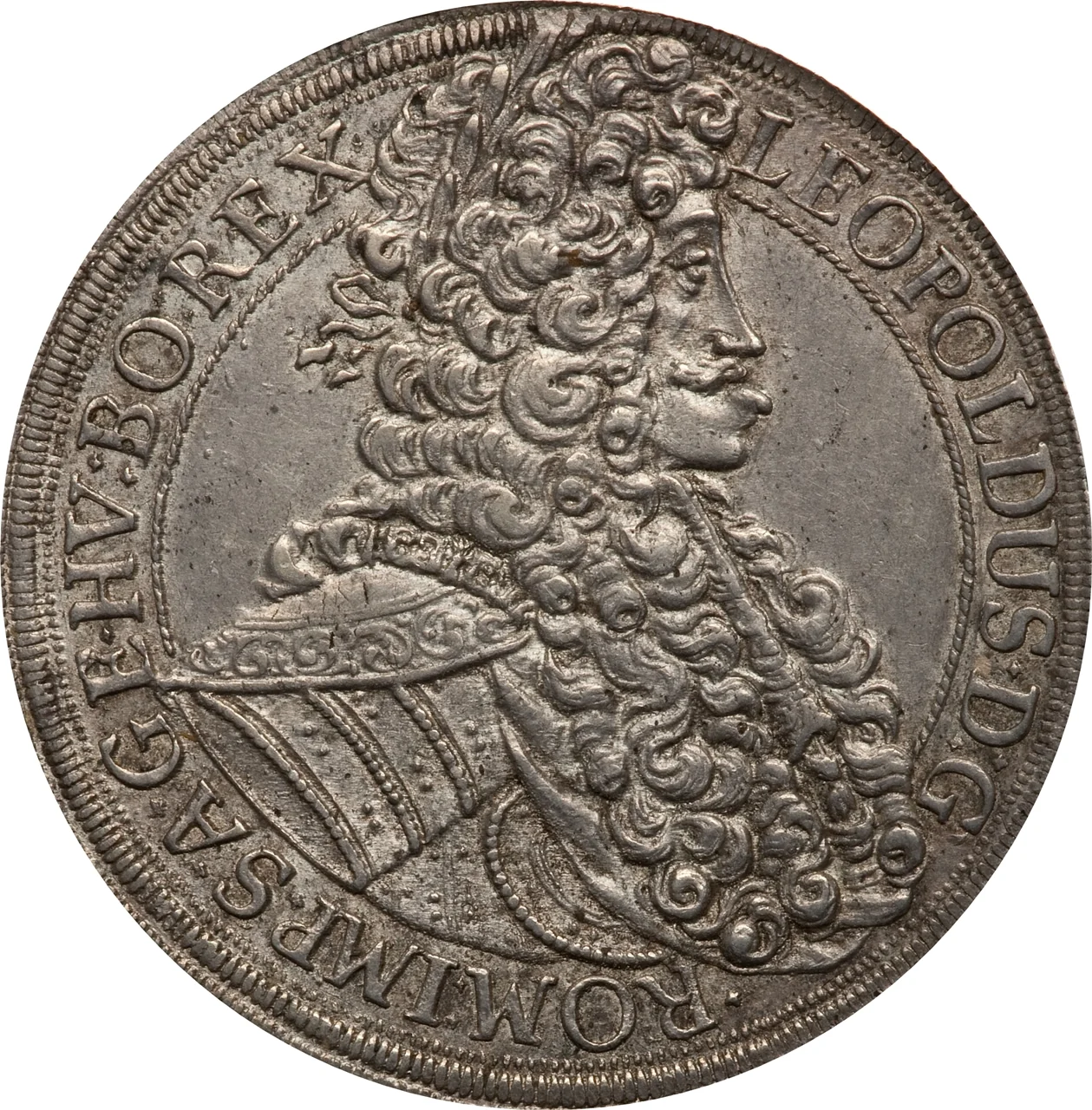
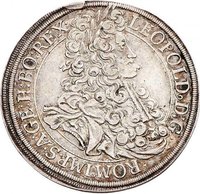
Obverse
Description:
Armored bust right, head and bust touching rim, dividing legend.
Inscription:
LEOPOLDUS D G // ROM IMP S A GE HV BO REX
Script: Latin
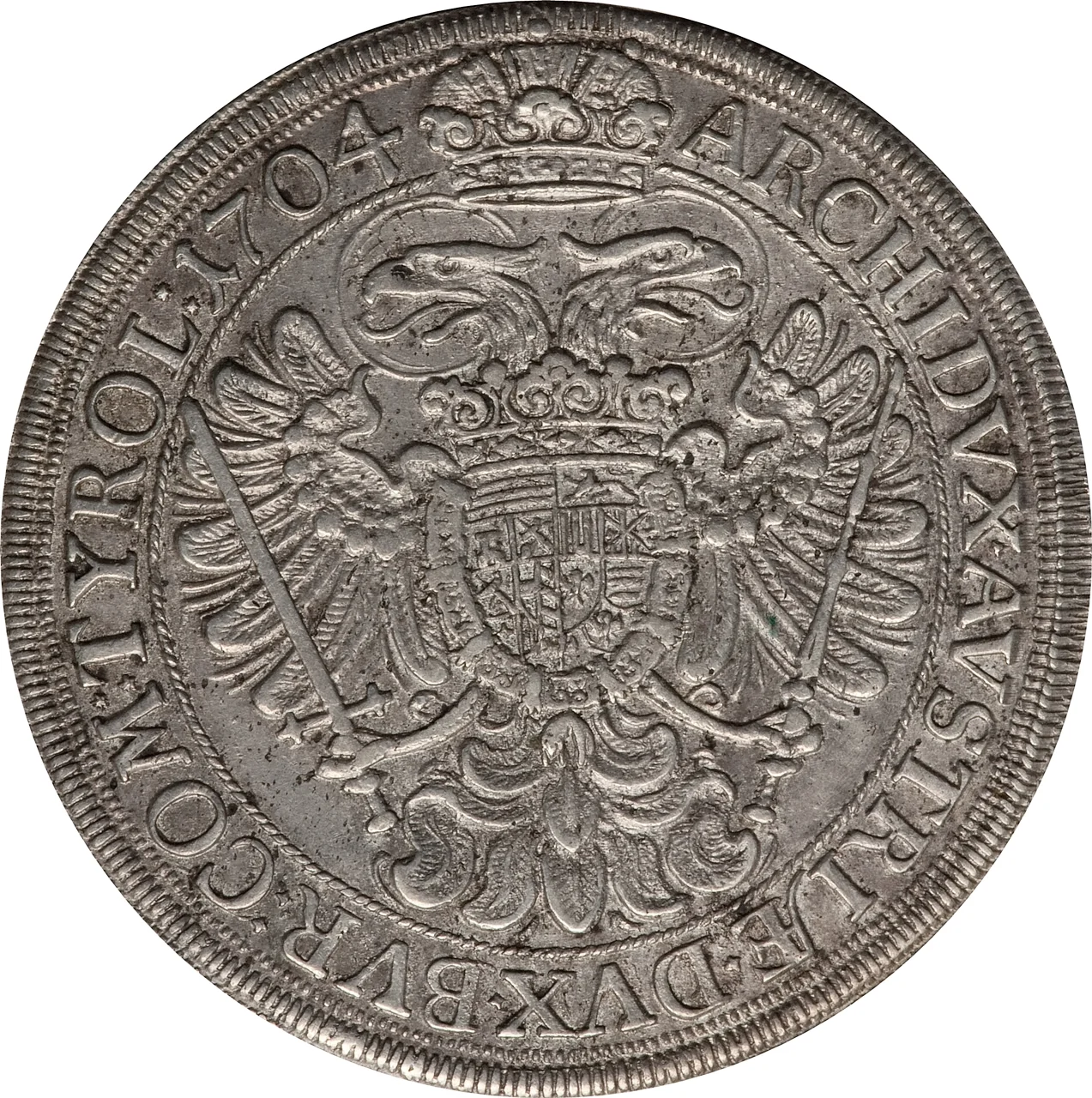
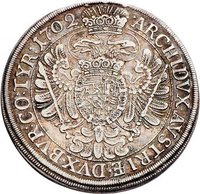
Reverse
Description:
Two-headed imperial eagle holding a sword and scepter. Date above legend.
Inscription:
ARCHIDVX AVSTRIÆ DVX BVR COM TYROL 1704
Script: Latin
Edge
Mints
| Name | Mark |
|---|---|
| Münze Österreich | — |
Mintings
| Year | Mint Mark | Mintage | Quality | Collection |
|---|---|---|---|---|
| 1700 | — | — | ||
| 1701 | — | — | ||
| 1702 | — | — | ||
| 1703 | — | — | ||
| 1704 | — | — | ||
| 1705 | — | — |
Historical background
At the dawn of the 18th century, the currency system of the Austrian Habsburg monarchy was a complex and fragmented patchwork, reflecting the empire's diverse and decentralized political structure. The core lands operated on a bimetallic system based on the silver Gulden (florin) and the gold Ducat, but each province—from Bohemia to Hungary to the Austrian duchies—often minted its own versions with varying weights and purity. Furthermore, a plethora of older, debased coins from the 17th-century financial crises remained in circulation, creating confusion in trade and public finance. This monetary disunity was a significant obstacle to economic integration and state administration.
The government in Vienna struggled to assert central control. The financial exhaustion from the ongoing wars against the Ottoman Empire and the impending War of the Spanish Succession (1701-1714) placed immense strain on the treasury. Rather than implementing thorough reform, the state frequently resorted to short-term expedients like debasement—reducing the silver content in coins to mint more of them to pay armies and debts. This practice, while providing immediate funds, eroded public trust in the currency, spurred inflation in some areas, and complicated commerce both within the empire and with neighboring German states.
Consequently, the year 1700 represents a period of persistent monetary instability within the Habsburg realms. The lack of a uniform, trusted currency hindered economic development and underscored the monarchy's weak fiscal apparatus. It was not until the later 18th century, under Empress Maria Theresa, that sustained efforts at standardization, such as the 1753 Konventionsmünzfuß (monetary convention), would begin to create a more coherent imperial currency system, laying the groundwork for the later Austro-Hungarian Gulden.
The government in Vienna struggled to assert central control. The financial exhaustion from the ongoing wars against the Ottoman Empire and the impending War of the Spanish Succession (1701-1714) placed immense strain on the treasury. Rather than implementing thorough reform, the state frequently resorted to short-term expedients like debasement—reducing the silver content in coins to mint more of them to pay armies and debts. This practice, while providing immediate funds, eroded public trust in the currency, spurred inflation in some areas, and complicated commerce both within the empire and with neighboring German states.
Consequently, the year 1700 represents a period of persistent monetary instability within the Habsburg realms. The lack of a uniform, trusted currency hindered economic development and underscored the monarchy's weak fiscal apparatus. It was not until the later 18th century, under Empress Maria Theresa, that sustained efforts at standardization, such as the 1753 Konventionsmünzfuß (monetary convention), would begin to create a more coherent imperial currency system, laying the groundwork for the later Austro-Hungarian Gulden.
💎 Extremely Rare