

1 Rupee – Mughal Empire
India
Context
Years: 1671–1705
Country: India 
Issuer: Mughal Empire
Ruler: Aurangzeb
Currency:
(1540—1842)
Demonetized: Yes
Material
References
KM: #Click to copy to clipboard300.54
Numista: #93097
Value
Bullion value: $32.82
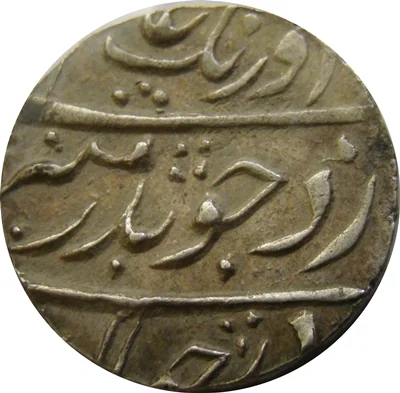
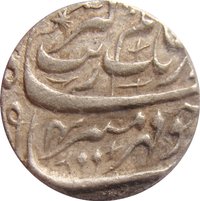
Obverse
Description:
Badr Munir couplet, dated AH.
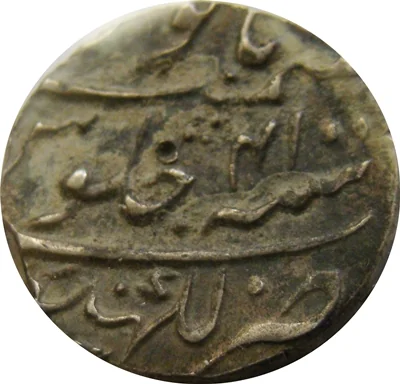
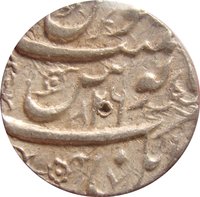
Reverse
Description:
Inscription, regnal year, mint at base.
Edge
Mintings
| Year | Mint Mark | Mintage | Quality | Collection |
|---|---|---|---|---|
| — | — | — | ||
| 1671 | — | — | ||
| 1674 | — | — | ||
| 1675 | — | — | ||
| 1676 | — | — | ||
| 1677 | — | — | ||
| 1678 | — | — | ||
| 1680 | — | — | ||
| 1684 | — | — | ||
| 1686 | — | — | ||
| 1687 | — | — | ||
| 1688 | — | — | ||
| 1689 | — | — | ||
| 1690 | — | — | ||
| 1691 | — | — | ||
| 1692 | — | — | ||
| 1693 | — | — | ||
| 1695 | — | — | ||
| 1699 | — | — | ||
| 1702 | — | — | ||
| 1703 | — | — | ||
| 1704 | — | — | ||
| 1705 | — | — |
Historical background
In 1671, the Mughal Empire's currency system under Emperor Aurangzeb was a sophisticated and highly regulated bimetallic standard, centered on the silver rupee and the gold mohur. The primary circulating coin was the silver rupee, which maintained remarkable purity and consistency across the empire due to strict imperial control over mints (dar al-zarb). These coins were struck in numerous mints from Kabul to Dhaka, bearing the emperor's name and the Islamic calendar year, serving as a powerful tool of political legitimacy and economic integration. The system was underpinned by the steady influx of New World silver, primarily from Spanish America, which entered the empire through trade with European companies and flowed in via the Arabian Sea ports, ensuring a stable and abundant money supply for the vast agrarian and commercial economy.
The year 1671 falls within a period of relative monetary stability before the later fiscal strains of Aurangzeb's prolonged Deccan campaigns. The exchange rate between gold and silver was not officially fixed but fluctuated based on market conditions, typically hovering around 14-16 silver rupees to one gold mohur. Alongside these precious metal coins, a vital layer of smaller currency existed in the form of copper dams (also called paisa), essential for daily peasant and artisanal transactions. While the imperial coinage was robust, the system also accommodated older regional coins and foreign currencies in port cities, reflecting the empire's immense commercial vitality and connections to global trade networks.
However, this apparent stability contained administrative challenges. Aurangzeb's centralizing policies led to increased scrutiny of mint operations to prevent fraud and ensure revenue, as coinage was intrinsically linked to taxation. The hawala system (hundis) for transferring money and providing credit was well-developed, facilitating long-distance trade and military payroll. Thus, in 1671, the Mughal currency was not just a medium of exchange but a finely tuned instrument of state power, economic unity, and imperial authority, effectively supporting what was then one of the world's largest and wealthiest economies.
The year 1671 falls within a period of relative monetary stability before the later fiscal strains of Aurangzeb's prolonged Deccan campaigns. The exchange rate between gold and silver was not officially fixed but fluctuated based on market conditions, typically hovering around 14-16 silver rupees to one gold mohur. Alongside these precious metal coins, a vital layer of smaller currency existed in the form of copper dams (also called paisa), essential for daily peasant and artisanal transactions. While the imperial coinage was robust, the system also accommodated older regional coins and foreign currencies in port cities, reflecting the empire's immense commercial vitality and connections to global trade networks.
However, this apparent stability contained administrative challenges. Aurangzeb's centralizing policies led to increased scrutiny of mint operations to prevent fraud and ensure revenue, as coinage was intrinsically linked to taxation. The hawala system (hundis) for transferring money and providing credit was well-developed, facilitating long-distance trade and military payroll. Thus, in 1671, the Mughal currency was not just a medium of exchange but a finely tuned instrument of state power, economic unity, and imperial authority, effectively supporting what was then one of the world's largest and wealthiest economies.
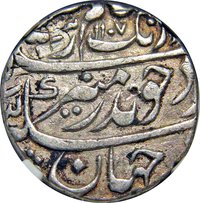
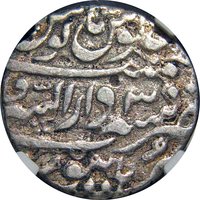
💎 Extremely Rare