

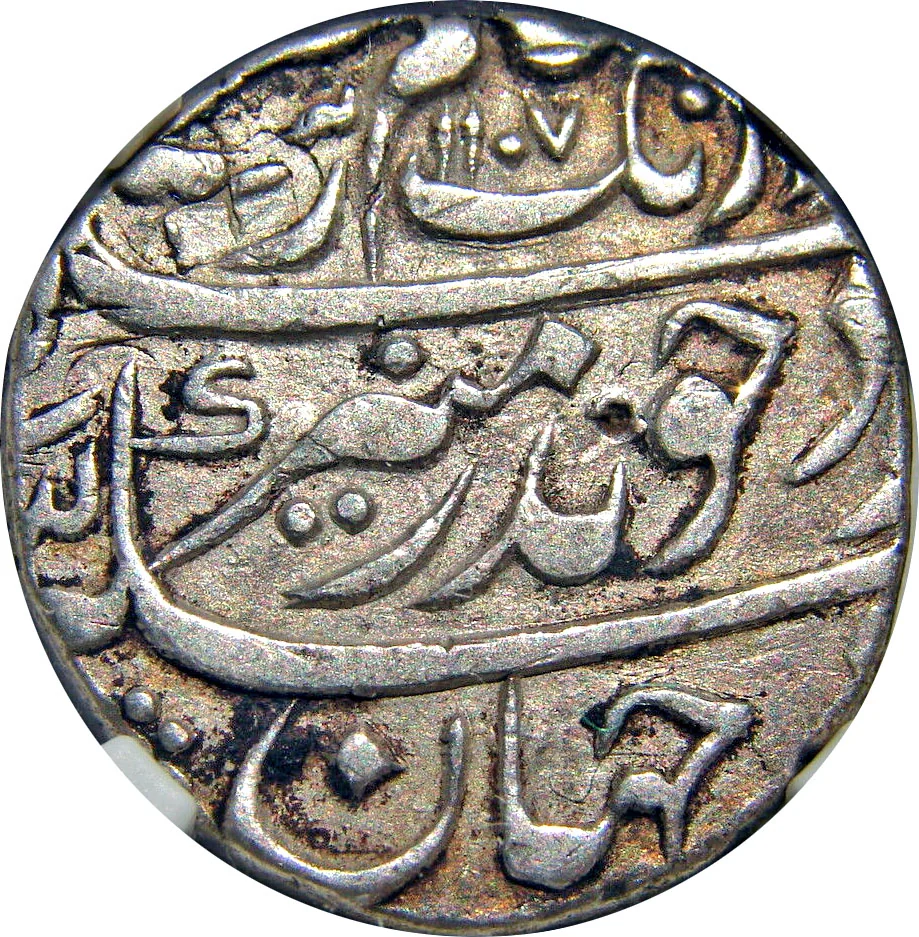
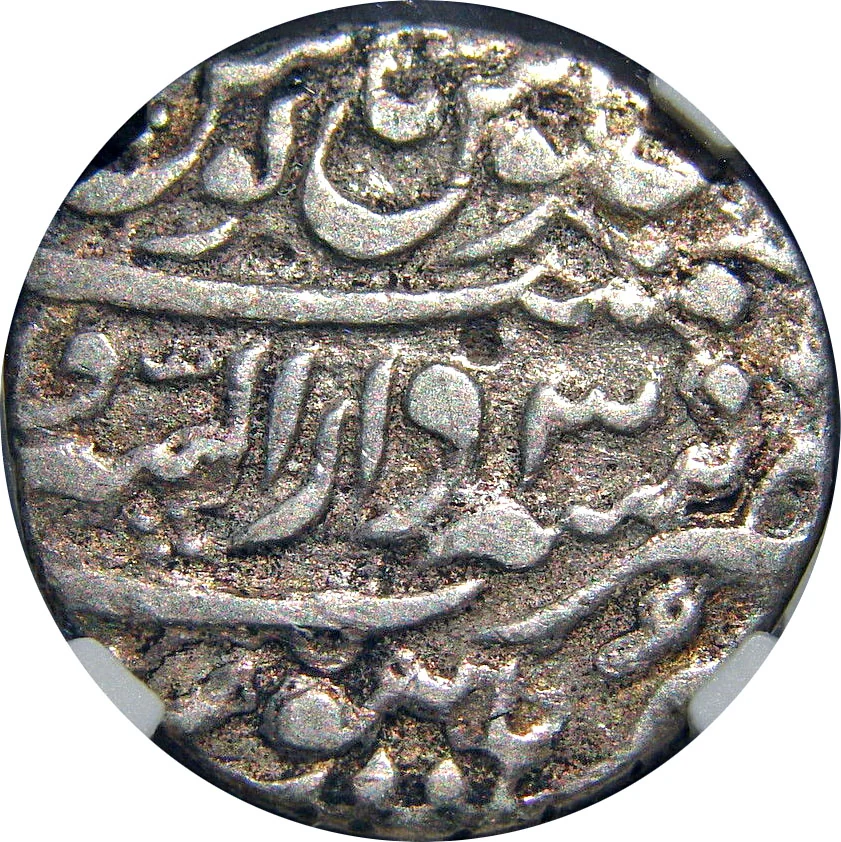
1 Rupee – Mughal Empire
India
Context
Years: 1668–1707
Country: India 
Issuer: Mughal Empire
Ruler: Aurangzeb
Currency:
(1540—1842)
Demonetized: Yes
Material
References
KM: #Click to copy to clipboard300.24
Numista: #62576
Value
Bullion value: $31.26
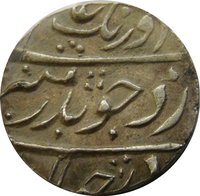
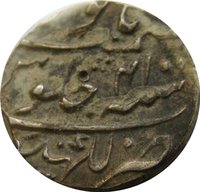
Obverse
Description:
AH Date
Inscription:
Ry30/AH 1107
Reverse
Description:
RY Date & Mint
Inscription:
Zarb Dar al-Suroor Burhanpur (with epithet)
دار السرور برہانپور (obviously the ‘dots’ are all not there because of choice of calligraphy style back then)
دار السرور برہانپور (obviously the ‘dots’ are all not there because of choice of calligraphy style back then)
Edge
Plain
Mintings
| Year | Mint Mark | Mintage | Quality | Collection |
|---|---|---|---|---|
| 1668 | — | — | ||
| 1675 | — | — | ||
| 1676 | — | — | ||
| 1676 | — | — | ||
| 1678 | — | — | ||
| 1679 | — | — | ||
| 1680 | — | — | ||
| 1681 | — | — | ||
| 1682 | — | — | ||
| 1683 | — | — | ||
| 1684 | — | — | ||
| 1685 | — | — | ||
| 1686 | — | — | ||
| 1687 | — | — | ||
| 1688 | — | — | ||
| 1689 | — | — | ||
| 1690 | — | — | ||
| 1691 | — | — | ||
| 1692 | — | — | ||
| 1693 | — | — | ||
| 1694 | — | — | ||
| 1695 | — | — | ||
| 1696 | — | — | ||
| 1697 | — | — | ||
| 1698 | — | — | ||
| 1699 | — | — | ||
| 1700 | — | — | ||
| 1701 | — | — | ||
| 1702 | — | — | ||
| 1703 | — | — | ||
| 1704 | — | — | ||
| 1705 | — | — | ||
| 1706 | — | — | ||
| 1707 | — | — |
Historical background
In 1668, the Mughal Empire's currency system was a sophisticated and highly regulated bimetallic standard, operating under the firm control of Emperor Aurangzeb Alamgir. The primary units were the silver rupee (the workhorse of the economy, used for major transactions and revenue collection) and the gold mohur (largely a prestige coin for hoarding, gifts, and large-scale transfers). These were supplemented by a plethora of copper dams and paisas for everyday local trade. All coins were minted in imperial mints (dar al-ḍarb) across the subcontinent, with their weight, purity, and design strictly standardized to maintain confidence and facilitate commerce across the vast empire. The system's integrity was a direct reflection of state power and economic stability.
This year, however, was marked by a significant imperial intervention. Aurangzeb, a ruler deeply concerned with orthodox Islamic principles, issued a notable decree forbidding the production and circulation of coins bearing the kalima (the Islamic declaration of faith) in the provinces of the Deccan, which had recently been brought under Mughal control. His reasoning was that such sacred inscriptions would inevitably be defiled as the coins passed through the hands of non-Muslims or in transactions involving "impure" goods like alcohol. This order highlighted the tension between the currency's economic function and its symbolic religious weight, and it necessitated the minting of distinct Deccani rupees with only the emperor's name and titles.
Despite this religious edict, the broader currency situation in 1668 remained robust. The treasury was flush with bullion from continued foreign trade, particularly with European companies and the Arab world, which ensured a steady supply of precious metals for coinage. The uniform rupee facilitated a thriving internal economy and a centralized revenue system (zabt), where all taxes were assessed and paid in cash. Nevertheless, the very need for Aurangzeb's decree subtly underscored the challenges of integrating newly conquered regions and managing an increasingly diverse economic sphere, foreshadowing the administrative strains that would emerge in the later decades of his long reign.
This year, however, was marked by a significant imperial intervention. Aurangzeb, a ruler deeply concerned with orthodox Islamic principles, issued a notable decree forbidding the production and circulation of coins bearing the kalima (the Islamic declaration of faith) in the provinces of the Deccan, which had recently been brought under Mughal control. His reasoning was that such sacred inscriptions would inevitably be defiled as the coins passed through the hands of non-Muslims or in transactions involving "impure" goods like alcohol. This order highlighted the tension between the currency's economic function and its symbolic religious weight, and it necessitated the minting of distinct Deccani rupees with only the emperor's name and titles.
Despite this religious edict, the broader currency situation in 1668 remained robust. The treasury was flush with bullion from continued foreign trade, particularly with European companies and the Arab world, which ensured a steady supply of precious metals for coinage. The uniform rupee facilitated a thriving internal economy and a centralized revenue system (zabt), where all taxes were assessed and paid in cash. Nevertheless, the very need for Aurangzeb's decree subtly underscored the challenges of integrating newly conquered regions and managing an increasingly diverse economic sphere, foreshadowing the administrative strains that would emerge in the later decades of his long reign.
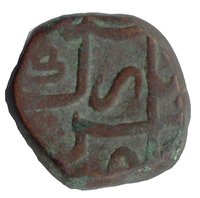
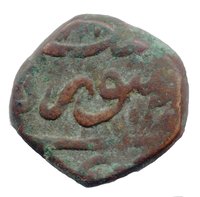
💎 Extremely Rare