

1 mark – Aachen
Add to wishlist
Germany
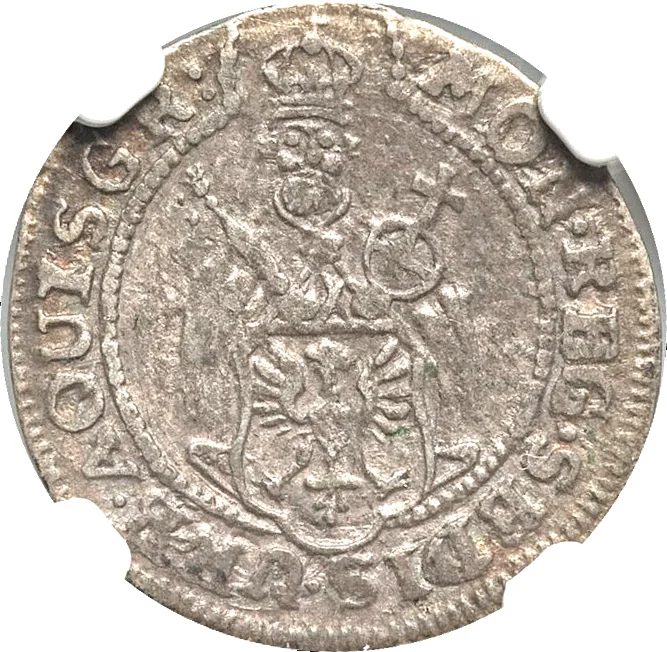
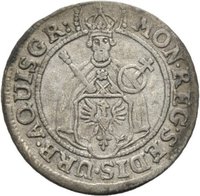
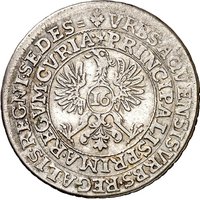
Obverse
Description:
Crowned figure holding orb and scepter, above the Aachen arms and encircled by the legend.
Inscription:
MONREGSEDIS.URB.AOUIS GR:
Script: Latin
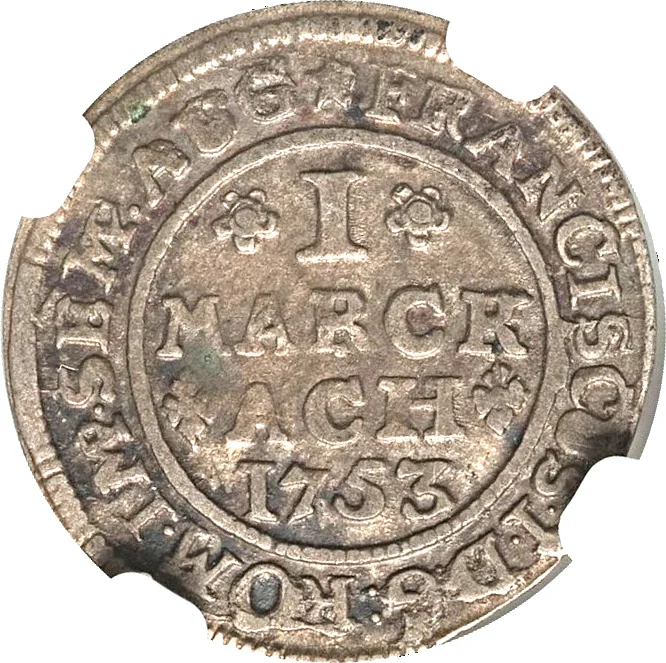
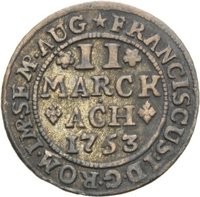
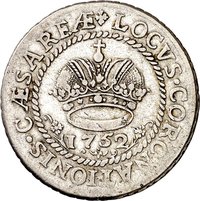
Reverse
Description:
Value and date within circled four-line inscription.
Inscription:
*FRANCISCUS.I.DG.ROM.IMSEM.AUG
*I*
MARCK
*ACH*
1753
*I*
MARCK
*ACH*
1753
Script: Latin
Edge
Mintings
| Year | Mint Mark | Mintage | Quality | Collection |
|---|---|---|---|---|
| 1753 | — | — |
Historical background
In 1753, the Free Imperial City of Aachen operated within the complex and fragmented monetary landscape of the Holy Roman Empire. As an autonomous entity, Aachen minted its own coins, primarily Albuses and Groschen, which circulated alongside a multitude of foreign currencies. These included coins from neighboring territories like the Duchy of Jülich and the Electorate of Cologne, as well as high-value "trade coins" from the Dutch Republic and the Austrian Habsburg realms. This proliferation created a constant challenge of exchange rates and valuation, requiring official city ordinances to periodically fix the value of the many circulating denominations.
The city's monetary system was fundamentally bimetallic, based on both silver and gold, but it faced significant pressure from the wider European trend of currency debasement. Neighboring states frequently reduced the precious metal content of their coins to finance military expenditures, leading to an influx of "bad money" into Aachen. This drove out the full-weight "good money" (Gresham's Law), threatening the city's financial stability and the trustworthiness of its own currency. The city council therefore had to vigilantly regulate the mint to maintain the standard of Aachen's coinage, a key aspect of its economic sovereignty and civic pride.
Ultimately, Aachen's currency situation was a daily exercise in managed complexity. Money changers (Wechsler) played a crucial role in the market squares, facilitating trade by assessing and exchanging the mixed coinage. The city's authorities sought to maintain order through published exchange tables and regulations, aiming to ensure smooth commerce for its important textile and metalworking industries. However, the system remained vulnerable to external shocks and the inflationary pressures of debased foreign coin, reflecting the broader political weakness of the Empire where over 300 different entities issued currency.
The city's monetary system was fundamentally bimetallic, based on both silver and gold, but it faced significant pressure from the wider European trend of currency debasement. Neighboring states frequently reduced the precious metal content of their coins to finance military expenditures, leading to an influx of "bad money" into Aachen. This drove out the full-weight "good money" (Gresham's Law), threatening the city's financial stability and the trustworthiness of its own currency. The city council therefore had to vigilantly regulate the mint to maintain the standard of Aachen's coinage, a key aspect of its economic sovereignty and civic pride.
Ultimately, Aachen's currency situation was a daily exercise in managed complexity. Money changers (Wechsler) played a crucial role in the market squares, facilitating trade by assessing and exchanging the mixed coinage. The city's authorities sought to maintain order through published exchange tables and regulations, aiming to ensure smooth commerce for its important textile and metalworking industries. However, the system remained vulnerable to external shocks and the inflationary pressures of debased foreign coin, reflecting the broader political weakness of the Empire where over 300 different entities issued currency.
💎 Extremely Rare