

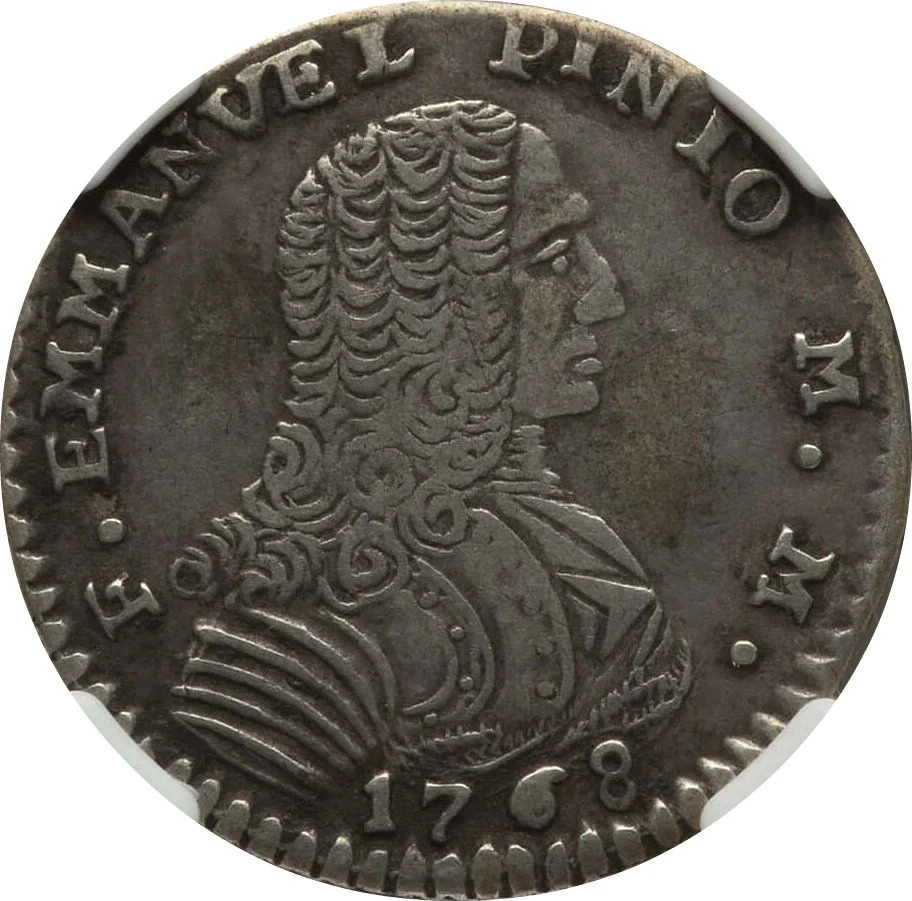
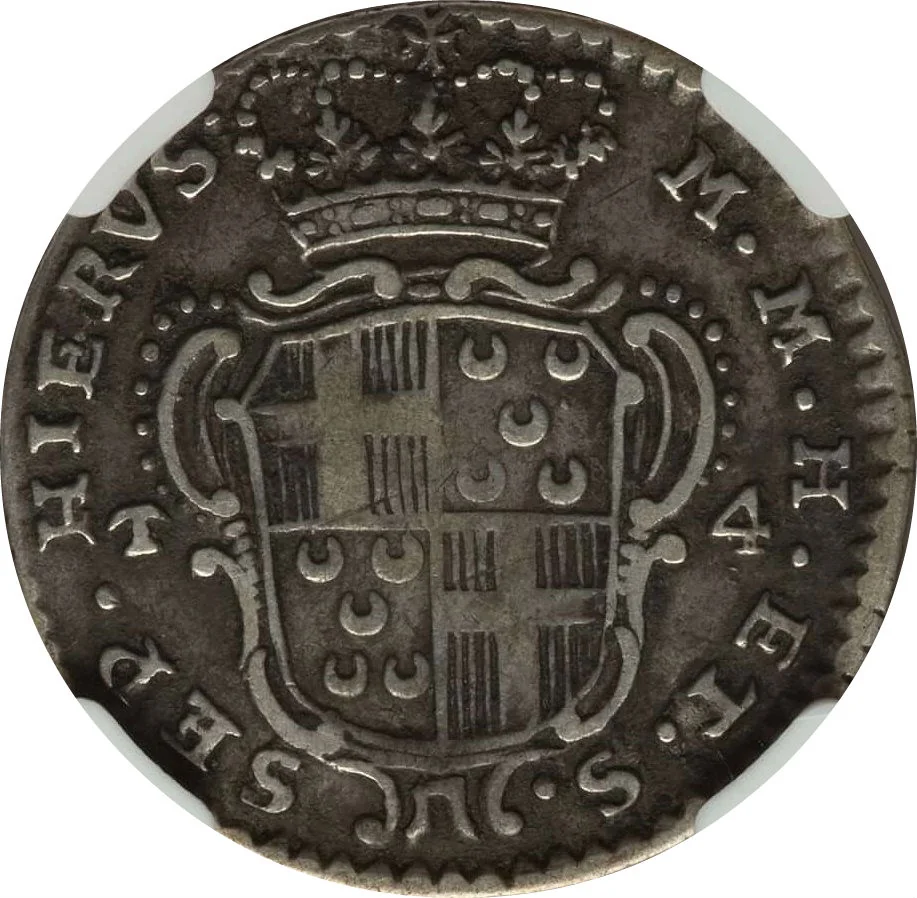
4 Tari – Malta
Malta
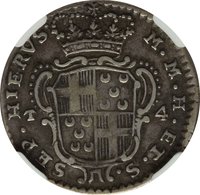
Obverse
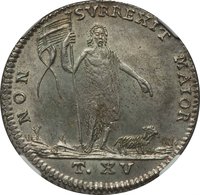
Reverse
Edge
Mintings
| Year | Mint Mark | Mintage | Quality | Collection |
|---|---|---|---|---|
| 1768 | — | — |
Historical background
In 1768, Malta's currency situation was complex and fragmented, reflecting its strategic position and recent political transition. The islands were under the rule of the Knights of the Order of St. John, who minted their own distinctive coinage, including the scudo, tari, and grani. However, due to Malta's role as a bustling Mediterranean trading hub, a multitude of foreign coins circulated freely alongside the local issues. Spanish pieces of eight, Venetian sequins, French louis d'or, and Ottoman piastres were all commonly used in commerce, their values fluctuating based on weight and metallic content. This created a de facto multi-currency system where merchants and money-changers had to be adept at assessing and converting between various coins.
This monetary diversity was managed through official "bando" proclamations issued by the Grandmaster's treasury. These edicts periodically fixed the exchange rates for the most common foreign coins in terms of the local scudo, attempting to bring order to the market. The system, however, was inherently unstable. The intrinsic value of a coin (its precious metal content) often differed from its officially decreed tariff, leading to arbitrage, speculation, and the frequent disappearance of undervalued full-weight coins from circulation—a classic example of Gresham's Law.
The year 1768 fell within a period of relative stability under Grandmaster Manuel Pinto da Fonseca, but underlying pressures were building. The Knights' finances were often strained, and the reliance on foreign specie made the local economy vulnerable to external shifts in bullion flows. Furthermore, the first paper money, in the form of Billette di Monte, had been introduced decades earlier to finance public debt, adding another layer to the monetary landscape. Thus, Malta's currency situation was a precarious balance of local authority, international trade necessities, and the universal challenges of maintaining a stable medium of exchange in the pre-modern era.
This monetary diversity was managed through official "bando" proclamations issued by the Grandmaster's treasury. These edicts periodically fixed the exchange rates for the most common foreign coins in terms of the local scudo, attempting to bring order to the market. The system, however, was inherently unstable. The intrinsic value of a coin (its precious metal content) often differed from its officially decreed tariff, leading to arbitrage, speculation, and the frequent disappearance of undervalued full-weight coins from circulation—a classic example of Gresham's Law.
The year 1768 fell within a period of relative stability under Grandmaster Manuel Pinto da Fonseca, but underlying pressures were building. The Knights' finances were often strained, and the reliance on foreign specie made the local economy vulnerable to external shifts in bullion flows. Furthermore, the first paper money, in the form of Billette di Monte, had been introduced decades earlier to finance public debt, adding another layer to the monetary landscape. Thus, Malta's currency situation was a precarious balance of local authority, international trade necessities, and the universal challenges of maintaining a stable medium of exchange in the pre-modern era.
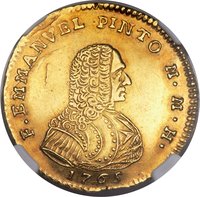
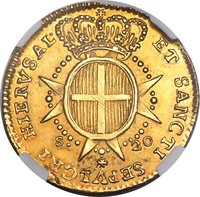
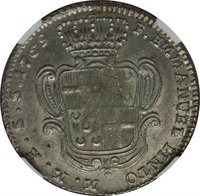
✨ Legendary