

24 skilling – Denmark
Add to wishlist
Denmark
Context
Material
References
KM: #
Numista: #90550
Value
Bullion value: $13.01
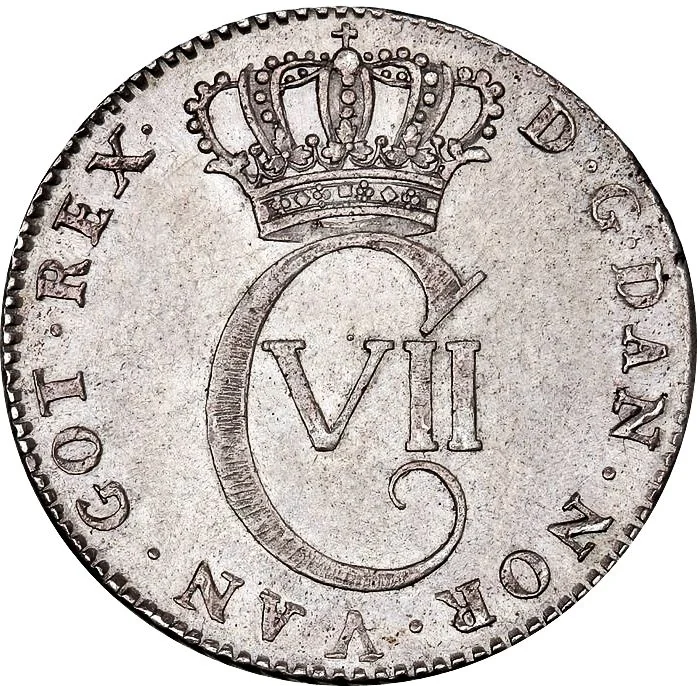
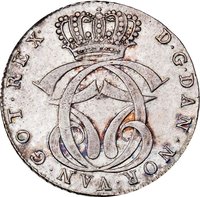
Obverse
Description:
Crowned royal monogram. Rim inscription.
Inscription:
CVII
D • G • DAN • NOR • VAN • GOT • REX •
D • G • DAN • NOR • VAN • GOT • REX •
Script: Latin
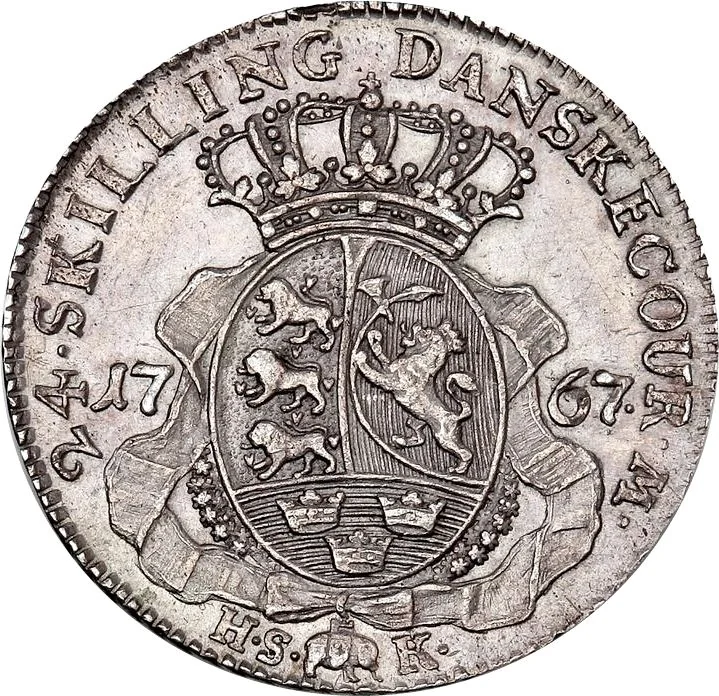
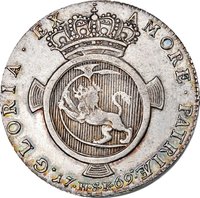
Reverse
Description:
Shield with Danish, Norwegian, and Swedish arms, crowned and encircled by the Order of the Elephant. Date flanking shield, value below.
Inscription:
24 • SKILLING DANSKE COUR • M •
17 51
H • S • K •
17 51
H • S • K •
Script: Latin
Edge
Categories
| Symbols> Coat of Arms |
Mints
| Name | Mark |
|---|---|
| Royal Danish Mint | — |
Mintings
| Year | Mint Mark | Mintage | Quality | Collection |
|---|---|---|---|---|
| 1767 | — | — |
Historical background
In 1767, Denmark-Norway operated under a silver standard, but the monetary system was complex and strained. The primary unit was the rigsdaler, subdivided into 96 skilling. However, a chronic shortage of physical silver coinage, especially small denominations for daily trade, plagued the economy. This scarcity was exacerbated by the state's fiscal difficulties following the costly Seven Years' War (1756-1763), which had drained treasury reserves and increased the national debt. Consequently, various forms of credit notes and inferior copper coins circulated alongside full-value silver, creating confusion and undermining public trust in the currency.
The situation was further complicated by the circulation of foreign coins, particularly German and Dutch, which were necessary to facilitate trade but introduced exchange rate fluctuations. Furthermore, the Danish state had a history of debasing the currency—reducing the silver content in coins—to generate short-term revenue, a practice that led to inflation and economic instability. By 1767, these pressures created an environment where the intrinsic value of coins often differed from their face value, hindering both domestic commerce and international exchange. The mercantilist policies of the time, which aimed to hoard precious metals within the kingdom, also conflicted with the practical realities of a trade-dependent nation.
Recognizing the systemic problems, the government was in the early stages of contemplating monetary reform. The year 1767 fell within a period of administrative scrutiny that would eventually lead to significant changes. Just a few years later, in 1771, a major currency restructuring was proposed, and by 1777, a new stable kurant system was introduced, aiming to separate the unit of account from the physical silver content and restore order. Thus, 1767 represents a point of mounting pressure within the Danish economy, highlighting the urgent need for the comprehensive monetary overhaul that would follow in the subsequent decade.
The situation was further complicated by the circulation of foreign coins, particularly German and Dutch, which were necessary to facilitate trade but introduced exchange rate fluctuations. Furthermore, the Danish state had a history of debasing the currency—reducing the silver content in coins—to generate short-term revenue, a practice that led to inflation and economic instability. By 1767, these pressures created an environment where the intrinsic value of coins often differed from their face value, hindering both domestic commerce and international exchange. The mercantilist policies of the time, which aimed to hoard precious metals within the kingdom, also conflicted with the practical realities of a trade-dependent nation.
Recognizing the systemic problems, the government was in the early stages of contemplating monetary reform. The year 1767 fell within a period of administrative scrutiny that would eventually lead to significant changes. Just a few years later, in 1771, a major currency restructuring was proposed, and by 1777, a new stable kurant system was introduced, aiming to separate the unit of account from the physical silver content and restore order. Thus, 1767 represents a point of mounting pressure within the Danish economy, highlighting the urgent need for the comprehensive monetary overhaul that would follow in the subsequent decade.
✨ Legendary