

1 speciedaler – Denmark
Add to wishlist
Denmark
Context
Material
References
KM: #
Numista: #324361
Value
Bullion value: $62.32
Obverse
Description:
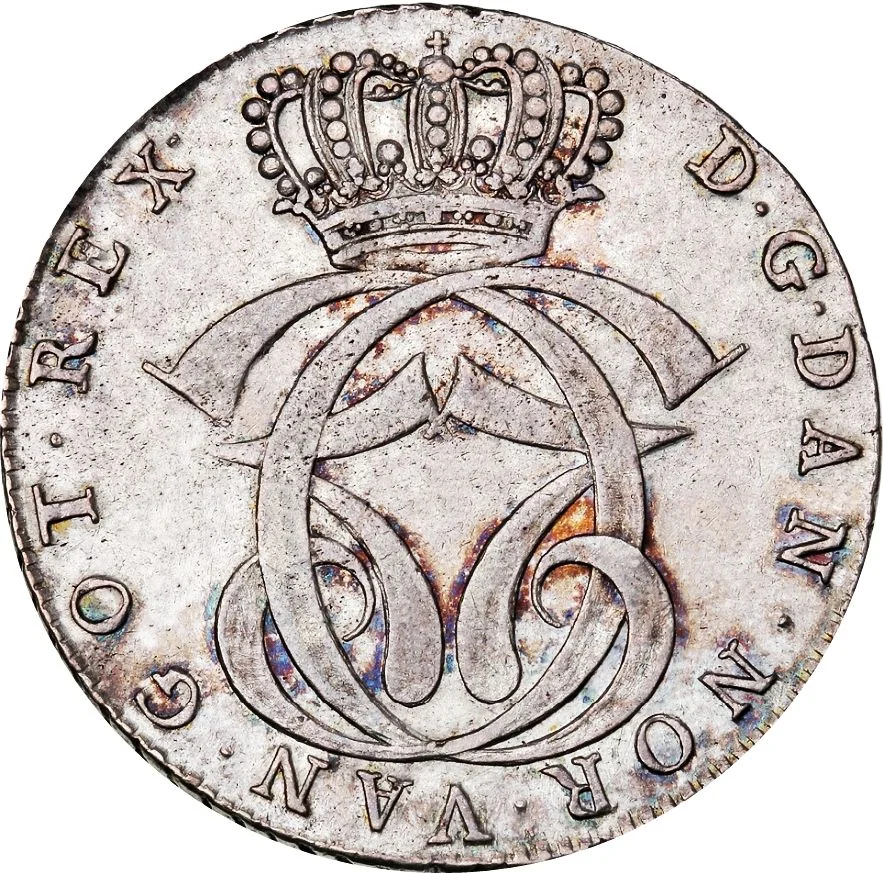
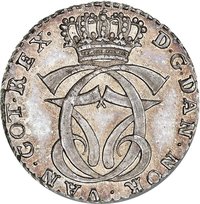
Crowned double K monogram. Rim inscription.
Inscription:
7CC7
D • G • DAN • NOR • VAN • GOT • REX •
D • G • DAN • NOR • VAN • GOT • REX •
Script: Latin
Reverse
Description:
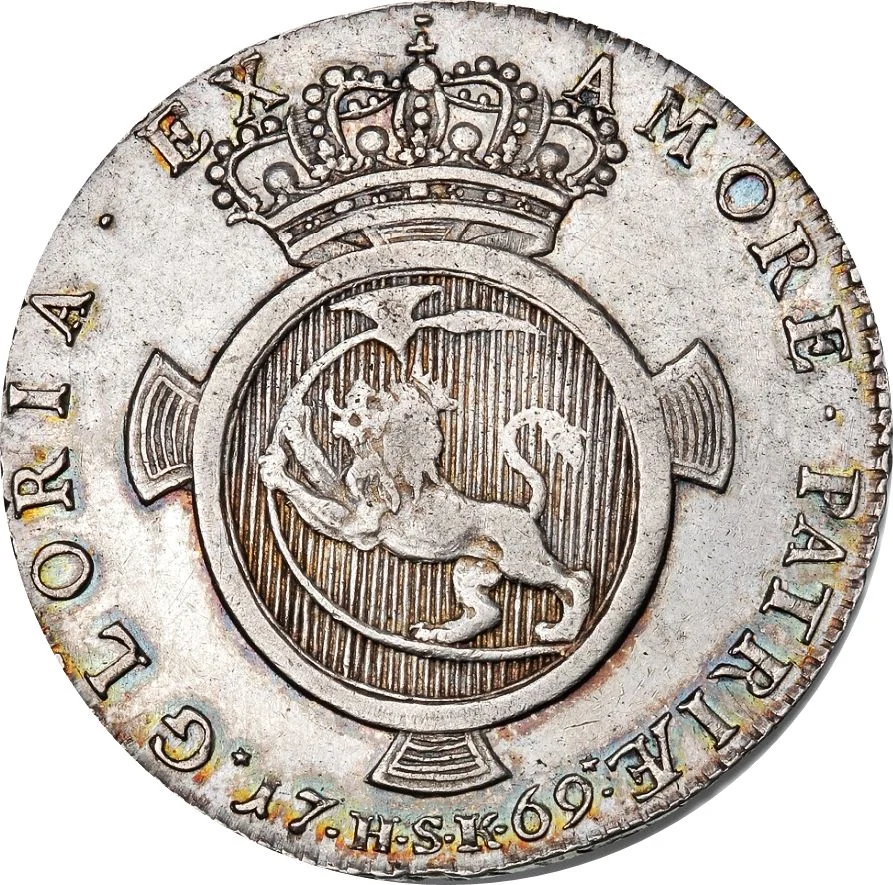
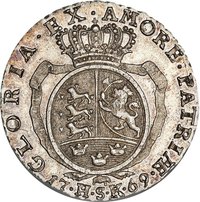
Shield with Norwegian lion and axe over a cross. King’s motto around rim. Mintmark and date below.
Inscription:
GLORIA • EX • AMORE • PATRIÆ •
* 17.H.S.K.69 *
* 17.H.S.K.69 *
Script: Latin
Edge
Coarse milling
Mintings
| Year | Mint Mark | Mintage | Quality | Collection |
|---|---|---|---|---|
| 1768 | HSK | — | ||
| 1769 | HSK | — |
Historical background
In 1768, Denmark operated under a silver-based monetary system, yet the kingdom was grappling with significant currency instability and complexity. The primary unit was the rigsdaler, subdivided into 96 skilling. However, the circulating medium was a confusing mix of actual silver coins, heavily debased subsidiary coins, and a substantial volume of paper money. This paper currency, first introduced by the state in 1713, was not fully convertible to silver, leading to a divergence between its face value and its actual market value, thereby creating a dual-price system that hampered trade and economic predictability.
The root of the instability lay in decades of state financial strain, particularly due to costly wars and the expenses of maintaining the absolutist monarchy. To finance these, the government had repeatedly debased the coinage and issued excessive amounts of paper money, known as kuranter. By 1768, public confidence in this paper was low, and its value fluctuated. Furthermore, the Danish state included the duchies of Schleswig and Holstein, which used different monetary systems (the Courant and Mark systems), adding another layer of complication for commerce across the realms.
Consequently, 1768 fell within a period of protracted monetary crisis that would eventually force a major reform. Just three years later, in 1771, the government would announce a significant devaluation of the paper currency in an attempt to restore parity with silver, a painful but necessary step toward stabilization. Therefore, the currency situation in 1768 was one of fragility and transition, characterized by inflationary pressures, public distrust, and an urgent need for systemic overhaul to unify and secure the kingdom's finances.
The root of the instability lay in decades of state financial strain, particularly due to costly wars and the expenses of maintaining the absolutist monarchy. To finance these, the government had repeatedly debased the coinage and issued excessive amounts of paper money, known as kuranter. By 1768, public confidence in this paper was low, and its value fluctuated. Furthermore, the Danish state included the duchies of Schleswig and Holstein, which used different monetary systems (the Courant and Mark systems), adding another layer of complication for commerce across the realms.
Consequently, 1768 fell within a period of protracted monetary crisis that would eventually force a major reform. Just three years later, in 1771, the government would announce a significant devaluation of the paper currency in an attempt to restore parity with silver, a painful but necessary step toward stabilization. Therefore, the currency situation in 1768 was one of fragility and transition, characterized by inflationary pressures, public distrust, and an urgent need for systemic overhaul to unify and secure the kingdom's finances.
✨ Legendary