

India
Obverse
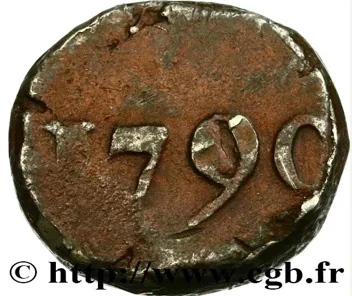
Description:
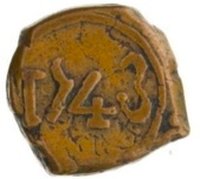
Date.
Reverse
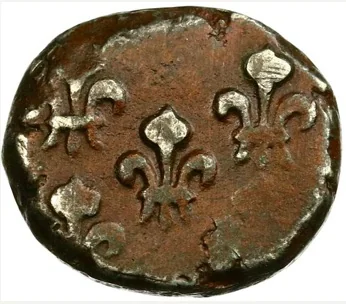
Description:
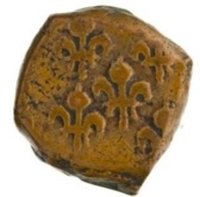
Five fleurs-de-lis.
Edge
Mints
| Name | Mark |
|---|---|
| Mahé | — |
Mintings
| Year | Mint Mark | Mintage | Quality | Collection |
|---|---|---|---|---|
| 1730 | — | — | ||
| 1731 | — | — | ||
| 1736 | — | — | ||
| 1740 | — | — | ||
| 1750 | — | — | ||
| 1752 | — | — | ||
| 1753 | — | — | ||
| 1755 | — | — | ||
| 1756 | — | — | ||
| 1767 | — | — | ||
| 1769 | — | — | ||
| 1785 | — | — | ||
| 1787 | — | — | ||
| 1790 | — | — |
Historical background
In 1730, Mahé, a strategic coastal settlement on the Malabar Coast of India, was under the nascent control of the French East India Company. The broader regional economy was dominated by the powerful Kingdom of Mysore under Maharaja Chamaraja Wodeyar VII, who claimed suzerainty over the area. While the French established a fort and trading post, their political and monetary authority was not absolute and operated within the context of local power structures and a complex, centuries-old Indian Ocean trade network.
The currency situation was inherently pluralistic and pragmatic. There was no single, official "Mahé currency." Instead, transactions were conducted using a variety of circulating coins, primarily silver Rupees and gold Pagodas from neighbouring Indian polities like Mysore and the Mughal Empire. These were supplemented by a wide array of foreign silver coins—Spanish Reales, French Écus, and Portuguese Réis—that arrived via maritime trade. The value of these coins was determined by their intrinsic weight and fineness of metal, assessed by local shroffs (money-changers), rather than by a central issuing authority.
This multi-currency environment presented constant challenges for French commercial accounts and tax collection. The Company likely attempted to fix exchange rates for accounting purposes, but the actual market rates fluctuated with the ebb and flow of trade and the quality of coinage. Thus, the monetary landscape of Mahé in 1730 was less a unified system and more a bustling bazaar of metallic wealth, where global and regional currencies converged, competing and circulating based on their accepted bullion value in a thriving Indian market.
The currency situation was inherently pluralistic and pragmatic. There was no single, official "Mahé currency." Instead, transactions were conducted using a variety of circulating coins, primarily silver Rupees and gold Pagodas from neighbouring Indian polities like Mysore and the Mughal Empire. These were supplemented by a wide array of foreign silver coins—Spanish Reales, French Écus, and Portuguese Réis—that arrived via maritime trade. The value of these coins was determined by their intrinsic weight and fineness of metal, assessed by local shroffs (money-changers), rather than by a central issuing authority.
This multi-currency environment presented constant challenges for French commercial accounts and tax collection. The Company likely attempted to fix exchange rates for accounting purposes, but the actual market rates fluctuated with the ebb and flow of trade and the quality of coinage. Thus, the monetary landscape of Mahé in 1730 was less a unified system and more a bustling bazaar of metallic wealth, where global and regional currencies converged, competing and circulating based on their accepted bullion value in a thriving Indian market.
✨ Legendary