

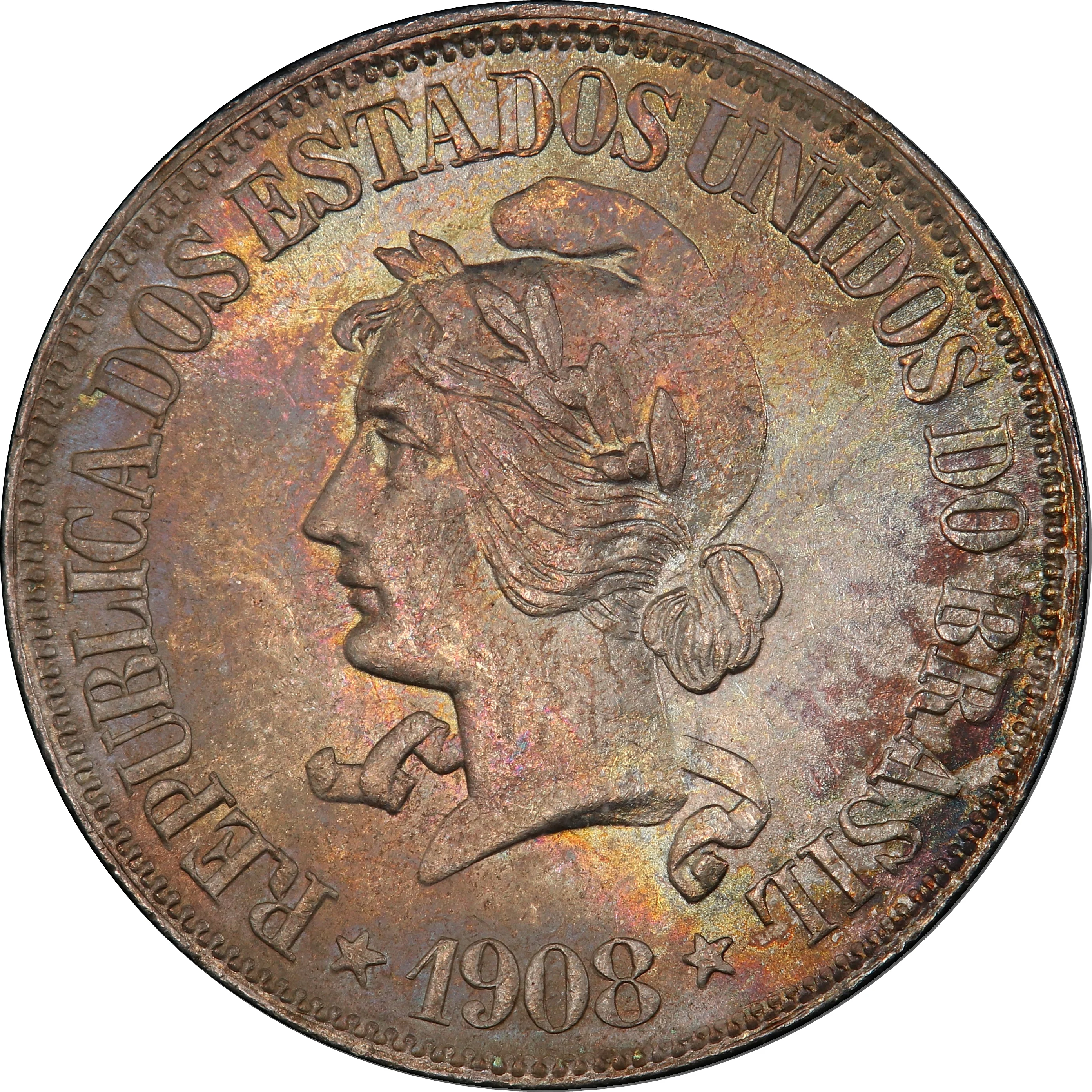
Obverse
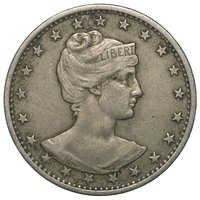
Description:
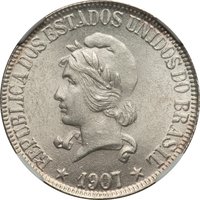
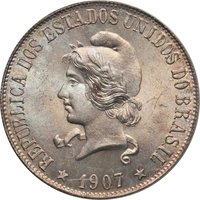
Liberty left, date below.
Inscription:
REPUBLICA DOS ESTADOS UNIDOS DO BRASIL
*1907*
*1907*
Translation:
REPUBLIC OF THE UNITED STATES OF BRAZIL
*1907*
*1907*
Script: Latin
Language: Portuguese
Engraver: João da Cruz Vargas
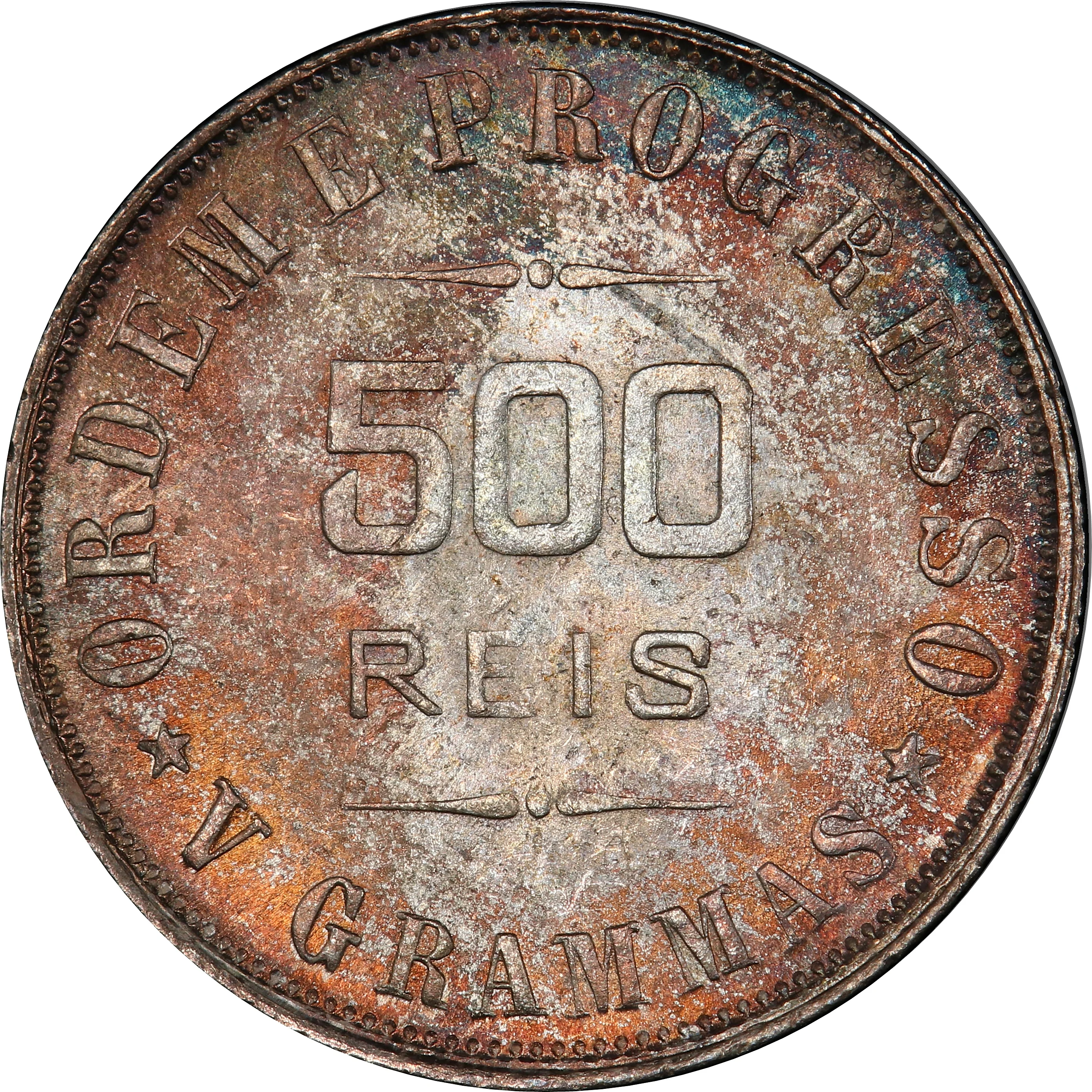
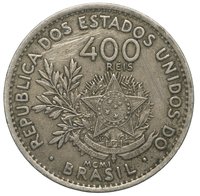
Reverse
Description:
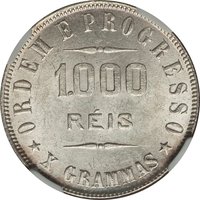
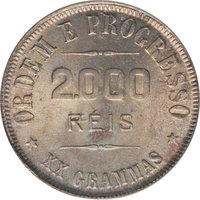
Central denomination
Inscription:
ORDEM E PROGRESSO
500
RÉIS
*V GRAMMAS*
500
RÉIS
*V GRAMMAS*
Translation:
Order and Progress
500
Reis
*5 Grams*
500
Reis
*5 Grams*
Script: Latin
Language: Portuguese
Edge
Milled
Categories
| Symbol> Allegory |
| Symbol> Phrygian cap |
Mints
| Name | Mark |
|---|---|
| Casa da Moeda do Brasil | — |
Mintings
| Year | Mint Mark | Mintage | Quality | Collection |
|---|---|---|---|---|
| 1906 | — | 352,000 | ||
| 1907 | — | 1,282,000 | ||
| 1908 | — | 498,000 | ||
| 1911 | — | 8,000 | ||
| 1912 | — | 2,000 |
Historical background
In 1906, Brazil's currency situation was defined by the profound instability of the mil-réis and the country's acute dependence on a single export commodity: coffee. The national currency had experienced severe depreciation for decades due to a combination of factors, including excessive money printing to cover fiscal deficits, a lack of foreign exchange reserves, and a persistent trade imbalance. This chronic devaluation created an unpredictable economic environment, discouraging foreign investment and complicating both government finance and everyday commercial transactions.
The crisis was inextricably linked to the coffee economy. A massive overproduction of coffee in the early 1900s threatened to crash global prices, which would have been catastrophic for Brazil's dominant export sector and the government's primary source of revenue. In response, the federal government, under President Rodrigues Alves, enacted the Taubaté Agreement of 1906 in collaboration with the major coffee-producing states (São Paulo, Minas Gerais, and Rio de Janeiro). This landmark policy committed the government to artificially support coffee prices by purchasing and warehousing surplus beans, effectively removing them from the market to maintain profitability.
To finance this costly coffee valorization scheme and to finally stabilize the currency, Brazil sought foreign loans, primarily from European banking syndicates. These loans, secured against future coffee revenues, enabled the establishment of a gold conversion fund (Caixa de Conversão) in 1906. This mechanism aimed to peg the mil-réis to gold, restoring confidence and attracting capital. Thus, the currency situation of 1906 represents a pivotal moment of state intervention, where monetary policy was directly harnessed to bail out the plantation oligarchy, embedding a legacy of external debt and tying the nation's financial health to the volatile fortunes of a single crop.
The crisis was inextricably linked to the coffee economy. A massive overproduction of coffee in the early 1900s threatened to crash global prices, which would have been catastrophic for Brazil's dominant export sector and the government's primary source of revenue. In response, the federal government, under President Rodrigues Alves, enacted the Taubaté Agreement of 1906 in collaboration with the major coffee-producing states (São Paulo, Minas Gerais, and Rio de Janeiro). This landmark policy committed the government to artificially support coffee prices by purchasing and warehousing surplus beans, effectively removing them from the market to maintain profitability.
To finance this costly coffee valorization scheme and to finally stabilize the currency, Brazil sought foreign loans, primarily from European banking syndicates. These loans, secured against future coffee revenues, enabled the establishment of a gold conversion fund (Caixa de Conversão) in 1906. This mechanism aimed to peg the mil-réis to gold, restoring confidence and attracting capital. Thus, the currency situation of 1906 represents a pivotal moment of state intervention, where monetary policy was directly harnessed to bail out the plantation oligarchy, embedding a legacy of external debt and tying the nation's financial health to the volatile fortunes of a single crop.
🌱 Common