

¼ Rupee – Bombay Presidency
India
Context
Years: 1233–1819
Islamic (Hijri) Year: 1234
Country: India 
Issuer: Bombay Presidency
Currency:
(1672—1835)
Demonetized: Yes
Material
References
KM: #Click to copy to clipboard258
Numista: #89524
Value
Bullion value: $8.71
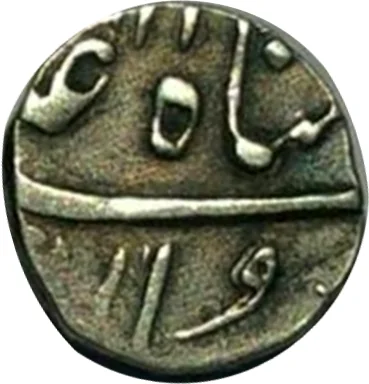
Obverse
Description:
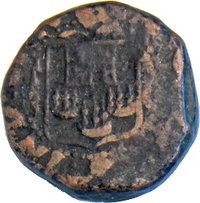
Sikka Mubarak Badshah Ghazi Akbar Shah (Persian, mostly off-flan).
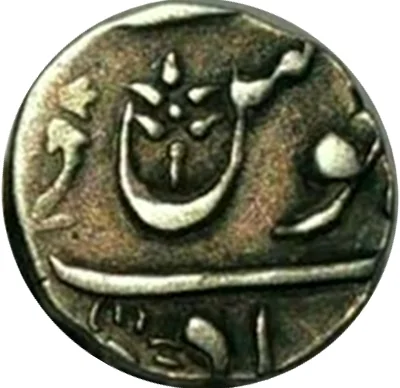
Reverse
Description:
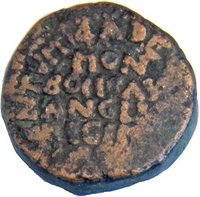
Ahmedabad coin, Year 1 of Maimanat Manus.
Edge
Plain
Mintings
| Year | Mint Mark | Mintage | Quality | Collection |
|---|---|---|---|---|
| — | — | — | ||
| 1819 | — | — |
Historical background
In 1233, the Bombay Presidency did not exist as a formal administrative entity, as this date corresponds to the year 1817-1818 CE in the Gregorian calendar, a period of transition and conflict. The region was under the control of the Maratha Confederacy, specifically the Peshwa in Pune, with the British East India Company holding sway in key coastal territories like Bombay Island. The currency situation was therefore fragmented and complex, characterized by the simultaneous circulation of multiple coinages from different political authorities, including Maratha, Mughal, and local issuers, alongside Company rupees.
The primary silver currency was the rupee, but its value and purity varied depending on the mint. The East India Company issued its own Bombay rupees from its mint at Bombay Fort, competing with the older Ankushi rupees of the Maratha Peshwas and the fading Surat rupees. Gold mohurs and copper paisa completed the monetary hierarchy. This multiplicity created a chaotic exchange environment, requiring constant recalibration and causing significant inconvenience to trade, as merchants had to navigate differing valuations and frequent debasements.
This chaotic monetary background was set against the climax of the Third Anglo-Maratha War (1817-1818). The Company's decisive victory and the subsequent dissolution of the Peshwa's power in 1818 would fundamentally alter the currency landscape. The British annexation of vast Maratha territories laid the groundwork for the formal establishment of the Bombay Presidency and, within a few years, would lead to a concerted drive by the Company to standardize the coinage under its sole authority, aiming to impose monetary order as a tool of political and economic consolidation.
The primary silver currency was the rupee, but its value and purity varied depending on the mint. The East India Company issued its own Bombay rupees from its mint at Bombay Fort, competing with the older Ankushi rupees of the Maratha Peshwas and the fading Surat rupees. Gold mohurs and copper paisa completed the monetary hierarchy. This multiplicity created a chaotic exchange environment, requiring constant recalibration and causing significant inconvenience to trade, as merchants had to navigate differing valuations and frequent debasements.
This chaotic monetary background was set against the climax of the Third Anglo-Maratha War (1817-1818). The Company's decisive victory and the subsequent dissolution of the Peshwa's power in 1818 would fundamentally alter the currency landscape. The British annexation of vast Maratha territories laid the groundwork for the formal establishment of the Bombay Presidency and, within a few years, would lead to a concerted drive by the Company to standardize the coinage under its sole authority, aiming to impose monetary order as a tool of political and economic consolidation.
✨ Legendary