

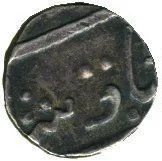
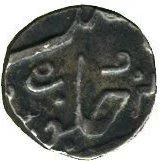

Obverse
Description:
Sikka mubarak, Alamgir.
Reverse
Description:
Zarb Mumbai, Sanat Julus, Maimanat Manus
Edge
Plain
Mintings
| Year | Mint Mark | Mintage | Quality | Collection |
|---|---|---|---|---|
| 1188 | — | — |
Historical background
The request for a background on the currency situation in the Bombay Presidency in "1188" presents a chronological issue, as this year corresponds to the Hijri calendar (approximately 1774-1775 CE), a period predating the formal establishment of the Bombay Presidency (which began under the East India Company's administration in the late 17th century and was consolidated in the 19th century). However, examining the monetary landscape of the region in the late 18th century reveals a complex and fragmented system. The area was not under a unified currency authority; instead, it was a mosaic of circulating coins from various powers. Mughal silver rupees (and their local imitations), Portuguese xerafins and tangas from Goa, and coins from other Indian princely states and European trading companies all competed in the marketplace. The British East India Company itself issued coins from its Bombay Mint, but these operated alongside, not in place of, this diverse monetary pool.
The primary challenge was one of extreme variability. Coins differed in weight, purity, and valuation from district to district, leading to constant recalculation and arbitrage. Transactions required expert knowledge of the fluctuating exchange rates between, for instance, the Company's rupee, the Mughal sicca rupee, and the various copper pice. Furthermore, the scarcity of small-denomination coins for everyday trade was a persistent problem, often addressed through the use of cut or damaged coins (dubbies), or by merchants issuing their own private tokens. This lack of standardization created significant transaction costs, hindered regional trade, and complicated revenue collection for the Company, which sought to impose order.
Therefore, in the 1770s, the monetary situation was one of transition and contest. The East India Company was gradually expanding its territorial and economic control following the Battle of Plassey (1757) and the acquisition of the diwani of Bengal (1765), but its administrative and fiscal systems were still evolving. The currency chaos in Bombay and its hinterlands reflected the broader political reality: the declining authority of the Mughal Empire, the rising influence of the Maratha Confederacy, and the increasing entrenchment of European companies. The Company's eventual drive towards a uniform silver standard and centralized minting authority would be a key tool in consolidating its political power in the decades to come.
The primary challenge was one of extreme variability. Coins differed in weight, purity, and valuation from district to district, leading to constant recalculation and arbitrage. Transactions required expert knowledge of the fluctuating exchange rates between, for instance, the Company's rupee, the Mughal sicca rupee, and the various copper pice. Furthermore, the scarcity of small-denomination coins for everyday trade was a persistent problem, often addressed through the use of cut or damaged coins (dubbies), or by merchants issuing their own private tokens. This lack of standardization created significant transaction costs, hindered regional trade, and complicated revenue collection for the Company, which sought to impose order.
Therefore, in the 1770s, the monetary situation was one of transition and contest. The East India Company was gradually expanding its territorial and economic control following the Battle of Plassey (1757) and the acquisition of the diwani of Bengal (1765), but its administrative and fiscal systems were still evolving. The currency chaos in Bombay and its hinterlands reflected the broader political reality: the declining authority of the Mughal Empire, the rising influence of the Maratha Confederacy, and the increasing entrenchment of European companies. The Company's eventual drive towards a uniform silver standard and centralized minting authority would be a key tool in consolidating its political power in the decades to come.
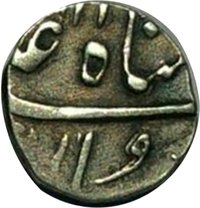
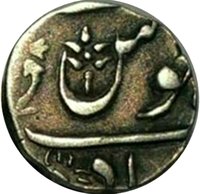
✨ Legendary