

1 Unit – Scotland
United Kingdom
Context
Years: 1625–1635
Country: United Kingdom 
Issuer: Scotland 
Ruler: Charles I
Currency:
(1136—1707)
Demonetized: Yes
Material
Diameter: 36 mm
Weight: 10.03 g
Gold weight: 9.20 g
Shape: Irregular round
Composition: 91.7% Gold
Magnetic: No
Technique: Hammered
References
KM: #Click to copy to clipboard56
Numista: #89447
Value
Bullion value: $1536.11
Obverse
Description:
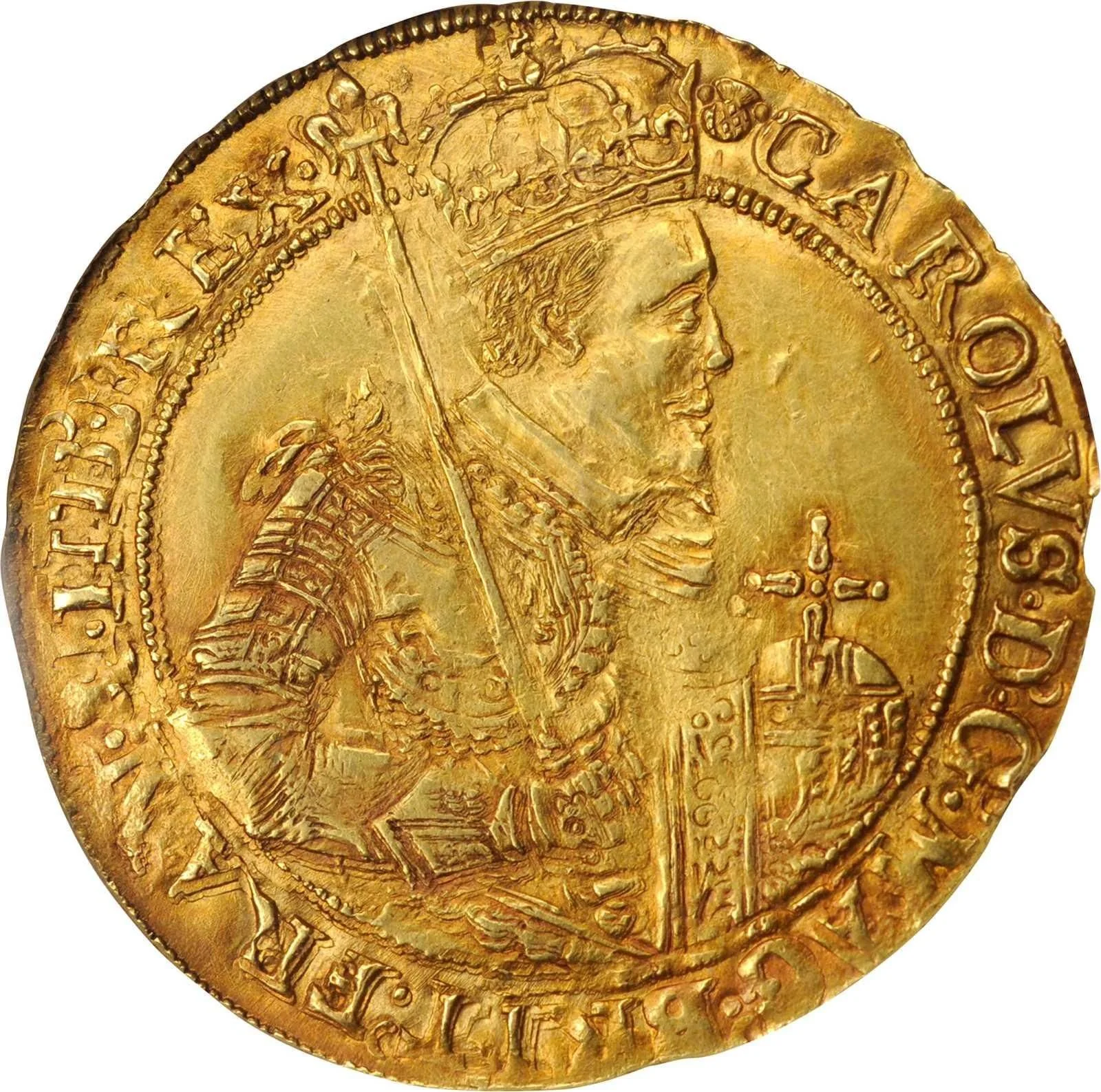
Right-facing bust of Charles I.
Inscription:
CAROLVS · D' · G' · MAG · BRIT' · FRAN · & · HIB' · REX ·
Script: Latin
Reverse
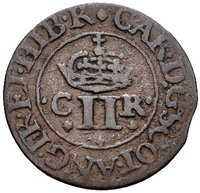
Description:
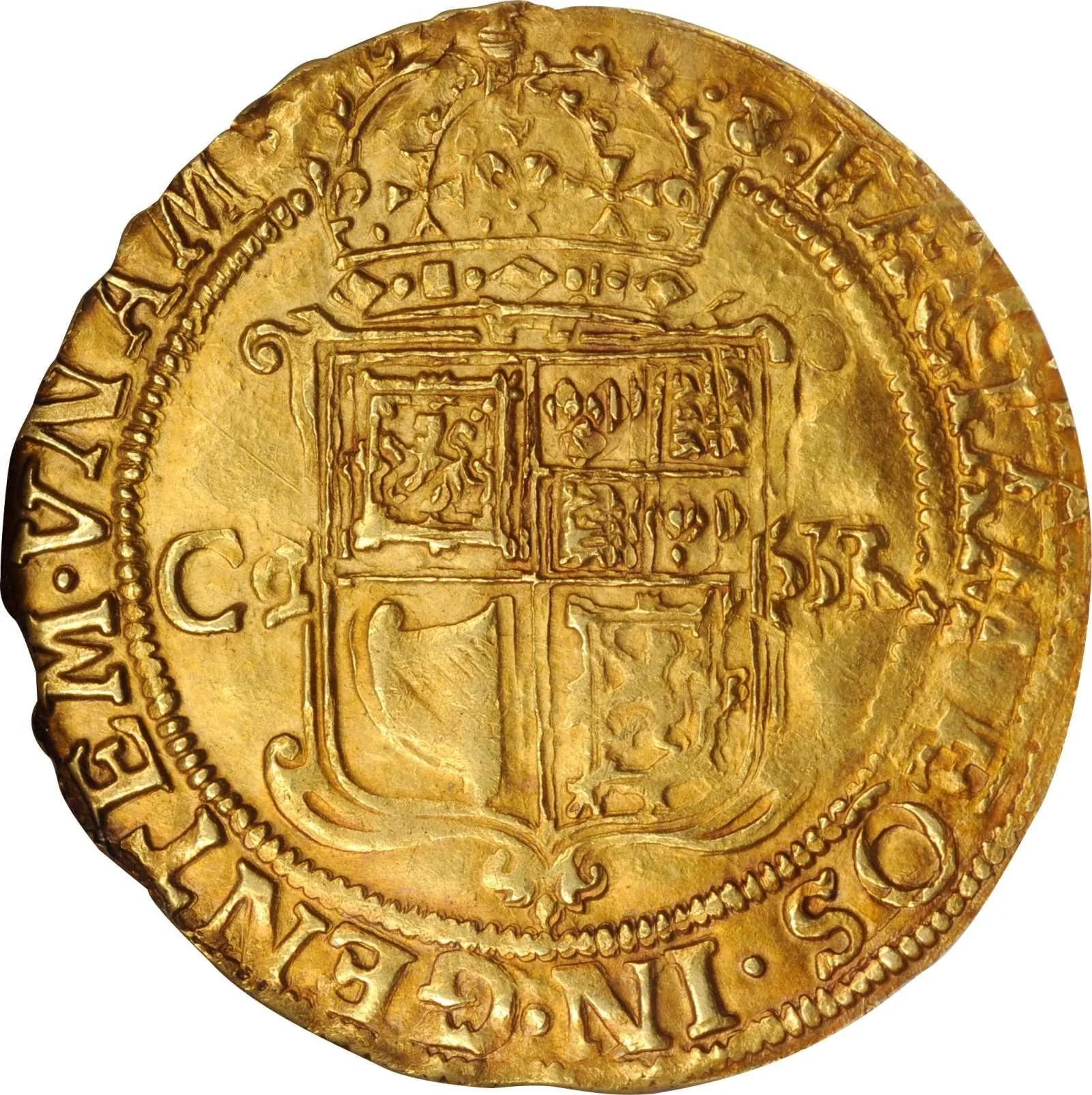
Royal arms flanked by 'CR'.
Inscription:
· FACIAM · EOS · IN · GENTEM · VNAM ·
Script: Latin
Edge
Mints
| Name | Mark |
|---|---|
| Edinburgh | — |
Mintings
| Year | Mint Mark | Mintage | Quality | Collection |
|---|---|---|---|---|
| — | — | — |
Historical background
In 1625, Scotland operated under a distinct monetary system from its southern neighbour, England, though both were under the rule of King James VI and I. The official unit of account was the pound Scots (£Scots), which had a fixed exchange rate of 12:1 with the pound Sterling (£Sterling), meaning £12 Scots equalled £1 Sterling. This reflected a long history of debasement and the relative economic strengths of the two kingdoms. The physical currency in circulation was a complex mixture, including domestic Scottish coinage—such as the merk (worth 13 shillings and 4 pence Scots)—and a substantial quantity of foreign coins, particularly Spanish dollars and Dutch guilders, which were essential for international trade.
The reign of James VI had seen attempts at monetary reform, but the system remained problematic. The official Scottish coinage, minted in Edinburgh, was often in short supply and suffered from issues of clipping and counterfeiting. More critically, the poor quality and scarcity of small denomination coins created significant hardship for everyday transactions among the common people. This forced a reliance on inefficient barter or the use of cut and worn foreign coins, leading to a disconnect between the official accounting system and the messy reality of the circulating medium.
This monetary landscape existed within a broader context of economic strain. Scotland was a poorer, largely agrarian nation compared to England, with a limited export economy heavily reliant on wool, hides, and fish. The chronic trade deficit drained specie (gold and silver coin) out of the country, exacerbating the currency shortages. Thus, in 1625, Scotland's currency situation was characterised by a weak and unstable domestic coinage, a dependency on foreign money, and underlying economic fragility—all of which would contribute to the severe financial and political crises that unfolded later in the century.
The reign of James VI had seen attempts at monetary reform, but the system remained problematic. The official Scottish coinage, minted in Edinburgh, was often in short supply and suffered from issues of clipping and counterfeiting. More critically, the poor quality and scarcity of small denomination coins created significant hardship for everyday transactions among the common people. This forced a reliance on inefficient barter or the use of cut and worn foreign coins, leading to a disconnect between the official accounting system and the messy reality of the circulating medium.
This monetary landscape existed within a broader context of economic strain. Scotland was a poorer, largely agrarian nation compared to England, with a limited export economy heavily reliant on wool, hides, and fish. The chronic trade deficit drained specie (gold and silver coin) out of the country, exacerbating the currency shortages. Thus, in 1625, Scotland's currency situation was characterised by a weak and unstable domestic coinage, a dependency on foreign money, and underlying economic fragility—all of which would contribute to the severe financial and political crises that unfolded later in the century.
✨ Legendary