

2 Pence – Scotland
United Kingdom
Context
Years: 1619–1623
Country: United Kingdom 
Issuer: Scotland 
Ruler: James VI
Currency:
(1136—1707)
Demonetized: Yes
Total mintage: 3,600,000
Material
Diameter: 19 mm
Weight: 2.18 g
Shape: Irregular round
Composition: Copper
Magnetic: No
Technique: Hammered
References
KM: #Click to copy to clipboard41
Numista: #88040
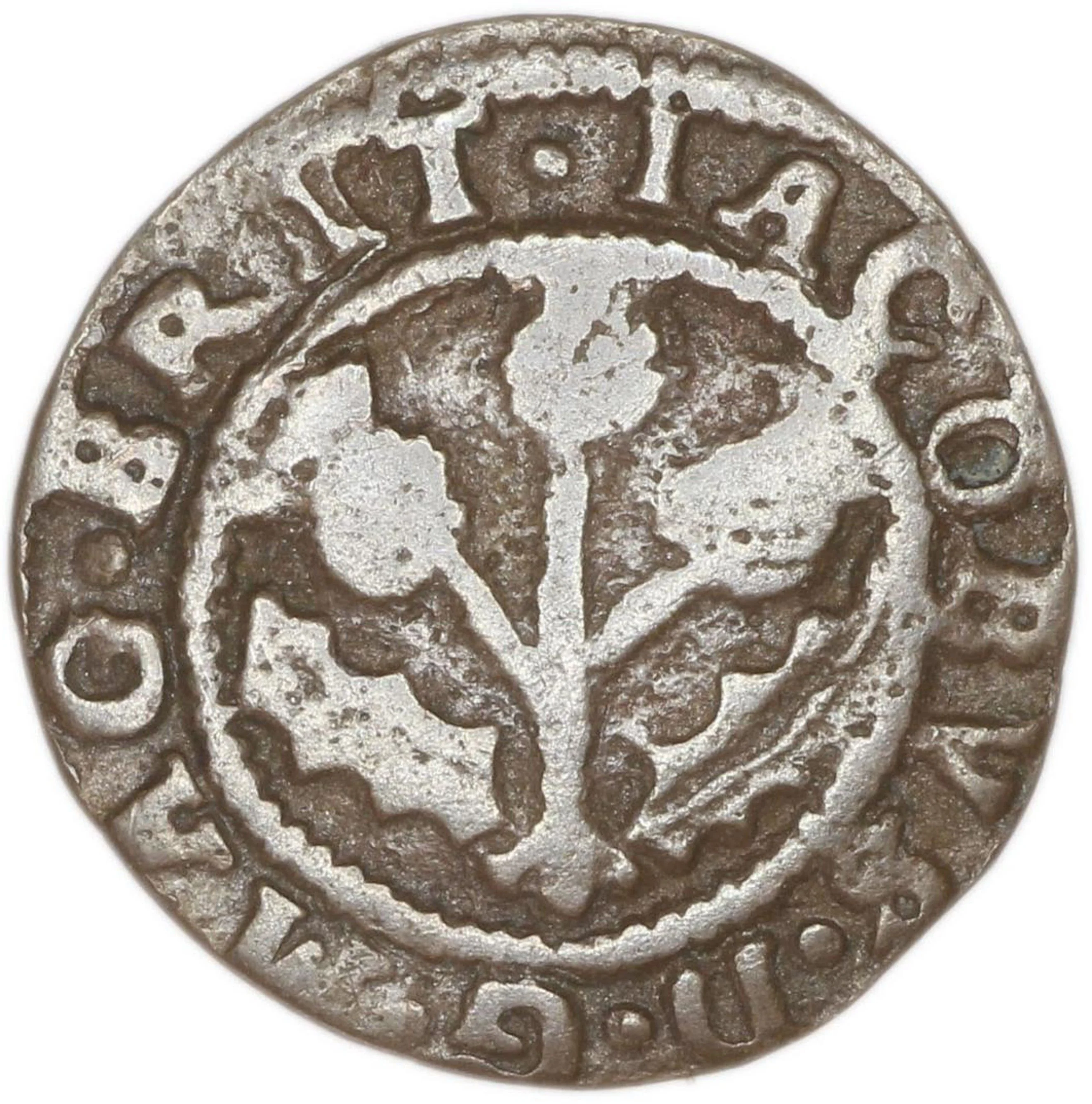
Obverse
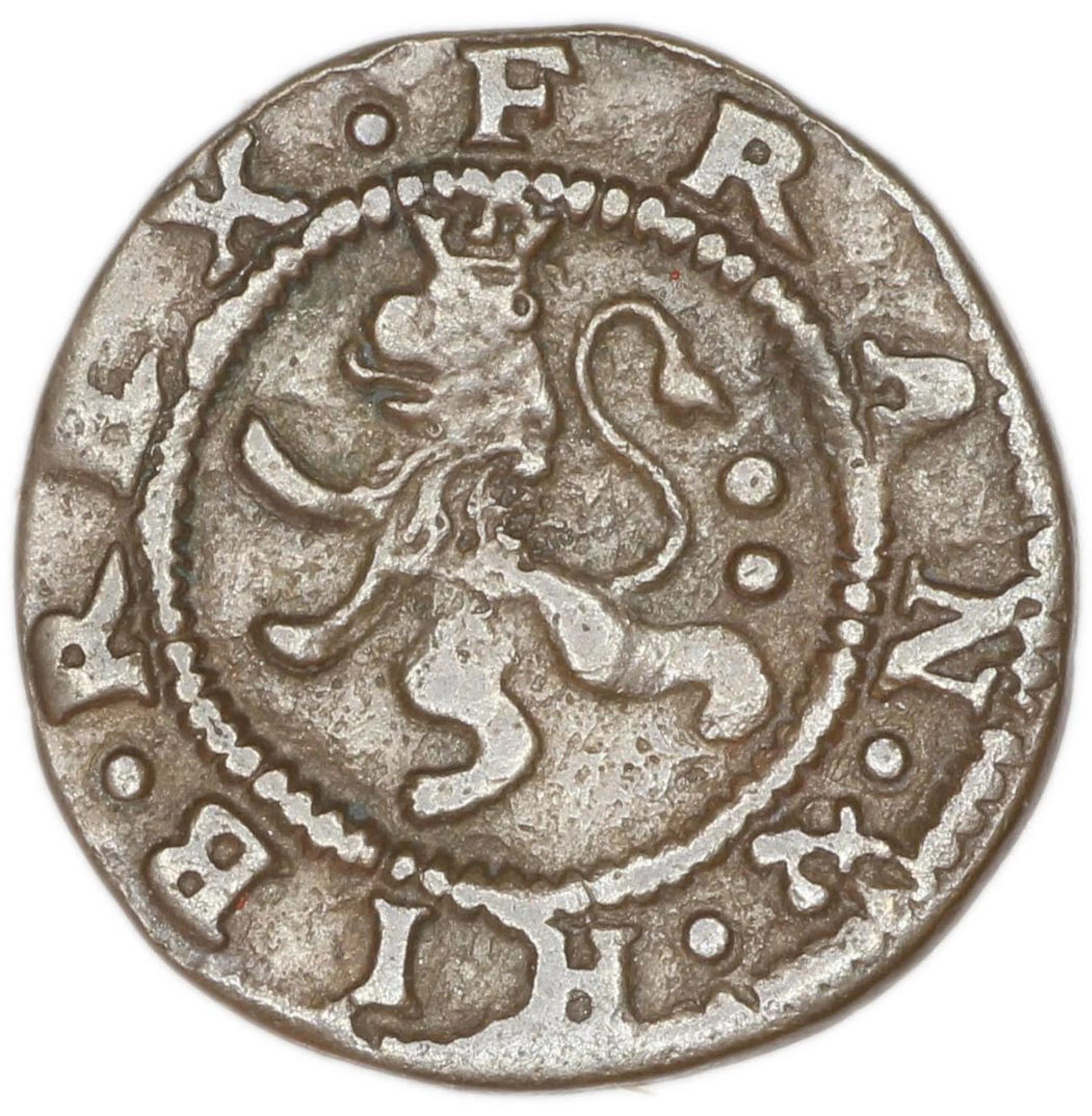
Reverse
Description:
Rampant lion crowned left, two pellets to the right.
Inscription:
· FRAN · & · HIB · REX
Script: Latin
Edge
Mints
| Name | Mark |
|---|---|
| Edinburgh | — |
Mintings
| Year | Mint Mark | Mintage | Quality | Collection |
|---|---|---|---|---|
| 1619 | — | 1,680,000 | ||
| 1623 | — | 1,920,000 |
Historical background
In 1619, Scotland operated under a distinct monetary system from England, despite sharing a monarch since 1603. The official currency was the Scottish pound (Scots pound), which had been significantly debased over the centuries and was fixed at an exchange rate of 12 Scots pounds to 1 English pound sterling. The coinage in circulation was a limited and often poor-quality mix of domestic and foreign coins, including French écus, Dutch rijksdaalders, and Spanish reales, reflecting Scotland's extensive trade links. This multiplicity of coins, all with fluctuating values, created a complex and cumbersome commercial environment.
The period was one of severe economic difficulty, marked by a chronic shortage of specie (physical coin). King James VI and I's attempts to unify the coinages of his two kingdoms had stalled, leaving Scotland with an inadequate supply of trusted, high-value currency for larger transactions. This scarcity led to the widespread use of "bills of exchange" and credit among merchants, while the general populace often resorted to barter for everyday goods. The economic instability was exacerbated by the practice of "crying up" or "crying down" the official value of certain foreign coins by royal proclamation, attempts to manipulate the money supply that often caused confusion and market distrust.
Consequently, the Scottish monetary situation in 1619 was characterised by a weak and unstable standard unit, a reliance on heterogeneous foreign coin, and a debilitating lack of circulating medium. This financial fragility hindered trade and economic development, laying bare the structural weaknesses of the Scottish economy within the regal union. These unresolved currency issues would persist, contributing to the economic crises that culminated in the ill-fated Darien Scheme later in the century and ultimately to the parliamentary Union of 1707.
The period was one of severe economic difficulty, marked by a chronic shortage of specie (physical coin). King James VI and I's attempts to unify the coinages of his two kingdoms had stalled, leaving Scotland with an inadequate supply of trusted, high-value currency for larger transactions. This scarcity led to the widespread use of "bills of exchange" and credit among merchants, while the general populace often resorted to barter for everyday goods. The economic instability was exacerbated by the practice of "crying up" or "crying down" the official value of certain foreign coins by royal proclamation, attempts to manipulate the money supply that often caused confusion and market distrust.
Consequently, the Scottish monetary situation in 1619 was characterised by a weak and unstable standard unit, a reliance on heterogeneous foreign coin, and a debilitating lack of circulating medium. This financial fragility hindered trade and economic development, laying bare the structural weaknesses of the Scottish economy within the regal union. These unresolved currency issues would persist, contributing to the economic crises that culminated in the ill-fated Darien Scheme later in the century and ultimately to the parliamentary Union of 1707.
💎 Extremely Rare